
Review · RILA MONASTERY & BOYANA CHURCH
From Sofia: Rila Monastery & Melnik Day Trip with Transfers
Rila and Melnik in one full day. This trip strings together UNESCO Rila Monastery and the surreal Melnik pyramids, then finishes with a wine tasting in a town that still feels small and slow. It is built as one smooth loop from Sofia, with a comfort minivan and a licensed English guide.
Two things I really like. First, the group timing, you reach Rila early enough that the main sights feel calmer for photos and for lingering in the chapel area. Second, the guide does more than point at walls, you get explanations for the monastery and the frescos so it connects instead of becoming just sightseeing.
One consideration to plan for is the practical rules at Rila: you must dress appropriately, and the tour is not suitable for wheelchair users. Add that entrance fees are extra, and you will want a little cash ready.
In This Review
- Key highlights at a glance
- Why This Day Trip Flows Well From Sofia
- Getting Through Rila Monastery Without Stress: Dress Code and Walking Reality
- UNESCO Rila Monastery: What You Should Actually Look For
- Frescos, History, and a Guide Who Explains More Than Facts
- Melnik Town Walk: Small Place, Big Stories
- Kordopulova House Wine Tasting: What You Get and How to Prepare
- Melnik Pyramids: A Nature Stop That Feels Like a Side Effect
- Price and Extras: Is $100 Good Value?
- Who This Tour Suits Best, and Who Should Skip It
- Should You Book This Rila Monastery and Melnik Trip?
- FAQ
- FAQ
- How long is the Rila Monastery and Melnik day trip?
- Is this tour a small group?
- What is included in the price?
- Are entrance fees included for Rila Monastery and Kordopulova House?
- What clothing is allowed at Rila Monastery?
- Is the tour wheelchair accessible?
Key highlights at a glance
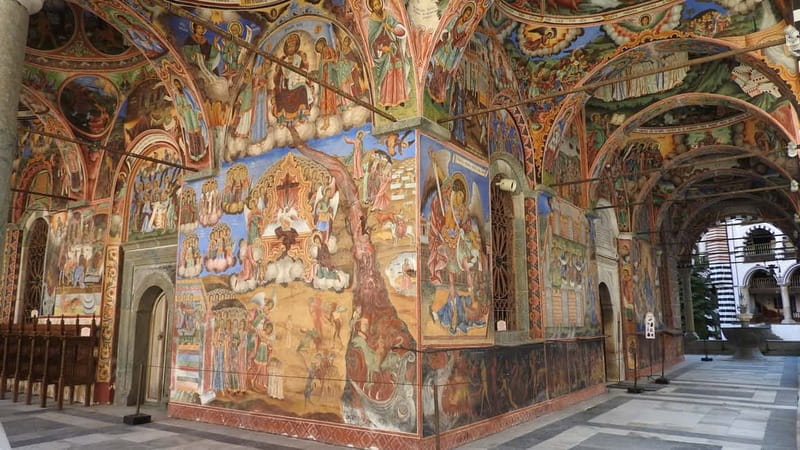
- UNESCO Rila Monastery with time for the main church and the monastery museum
- Early arrival at Rila for easier photos and less crush around the chapel area
- Melnik wine tasting at the Kordopulova house (entrance fee applies)
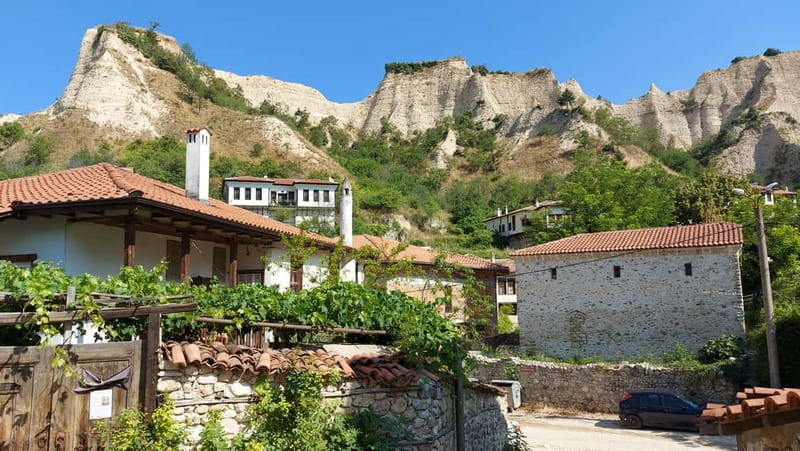
- Melnik pyramids views that feel like a nature spectacle right by town
- Small group size (limited to 7) plus hotel pickup and drop-off for less hassle
Rila and Boyana, more ways to go:
- From Sofia: Rila Monastery & Boyana Church Day Tour★ 4.7 · 5,107 reviews
- From Sofia: Must-See Rila Monastery & Boyana Church Day Tour★ 4.6 · 3,322 reviews
- From Sofia: 7 Rila Lakes and Rila Monastery Extended Trip★ 4.7 · 1,189 reviews
- Rila Monastery and Boyana Church Full-Day Tour★ 4.5 · 918 reviews
Why This Day Trip Flows Well From Sofia
A 10-hour day sounds packed, but this one stays logical because it pairs two very different experiences. Rila Monastery is spiritual and structured. Melnik is outdoorsy and sensory, with wine and those famous rock formations nearby.
The big practical win is the order. You start with Rila, and the timing helps you enjoy the atmosphere instead of fighting crowds. Once you have your monastery fix, the day shifts gears to Melnik, where walking through town and tasting wine feels natural rather than rushed.
Also, small group format changes the vibe. With only up to 7 people and an English-speaking licensed guide, you can ask questions without feeling like you are shouting over a dozen strangers. You are also not spending the day stuck waiting on a busload of people at every turn.
Getting Through Rila Monastery Without Stress: Dress Code and Walking Reality
Rila is stunning, but it also has strict rules. The tour notes clearly that shorts, short skirts, and sleeveless shirts are not allowed. For Rila specifically, your clothing must cover your shoulders, tank tops and short skirts are not permitted.
So I would plan like this:
- Wear long pants or a long skirt
- Bring a light layer or shawl for shoulder coverage
- Keep your daypack simple, you will likely be moving between church areas and museum spaces
One more practical angle: this is not wheelchair-friendly. Monastery and museum areas tend to involve steps, uneven surfaces, and internal courtyards, and the tour is explicitly not suitable for wheelchair users. If you use mobility aids, you will want to choose a different format or double-check accessibility with the provider before booking.
UNESCO Rila Monastery: What You Should Actually Look For
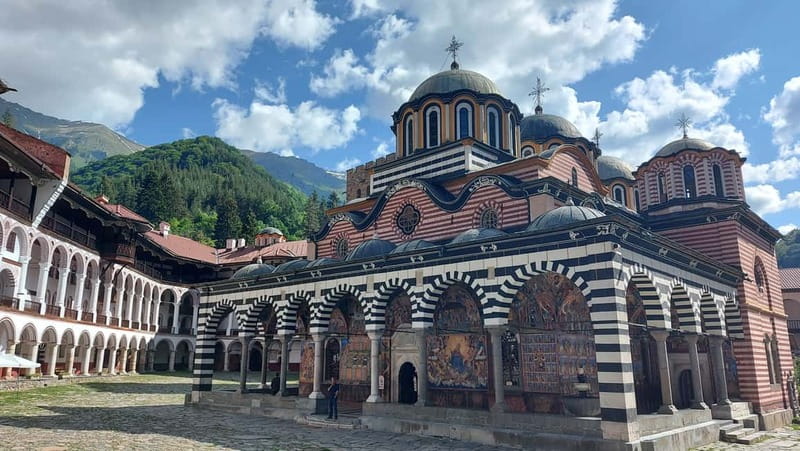
Rila Monastery is one of Bulgaria’s symbols, and it is part of the UNESCO World Cultural Heritage list. You are stepping into a complex connected to St John of Rila, a hermit canonized by the Orthodox Church. His ascetic life and tomb became a holy site, and over time it grew into a monastic complex that mattered for medieval Bulgaria, both spiritually and socially.
When you visit, I recommend you focus on three things:
- The main church as your anchor point. Start here, slow down, and let the space set the tone.
- The monastery museum if your timing allows. It gives you context so you understand what you are seeing rather than just looking.
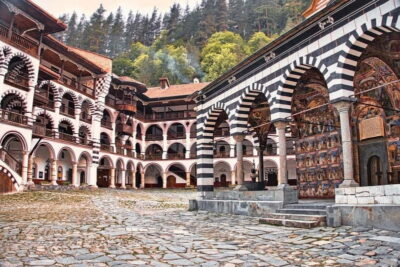
- The frescos and details even if you are not an art historian. The guide’s explanations matter here, and you will catch more than you would on your own.
You will also feel that Renaissance-era identity layer. The monument is described as an example of the Bulgarian Renaissance, symbolizing awareness of Slavic cultural identity after centuries of occupation. Even if that sounds like textbook history, it shows up in how the monastery communicates a strong cultural voice through its art and role.
And yes, it can feel emotional. That is not just marketing. The setting and the purpose of the place make it hard to treat it like a quick stop.
Frescos, History, and a Guide Who Explains More Than Facts
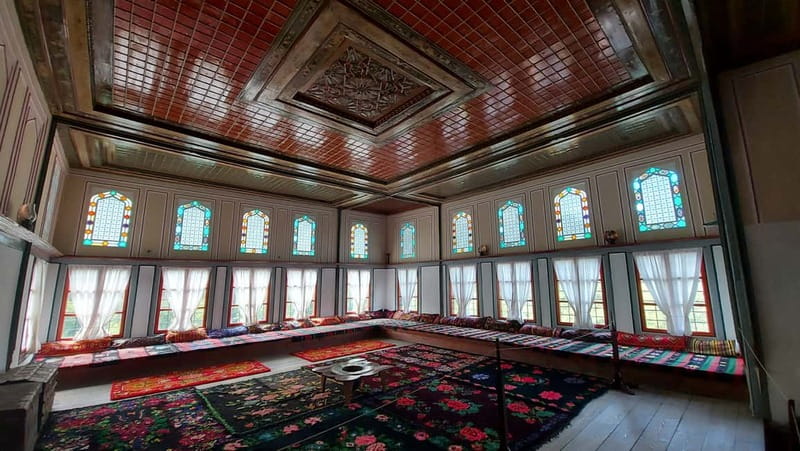
One of the strongest praise points from the trip is the way the guide turns the monastery into a story. People specifically mention explanations of the frescos and the monastery history, which is exactly what you want on a UNESCO site. Without that, you get the shell, but not the meaning.
Here is what you can do to make the explanation stick:
- Listen for what the guide says about St John of Rila and the monastery’s development. That context helps everything else fall into place.
- Pay attention to frescos, not just the main icon. Even quick notes about symbolism can change how you read the scenes.
- Ask one or two questions if you are curious. With a small group, it feels easier to get an answer.
I also like the practical side. One good sign from feedback is that the guide does small local touches beyond the big script, including suggestions for food stops around the monastery area. If someone points you toward the local doughnuts, take it seriously. It is a simple comfort that makes the day feel like travel, not just transfers.
More Revival-era village runs:
- From Sofia: Plovdiv and Koprivshtitsa Full Day Tour
★ 4.7 · 314 reviews - Plovdiv and Koprivshtitsa Full-Day Trip
★ 4.5 · 177 reviews - From Sofia: The Rose Valley & Koprivshtitsa 12 hrs Day Tour
★ 4.7 · 39 reviews
Melnik Town Walk: Small Place, Big Stories
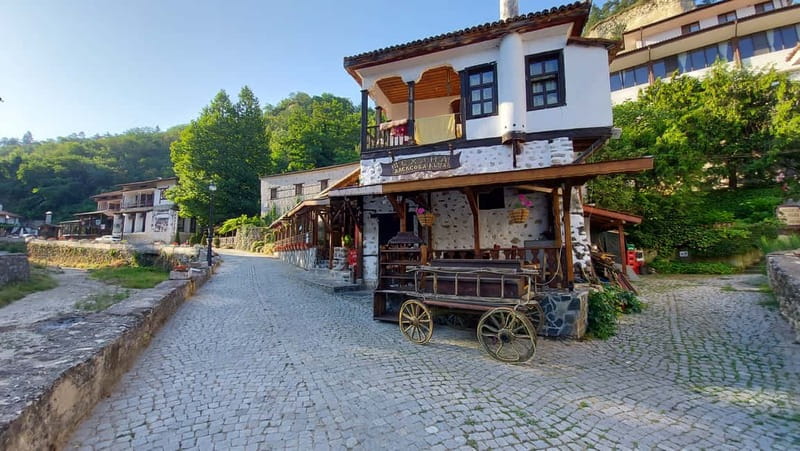
After Rila, you go to Melnik. It is described as the smallest town in Bulgaria today, which is part of why the atmosphere changes so quickly. Instead of monumental stone and sacred calm, you get a town you can actually walk at a human pace.
Melnik also carries layers of history. Early settlers of the region are linked to the Tracian tribe Medi, and the legendary rebel Spartacus is said to have originated there. During the Bulgarian Revival, Melnik apparently grew into a big city with a big market. From that era onward, it became known for high quality wines.
In practical terms, that means your town walk is not random. You are seeing a place that has long been a trading and tasting stop, not just a photo spot.
A simple tip: if the weather is nice, take your time to wander with no strict checklist. Melnik rewards slow looking, the kind of walking where you notice details because there is not a rush to the next room.
Kordopulova House Wine Tasting: What You Get and How to Prepare
Wine is a core part of the Melnik experience. During the tour, you visit the Kordopulova house, and you get a local wine tasting. There is an entrance fee for this stop, listed as 5 levs.
A couple things to know so you enjoy this section:
- The tasting wine can lean sweet. If you prefer dry wines, keep that in mind before you fall in love with the first glass.
- The tasting experience is set by the venue rules. One piece of feedback mentioned trouble with buying a bottle for tasting, and the tone of that interaction left something to be desired. If you have strong preferences, ask about tasting options early and avoid assuming you can sample everything.
Also, since lunch is not included, your Melnik time is a chance to add food on your own. One review note points to having a good meal in Melnik, which makes sense. Treat the town walk and the tasting as your two anchors, then eat where it feels convenient rather than chasing something you read online.
Melnik Pyramids: A Nature Stop That Feels Like a Side Effect
Around Melnik, you will see the Melnik pyramids. Even if you think you know what that means, it tends to surprise people. The rock formations give you that surreal, sculpted feeling, like nature made its own architecture.
This is the part of the day where I recommend you bring:
- Comfy shoes, because you will likely be doing short walks and viewpoint steps
- A camera or phone with enough battery, because photo opportunities happen fast
The best approach is to treat this as a break from the structured indoor time at Rila. You are getting air, changing light, and switching to a different kind of wow. If you enjoy contrast, you will love how the day changes from monastery reverence to geological spectacle.
Price and Extras: Is $100 Good Value?
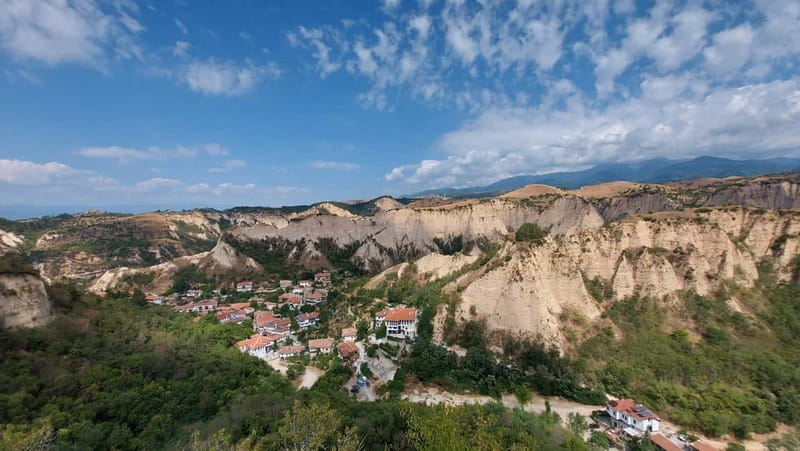
The price is listed as $100 per person for a 10-hour trip from Sofia to Rila Monastery and Melnik, with transfers in a comfort minivan, plus a licensed English-speaking guide, and hotel pickup and drop-off.
Here is the value math that matters:
- You are paying for transport time and logistics, plus guided time at two major stops.
- Small group size (limited to 7) usually means less waiting and more interaction.
- The guide helps you understand what you see, which is harder to replicate with a self-planned day trip.
Now for the extras you should budget:
- Rila monastery museum entrance fee is 8 levs (not included)
- Kordopulova house entrance fee is 5 levs (not included)
- Lunch and drinks are not included
If you budget those entry fees and plan for lunch in Melnik, the cost starts to feel more reasonable because the guided parts do real work. It is not just driving you out there. You are also getting explanations, and that is where this trip earns its keep.
One more way to judge value: the day is not only big sights, it is also pacing. Early arrival at Rila for easier viewing can be worth serious money in time saved and in how pleasant your experience feels.
Who This Tour Suits Best, and Who Should Skip It
This is a great fit if you:
- Want a one-day taste of both monastery culture and Bulgarian wine country
- Like the idea of a guide explaining frescos and historical context instead of leaving you on your own
- Prefer small-group travel with a limited number of people
You should be careful if you:
- Need wheelchair access. The tour is explicitly not suitable for wheelchair users.
- Have clothing limitations for religious sites. Rila has strict rules, including no shorts, short skirts, and no sleeveless shirts, plus shoulder coverage requirements.
If your group includes people who dress for comfort first, remind everyone before you leave Sofia. It is better to plan outfits in the hotel than to stand outside the monastery with the wrong shirt.
Should You Book This Rila Monastery and Melnik Trip?
Yes, if you want a meaningful day that covers two of Bulgaria’s most memorable themes: sacred heritage and regional wine culture, plus a nature stop that actually changes the pace.
Book it especially if you care about understanding what you are seeing. The guide focus on frescos and monastery history is one of the biggest reasons this trip gets strong satisfaction. And if you like practical value, the early arrival at Rila makes the monastery experience calmer and more photo-friendly.
Skip it or rethink if you cannot meet Rila’s clothing rules or you need wheelchair accessibility. In that case, you will likely lose more time than you gain.
FAQ
FAQ
How long is the Rila Monastery and Melnik day trip?
The duration is 10 hours.
Is this tour a small group?
Yes. It is limited to 7 participants.
What is included in the price?
The tour includes a licensed English-speaking guide, hotel pickup and drop-off, and transport with a comfort minivan.
Are entrance fees included for Rila Monastery and Kordopulova House?
No. Rila monastery museum entrance is 8 levs, and the Kordopulova house entrance fee is 5 levs. These are not included.
What clothing is allowed at Rila Monastery?
Shorts, short skirts, and sleeveless shirts are not allowed. You must cover your shoulders, and tank tops and short skirts are not permitted.
Is the tour wheelchair accessible?
No. It is not suitable for wheelchair users.
Added recently around Sofia
- Archaeological tour-From the Neolithic to Modern times in Augusta Trayana★ 5.0 · 1 review
- Sofia Full Day Tour★ 5.0 · 1 review
- PRIVATE adventure to Rila Lakes – GROUP price for 6★ 5.0 · 1 review
- 05.12.2026 Night of the Stars Show Ticket with Exclusive Access★ 5.0 · 1 review
- Melnik & Rozen Monastery Tour: Wine Tasting, History, Scenic Walk★ 5.0 · 1 review
- Small-group Weekend trip to Bulgaria’s most famous sites★ 5.0 · 1 review
- Exclusive Afternoon Wine & Appetizers with Local★ 5.0 · 1 review
Rila Monastery & Boyana Church, compared.
Must-See Rila Monastery & Boyana Church Day Tour
Read our review →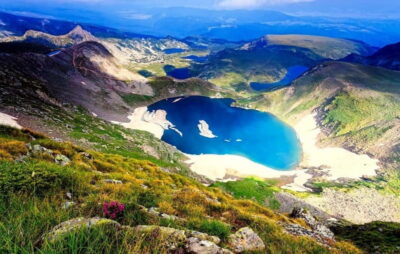
7 Rila Lakes and Rila Monastery Extended Trip
Read our review →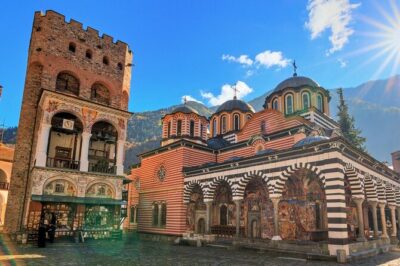
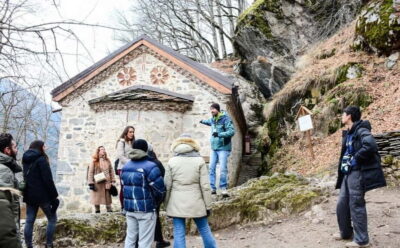
Rila Monastery & Optional St. Ivan Cave Day Tour
Read our review →
Browse the lists this tour appears in