
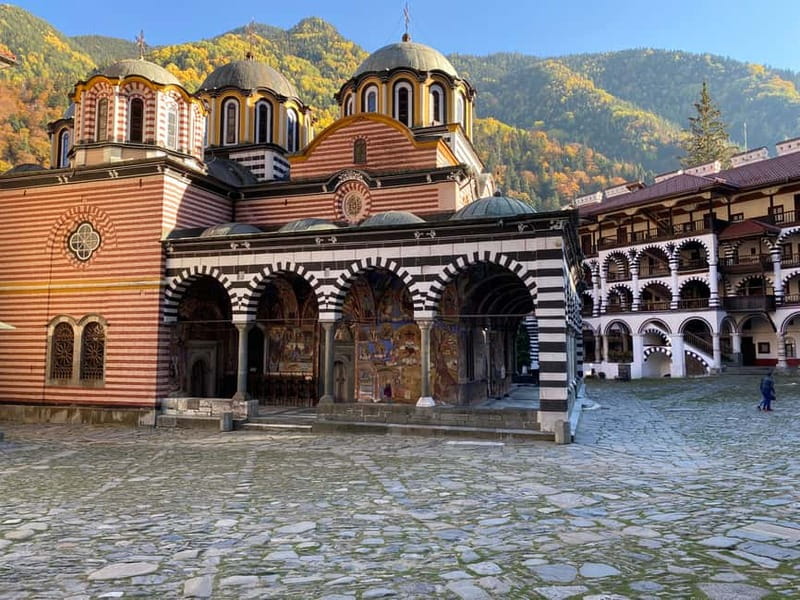
Review · RILA MONASTERY & BOYANA CHURCH
Rila Monastery: Complex Smartphone Audio Guide
The monastery plays like a self-guided app, and I love how this smartphone audio guide explains why Rila Monastery is on the UNESCO list, plus it gives you a plan for enjoying the local mekitsa. The route also brings you to the oldest 12th-century Bulgarian Orthodox shrine when you follow the numbered stops. One drawback to keep in mind is that the experience depends on your phone battery and connection, especially inside the temples.
What makes this worth your time is the freedom. You’re not stuck in a group shuffle. After you set up the audio on the right day, you can move at your own pace across the complex using a map and a simple “dial and press play” system for each segment. The total time lands around 1.5 hours, so it fits nicely into a day trip without swallowing your whole schedule.
Because it’s phone-based, you’ll want to arrive ready. You need a charged smartphone and internet access, and you’ll likely want headphones before you step into temple spaces. There are also clothing rules (no shorts, no short skirts, and no bare feet), and this tour is not suitable for wheelchair users.
In This Review
- Key highlights to know before you go
- Rila Monastery and the UNESCO why behind the quiet walls
- Price, time, and what $5 buys you in practice
- How the smartphone audio guide works, step by step
- Walking the 15 stops at your pace, what each phase is doing for you
- 1) Orientation and the “what am I seeing” moments
- 2) UNESCO relevance that changes how you look
- 3) The oldest shrine focus, the 12th-century heart of the story
- 4) Temple listening, where headphones and internet really matter
- 5) Finishing with a coherent route, not a wandering loop
- The drawback built into this style
- Mekitsa at the monastery, how to time a sweet break
- Rules that matter: shoes, bags, clothing, and getting around
- Languages and how to get the most out of the audio
- When this smartphone guide is a great fit, and when it is not
- Should you book this audio guide for Rila Monastery?
- FAQ
- How much does the Rila Monastery smartphone audio guide cost?
- How long does the visit take?
- What do I receive after booking?
- How do I access the audio files?
- Do I need internet and headphones?
- Is this tour suitable for wheelchair users?
Key highlights to know before you go
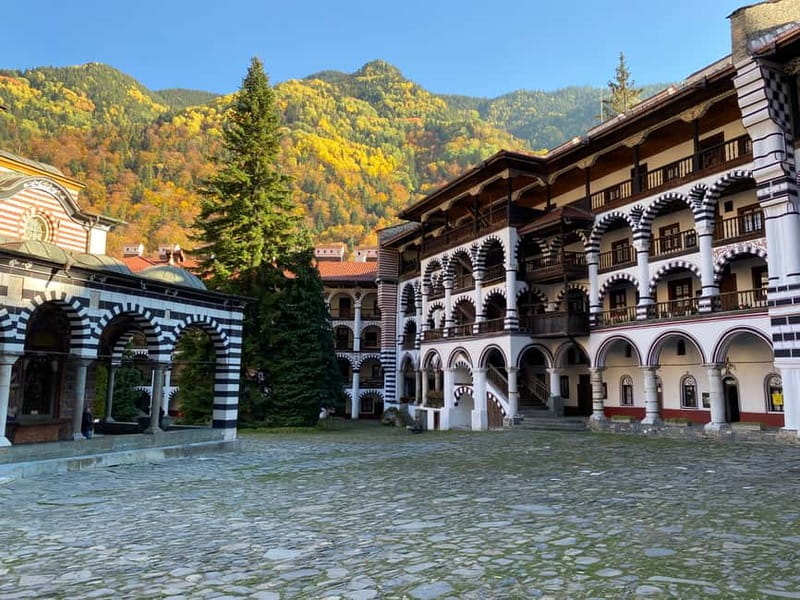
- UNESCO context you can actually use, with audio that explains why the monastery matters on the world stage
- A focus on the oldest 12th-century Bulgarian Orthodox shrine, so you know what you’re looking at
- 15 audio entries, triggered as you approach each key point on the route
- A territory map of the monastery, so you are not guessing where to go next
- Mekitsa included as a built-in pleasure, worth timing between audio stops
- Phone and internet required, especially for temple audio
Rila and Boyana, more ways to go:
- From Sofia: Rila Monastery & Boyana Church Day Tour★ 4.7 · 5,107 reviews
- From Sofia: Must-See Rila Monastery & Boyana Church Day Tour★ 4.6 · 3,322 reviews
- From Sofia: 7 Rila Lakes and Rila Monastery Extended Trip★ 4.7 · 1,189 reviews
- Rila Monastery and Boyana Church Full-Day Tour★ 4.5 · 918 reviews
Rila Monastery and the UNESCO why behind the quiet walls
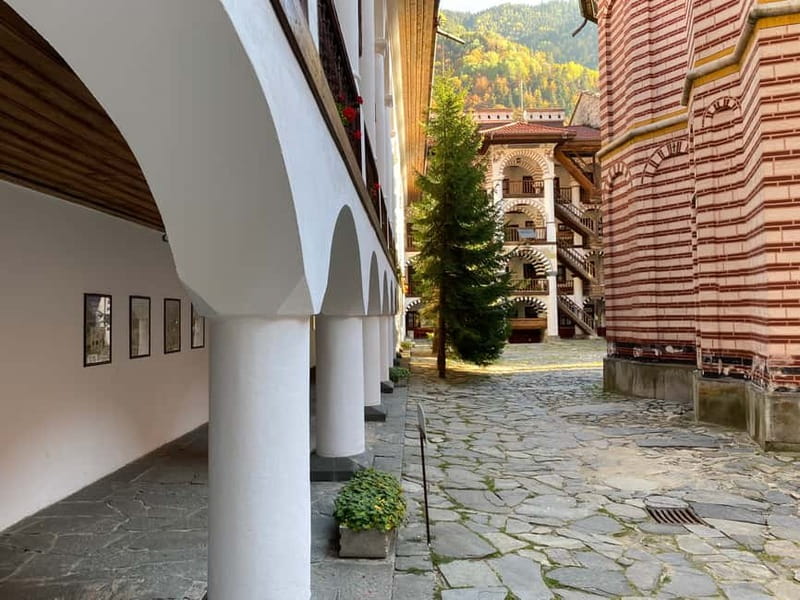
Rila Monastery is one of those places that draws people from all over Bulgaria and beyond. The big reason is not just its reputation, it is what the monastery represents and preserves. With this smartphone route, you get the UNESCO angle explained in a way that helps you connect the stones in front of you to the larger story behind the site.
One of the most useful parts of the audio is the segment that points you toward the most ancient shrine from the 12th century Bulgarian Orthodox Church. When you arrive, it is easy to see old buildings and think, oh, it is historic. This kind of audio narration makes the age and religious importance feel specific, so the site clicks into focus instead of staying vague.
I also like that the guide doesn’t treat UNESCO as a plaque you read once and forget. It is built into your walk. You approach, you listen, you look again. That is when context becomes real.
Price, time, and what $5 buys you in practice
At about $5 per person, this is unusually good value for a structured visit. You are paying for two things that solve real problems: clear guidance across a big complex and a map that keeps you oriented.
The visit is designed to take about 1 day, with the listening experience totaling around 1.5 hours across 15 audio entries. That matters because many monastery visits either drag (too much wandering) or feel rushed (too much teacher talk). Here, the route is short enough to keep your energy, but structured enough that you do not spend half your time figuring out the next stop.
You also get audio in 7 languages: English, French, Spanish, Italian, Russian, Bulgarian, and German. That is a big deal if you travel with someone whose language comfort varies. Even if only one person speaks well, you can swap devices and still keep the pace.
How the smartphone audio guide works, step by step
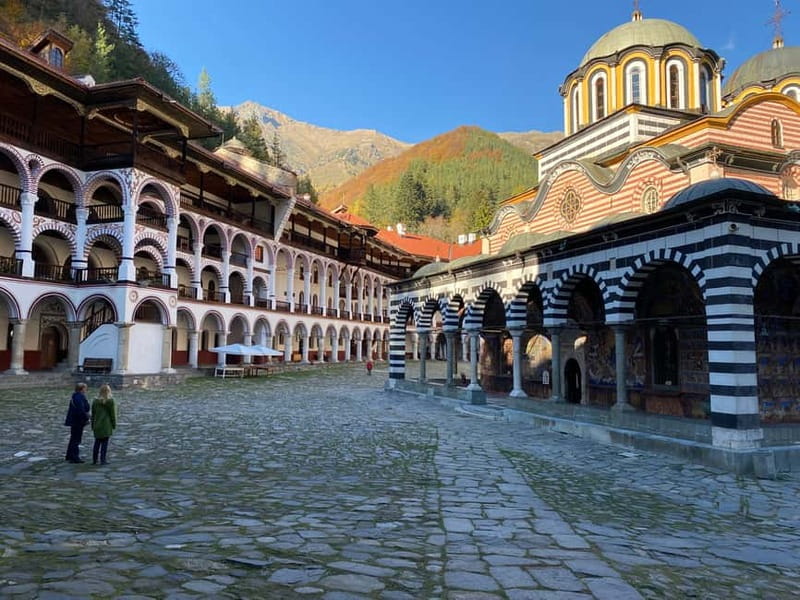
The format is simple, and that is a good thing. After you pay, you receive a link to access the audio files by email. On the day you choose, that link becomes active and stays valid for 24 hours.
On site, you use your phone to listen. You approach a stop, dial the number for that part, and the playback starts. It turns the visit into something more like a guided checklist than a free-for-all.
One practical note I recommend: use the device you intend to keep with you the entire time. If you plan to share, test the playback on your actual phone setup first at home. If your phone has limited storage or weak signal, handle that before you arrive.
Also, download readiness matters. The instructions stress that you need internet to listen through your phone, and that temple audio depends on it. So you should plan your entry times around having a stable connection and bringing your own headphones.
Walking the 15 stops at your pace, what each phase is doing for you
You are exploring the monastery complex on your own, but the audio makes it feel guided. Instead of one long lecture, it breaks the visit into 15 entries, each meant to match a specific moment as you move around.
Here is the practical way to think about the route, from beginning to end:
Routes to do unguided in Bulgaria:
- Sofia: City Monuments Guided Walking Tour with Audio Guide
★ 4.5 · 825 reviews - Rila Monastery and 7 Rila Lakes Self-Guided Shared Trip from Sofia
★ 5.0 · 280 reviews - Sofia: Rila Monastery & Boyana Church – Audio guided tour
★ 4.6 · 91 reviews
1) Orientation and the “what am I seeing” moments
Early in the walk, you use the audio to understand the site layout and what each area is for. This helps a lot because monastery complexes can look like a maze from the outside. When you have guidance that tells you what you are looking at before you move on, you waste less time.
2) UNESCO relevance that changes how you look
Then the guide shifts to the UNESCO reasoning. This is where you start connecting details to significance. Instead of treating the site as scenery, you begin to notice why certain parts matter and what they represent.
3) The oldest shrine focus, the 12th-century heart of the story
A key segment focuses on the most ancient shrine, dating to the 12th century Bulgarian Orthodox Church. When you reach that point, the audio gives you the religious and historical anchor. That reduces the odds that you will just take photos and move on without understanding what makes that shrine different from the rest.
4) Temple listening, where headphones and internet really matter
Inside temples, the instructions explicitly say you will need internet and headphones to listen to the recordings. So treat temple sections like your “listening zone.” Put your phone in a comfortable position, keep headphones ready, and avoid trying to solve tech problems mid-visit.
If you have poor reception, you might have to pause your listening and finish the rest of the route later. That is not a failure of the guide, it is how phone-based audio works in real-world conditions.
5) Finishing with a coherent route, not a wandering loop
Near the end, the remaining entries help you wrap up your understanding of the complex and keep you moving toward your exit. The big advantage is that it is not endless. You stay within a manageable loop that adds up to about 1.5 hours.
The drawback built into this style
The downside of an on-your-own route is that you must keep track of where you are. If you drift off the route or stop too long in one area, it can take time to catch up with the next audio entry number.
Mekitsa at the monastery, how to time a sweet break
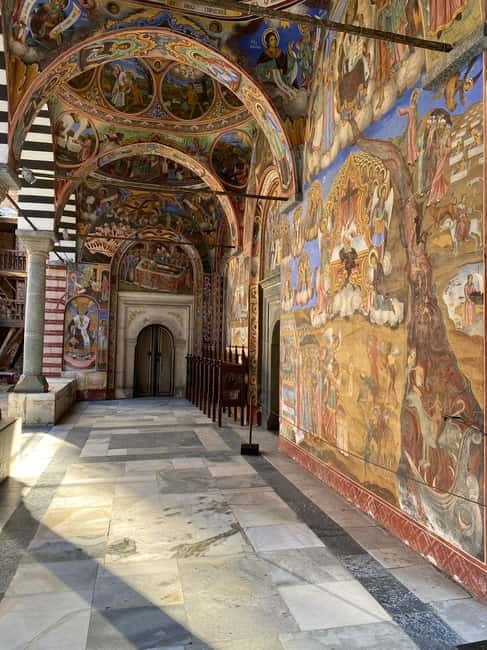
One of the highlights is the included recommendation to enjoy mekitsa, those Bulgarian donut-like treats. You do not need a complicated plan here. The best approach is to use mekitsa as your reward between audio phases.
Because the guide runs about 1.5 hours total, you should aim for a short break midway, so you recharge without losing your place. If you wait until the end, you might feel like you are eating while thinking about the exit, rather than enjoying the moment.
The mekitsa mention also signals something practical: the monastery visit is not only spiritual and architectural. It is a living place where visitors pick up snacks, slow down, and soak in the atmosphere with simple food.
Rules that matter: shoes, bags, clothing, and getting around
This experience comes with clear site rules. They are not optional, because they affect whether you can enter and how comfortable your walk will be.
Plan for the following:
- Avoid high-heeled shoes
- No pets
- No shorts
- No short skirts
- No bare feet
- Avoid luggage or large bags
- This tour is not suitable for wheelchair users
If you’re visiting in warm weather, it is easy to underestimate how strict clothing rules can feel. Wear something respectful and comfortable for walking. If you’re bringing a small daypack, make it easy to manage, since large bags are not allowed.
Also, keep your phone accessible. Since the tour is triggered by approaching numbered points, you do not want to spend time fishing your phone out from deep inside luggage.
Languages and how to get the most out of the audio
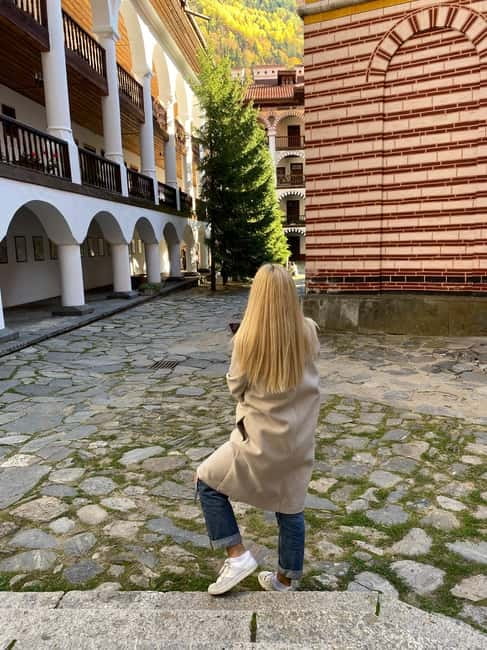
The audio guide includes English, French, Spanish, Italian, Russian, Bulgarian, and German. That broad set of languages is useful because Rila Monastery is so international. If your group includes mixed language comfort, this format can keep everyone together instead of splitting up.
Here is how I would use the language options to your advantage:
- Choose the language you understand best for the UNESCO and shrine parts, since those sections benefit from clear wording.
- If you’re a slower listener, consider sticking to one language on one device rather than switching mid-route.
If you have to pause, the audio setup is designed around a 24-hour active window. So you can take a breather, step outside, and resume later the same day without re-purchasing.
When this smartphone guide is a great fit, and when it is not
This is a strong choice if you like self-guided travel with structure. You get a route, you get meaningful audio, and you can stop whenever you want. It is also a good fit if you prefer not to compete for attention with a loud group, especially inside a sacred space.
It might feel frustrating if:
- You hate relying on internet while you walk.
- Your phone battery life is weak.
- You expect a human guide to handle questions on the spot.
- You need wheelchair access, since it is not suitable.
Also, keep in mind the simple mechanical nature of the system. The audio starts when you dial a number as you approach each stop. That means you need a calm, steady pace. If you rush and skip places, the route may not match your timing.
Should you book this audio guide for Rila Monastery?
If you want a budget-friendly, self-paced plan that still gives you real context about UNESCO and the 12th-century shrine, this is worth booking. The map and 15 entries do the heavy lifting, and the mekitsa idea gives you a natural break so the visit stays enjoyable.
I would book it when:
- You travel with headphones and have a reliable phone setup.
- You want a guided feel without a guided group.
- You like understanding what you are looking at, especially the UNESCO and oldest-shrine segments.
Skip it or think twice if:
- You cannot rely on internet for temple spaces.
- You do not want to manage app-like playback while walking.
- Your needs require wheelchair access, since this tour is not suitable.
FAQ
How much does the Rila Monastery smartphone audio guide cost?
It costs $5 per person.
How long does the visit take?
The total audio experience is about 1.5 hours, offered as a 1-day activity.
What do I receive after booking?
You get access to a smartphone audio guide in 7 languages and a map of the monastery territory.
How do I access the audio files?
After paying, you receive a link to access the audio files by email. On the chosen day, the link becomes active and stays valid for 24 hours.
Do I need internet and headphones?
Yes. The instructions say you need internet and headphones to listen to recordings in temples.
Is this tour suitable for wheelchair users?
No. It is not suitable for wheelchair users.
Guided by Headphones in Bulgaria



Added recently around Bulgaria
- Architectural Open Air Museum – Etara and Veliko Tarnovo★ 5.0 · 1 review
- Private One-way Transfer Varna Airport to Hotel or vice versa★ 5.0 · 1 review
- Private Transfer from Varna (VAR) Airport to Albena★ 5.0 · 1 review
- Stone Forest and Aladzha Monastery Experience★ 5.0 · 1 review
- Private Quad around Borovets★ 5.0 · 1 review
- Ski & snowboard private lessons in Borovets★ 3.0 · 1 review
- Half-Day Hiking with Private Mountain Guide in the Seven Rila Lakes★ 5.0 · 1 review
Rila Monastery & Boyana Church, compared.
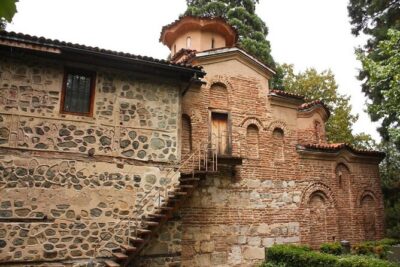
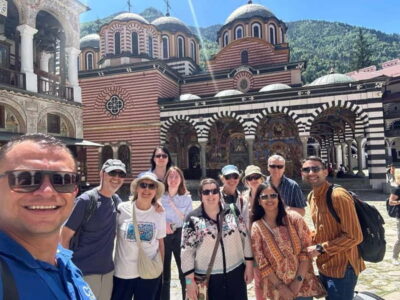
Must-See Rila Monastery & Boyana Church Day Tour
Read our review →
7 Rila Lakes and Rila Monastery Extended Trip
Read our review →

Rila Monastery & Optional St. Ivan Cave Day Tour
Read our review →
Browse the lists this tour appears in