
Review · SELF-GUIDED TOURS
Sofia Self Guided Audio Experience
Sofia is the kind of city where one block can feel like time travel. This self-guided audio experience lets you pick your pace, then follow a story trail through landmarks like the 4th-century Rotunda and the huge St. Alexander Nevki Cathedral. I especially like the flexibility to pause, resume, and stretch the day, and the fact that most stops are free to enter, so your money goes to the audio, not ticket piles. The main catch is you need your own smartphone setup, because earphones and internet access are on you.
You get a mobile ticket and private links that unlock everything: one playlist for all 16 attractions, plus a map where each pin jumps to the matching audio. A single, short stop time is built into the flow, about 20 minutes per location, but you are not locked into a group schedule. My only other note is practical: pick your audio language carefully, since the language option can’t be changed after confirmation.
In This Review
- Key highlights I’d plan around
- How the Sofia self-guided audio actually works
- Starting in Sofia’s modern core: station and market
- Central Railway Station
- Central Market Hall of Sofia
- Ottoman-era worship and an underground church you can’t forget
- Banya Bashi Mosque
- Church of St Petka of the Saddlers
- Sofia’s spiritual blend: multiple denominations, one walking day
- Catholic Cathedral of St Joseph
- Saint Nedelya Orthodox Cathedral
- Saint Sofia Church
- Saint Sofia’s towering soundscape: St. Alexander Nevski Cathedral
- Roman Sofia without the textbook feel
- The Rotunda Church of St George
- Amphitheatre of Serdica
- Russian connections and another church with a complicated start
- Saint Nikolas Russian Church
- Sveti Sedmochislenitsi Church
- A bronze reset, then stroll into pedestrian Sofia
- Monument to the Deity All-Holy Sofia
- Vitosha Boulevard
- NDK and Borisova Gradina: communist-era scale meets breathing room
- National Palace of Culture (NDK)
- Borisova Gradina Park
- Price and value: $9 for audio, with most entries free
- Who this self-guided audio route suits best
- Quick checklist before you go
- Should you book the Sofia Self Guided Audio Experience?
- FAQ
- How do I get the audio for the Sofia self-guided experience?
- What equipment do I need to use this tour?
- Is the audio offered as a playlist or only one stop at a time?
- What admissions are included for the stops?
- Can I choose where to start and finish?
- Can I change the audio guide language after I book?
Key highlights I’d plan around
- Stop where you want, spend more or less time at each place, and keep your day stress-free
- SoundCloud audio plus a linked Google map so navigation and listening stay in sync
- 16 major Sofia landmarks, including Roman-era sites, Ottoman-era worship, and 20th-century architecture
- Value focus: $9 for the audio experience, with most admissions listed as free
- One included admission at St. Alexander Nevski Cathedral, rather than paying out of pocket at the hardest stop
Routes to do unguided in Sofia:
- Sofia: City Monuments Guided Walking Tour with Audio Guide★ 4.5 · 825 reviews
- Rila Monastery and 7 Rila Lakes Self-Guided Shared Trip from Sofia★ 5.0 · 280 reviews
- Sofia: Rila Monastery & Boyana Church – Audio guided tour★ 4.6 · 91 reviews
- From Sofia: Plovdiv with audio guide + free pick-up★ 4.9 · 48 reviews
How the Sofia self-guided audio actually works
This isn’t a bus tour with a guide herding you from place to place. It’s a private, self-guided experience built around two links you receive by email for your chosen travel date. One link is for the audio, and the other is an interactive Google My Maps map with points for all 16 attractions.
You access the audio through a secure SoundCloud web link. At each stop, you can either play the full playlist to keep your flow going, or tap the specific stop from the map and press play right there. The audio links are valid until your tour is complete, with a maximum validity window of 6 days, which is helpful if you want to split the day into two shorter outings.
Your “tour kit” is simple. Bring a fully charged smartphone, internet access, and headphones or earphones. If your phone battery runs low or you lose signal, you’ll feel it, because the audio is delivered through web links rather than a preloaded device.
That flexibility is the real selling point. The experience is designed so you can stop and resume whenever you want, which is exactly how you should explore a city like Sofia, where you may want to linger for photos, a quiet moment inside a church, or a longer look at ruins.
Starting in Sofia’s modern core: station and market
Central Railway Station
Start with the Central Railway Station, Bulgaria’s grand transportation gateway. It was built in 1888 and later renovated, which gives you a clear marker for Sofia’s modernization push in the early 20th century. I like using the station as your first stop, because it orients you to the city’s “I arrived here to go somewhere” energy before you jump into older layers.
Practical note: this is a working public place, so you may want to keep your listening volume low and step to the side if crowds are moving through. The stop guide keeps the audio segment short, around 20 minutes, which is good for an active location like this.
Central Market Hall of Sofia
Next, head to the Central Market Hall, built in 1911 and still functioning as a commercial hub. The big idea here is that you’re not seeing Sofia like a museum city. You’re watching trade habits continue inside a historic container, which changes how you understand daily life in the capital.
The drawback here is that market areas can be harder to hear in if it’s busy, so bring comfortable earphones. Also, since this stop is free, it’s easy to treat it as a short listen first, then stay longer if you like the vibe.
Guided by headphones in Sofia:
- Audio Guide for Museum Paleontology and Historical Geology
★ 4.1 · 3 reviews - Sofia Audio guide Tour offers available in 7 languages
★ 3.5 · 3 reviews - Hidden Sofia: A Self-Guided Audio Tour
★ 5.0 · 1 review
Ottoman-era worship and an underground church you can’t forget
Banya Bashi Mosque
At Banya Bashi Mosque, you get Sofia’s only functioning mosque, and the story lands in the 16th century. It’s described as a masterpiece designed by Mimar Sinan, which is a great anchor if you like connecting architecture to named historical figures.
This is also the kind of stop where pacing matters. If you rush, you’ll miss the feeling of a working place of worship. Plan for a calm 20-minute audio segment, then spend extra time only if it feels respectful and open to you.
Church of St Petka of the Saddlers
Then comes one of the most dramatic “wait, Sofia has this?” stops, the subterranean Church of St Petka of the Saddlers. Dating back to the 11th century, it sits underground beneath the modern city surface, which turns the audio into more than background noise. It helps you understand why going below street level changes the whole mood of the visit.
Since you’re descending and moving through a site that likely feels more enclosed, it’s a good place to use headphones at a comfortable volume. You’ll want to hear the story clearly, because the visual cues are different when you’re below ground.
Sofia’s spiritual blend: multiple denominations, one walking day
Sofia does religion differently than many European cities. In one day on this route, you can hear stories that link Islamic, Orthodox, Catholic, and Russian ecclesiastical traditions to the city’s changing politics.
Catholic Cathedral of St Joseph
The Catholic Cathedral of St Joseph is your next major worship stop, described as a Neo-Gothic landmark built in the early 20th century. If you tend to focus only on Orthodox icons and domes, this is a smart counterweight, because it broadens what you think Sofia’s “big churches” can look like.
Since admission is listed as free, the main decision is time. If you want photos, add a few minutes. If you just want to listen and absorb, the audio’s paced for that.
Saint Nedelya Orthodox Cathedral
Now switch to the Orthodox tradition at Saint Nedelya Orthodox Cathedral. The current structure is described as completed in 1933, replacing an earlier church (the specific earlier building details aren’t fully spelled out in the tour info). Even without extra detail, the renovation-and-rebuild angle is the key theme, because it shows how Sofia’s religious architecture adapts over time.
Again, a 20-minute audio slot works well here, since cathedrals naturally slow you down. If there’s a service happening, you’ll likely want to keep your visit respectful and quiet.
Saint Sofia Church
Saint Sofia Church is one of the most important older points on the route. The guide describes it as a 6th-century basilica built on earlier ruins, and it’s tied directly to why Sofia gets its name. This stop is for you if you like origin stories, because it frames the city’s identity as something built layer by layer.
One consideration: because it’s an older church, the lighting and interior space can be different from the bigger cathedral stops. Plan for shorter listening bursts if you feel yourself getting distracted by visuals.
Saint Sofia’s towering soundscape: St. Alexander Nevski Cathedral
If you want one stop that many people recognize instantly from photos, this is it. St. Alexander Nevski Cathedral is described as the Balkans’ largest Orthodox cathedral, built between 1882 and 1912, with a neo-Byzantine look and a major role as Bulgaria’s most important religious monument.
This is the one site where the admission ticket is included, according to the tour details. That matters because it reduces the chance of you accidentally spending money right at the most famous church on your walk.
For your planning, think of this cathedral as your emotional anchor. Even if you only listen to the audio segment and don’t linger, you’ll leave with a stronger sense of why Sofia’s skyline has a dominant religious landmark. If you do linger, do it after the audio, so you can switch from story mode to observation mode.
Roman Sofia without the textbook feel
The Rotunda Church of St George
Next, you jump way back with the Rotunda Church of St George. It’s described as a 4th-century Roman rotunda, sacred for over 1,600 years. The best part of this stop is the continuity theme: it started as Roman architecture, then stayed sacred across empires.
You’ll likely enjoy the Rotunda most if you like compact sites where the scale is small but the timeline is huge. The audio being short helps you get the story fast, then look around with fresh eyes.
Amphitheatre of Serdica
Then comes the Amphitheatre of Serdica, the ancient entertainment complex tied to Roman civic life. The tour description focuses on gladiatorial contests and theatrical performances nearly 2,000 years ago. Even if ruins can look “just stones” at first glance, a good narration thread helps you picture the noise, crowds, and spectacle.
If you’re sensitive to weather, this is also a place to think about timing. Ruins can mean more open exposure. The route gives you only about 20 minutes of audio, so you can keep it flexible, then move on when you’ve got your fill.
Russian connections and another church with a complicated start
Saint Nikolas Russian Church
Saint Nikolas Russian Church is described as Sofia’s most photographed Orthodox church, with Russian ecclesiastical architecture. It’s built in 1914 to serve the Russia community in Sofia (the tour info cuts off, but that’s the connection it points to). Even if you’re not chasing the perfect photo, this stop works because the audio frames it as a symbol of Slavic brotherhood and artistic effort.
A small practical note: this church often draws attention, so use your time wisely. Listen first, then decide if you want to stay for pictures.
Sveti Sedmochislenitsi Church
Sveti Sedmochislenitsi Church is a story-driven stop. The guide describes it as a 19th-century building that began life as the city’s central mosque before transforming into an Orthodox cathedral. That kind of change in religious function is exactly why audio narration is useful here, because the visible cues may not tell the full story quickly.
The audio segment keeps things focused, so you should be able to fit it into a tight walking day without feeling like you skipped the details.
A bronze reset, then stroll into pedestrian Sofia
Monument to the Deity All-Holy Sofia
This stop is a modern statement in the middle of older layers. The Monument to the Deity All-Holy Sofia is described as a 24-meter bronze statue, erected in 2001. The tour info frames it as a replacement for a communist-era monument, which is a useful reminder that Sofia’s public art is tied to politics, not just aesthetics.
If you like meaning behind big outdoor landmarks, this stop is worth your time. If you prefer only old buildings, you can still do the 20-minute audio and treat it as a “modern context” check.
Vitosha Boulevard
Next is Vitosha Boulevard, Sofia’s premier pedestrian thoroughfare. It’s described as capturing the city’s evolution from communist isolation to European integration, running from the city center toward the higher areas of the city (the end point isn’t specified in the tour details).
This is a great “walk and listen” segment, especially if you want to let the audio guide you through transitions. The only caution is simply noise. A main pedestrian road can be lively, and earphones are your best tool for keeping the story clear.
NDK and Borisova Gradina: communist-era scale meets breathing room
National Palace of Culture (NDK)
The National Palace of Culture (NDK) is described as Sofia’s most ambitious architectural project, a massive cultural complex tied to communist-era aspirations. It’s still used as a premier arts and entertainment venue, which gives this stop real present-day relevance rather than being “just an old building.”
This is one of those stops where the audio can change how you see the structure. Without context, NDK might feel like big concrete. With context, it becomes a map of ideology, ambition, and city planning.
Borisova Gradina Park
Finish with Borisova Gradina Park, Sofia’s central park described as a green refuge for residents for over a century. It was created in the 1880s and named after Tsar Boris III. If your feet are getting tired, park time is how you earn a calmer ending.
Plan to enjoy this stop without rushing the audio. Even though the audio segment is about 20 minutes, you may want extra time just to decompress, especially if you’ve done multiple church and ruin stops earlier.
Price and value: $9 for audio, with most entries free
At $9 per person, this experience is unusually low-cost for what you get, mainly because the attraction list is mostly free. The tour info says most of the stops are free to visit, and it also notes admission is included at St. Alexander Nevski Cathedral.
So you’re not paying for a packaged set of museum tickets. You’re paying for a themed storytelling route plus a map that links you to each location. For many people, that means you can spend your money on one or two meals or a transit pass and still cover a lot of landmark time.
The one money watch item is the note about extra fees. Even when the core sights are free, you may need to purchase tickets if there are special sections with fees or if additional services are newly implemented. It’s not a deal-breaker, just something to keep in mind.
Who this self-guided audio route suits best
This tour fits best if you like control. You want to choose your order, linger when something grabs you, and skip when you’re not feeling it. The design supports splitting the experience across multiple days too, which is handy when Sofia’s walking can add up.
It also fits travelers who don’t want to coordinate with a group. In a city with multiple religious sites, different architecture styles, and ruins that can feel quiet and personal, self-guided audio often feels more natural than a scripted group schedule.
If you hate smartphone dependency, or you don’t like relying on internet while walking, this one will feel less comfortable. The tour is built around web-based audio links, plus your own headphones.
Quick checklist before you go
- Fully charged smartphone
- Headphones or earphones
- Internet access for SoundCloud and the linked map
- Pick your audio language during booking, since it can’t be changed after confirmation
- Expect 16 stops, roughly 20 minutes each, with a total duration of about 3 to 9 hours depending on your pace
Should you book the Sofia Self Guided Audio Experience?
I’d book it if you want Sofia landmarks without the pressure of a fixed tour group. The audio-map combo is made for independent pacing, and the value is strong at $9 since most stops are free to visit and one major cathedral admission is included.
Skip it or think twice if you prefer offline audio and hate relying on your phone for content. Also, if you want a very hands-on experience with a person answering questions in real time, this is not that kind of tour.
If your goal is to connect the dots across Roman ruins, Orthodox cathedrals, and modern Sofia planning, this route gives you a story thread you can control, not a schedule that controls you.
FAQ
How do I get the audio for the Sofia self-guided experience?
After booking, you receive two email links for your selected date. One link opens the audio guides through a secure SoundCloud web link, and the other is an interactive Google My Maps itinerary where each point links to its corresponding audio.
What equipment do I need to use this tour?
You need your own headphones or earphones, a fully charged smartphone, and internet access to use the SoundCloud audio and the map.
Is the audio offered as a playlist or only one stop at a time?
Both. You can access one playlist for all 16 attractions, and you can also play individual attraction guides directly from the interactive map pins.
What admissions are included for the stops?
The tour lists admission as free for the attractions, and it specifically notes admission fee included for St. Alexander Nevski Cathedral. The info also says you may need your own tickets if any attraction charges for special sections or added services.
Can I choose where to start and finish?
Yes. Since it is self-guided, you can choose where to start and finish according to your preference, and the start and end are listed as Sofia, Bulgaria.
Can I change the audio guide language after I book?
Language selection cannot be changed after confirmation. If your language isn’t available, you need to contact the provider at least 48 hours in advance so they can prepare it specially.
Added recently around Sofia
- Archaeological tour-From the Neolithic to Modern times in Augusta Trayana★ 5.0 · 1 review
- Sofia Full Day Tour★ 5.0 · 1 review
- PRIVATE adventure to Rila Lakes – GROUP price for 6★ 5.0 · 1 review
- 05.12.2026 Night of the Stars Show Ticket with Exclusive Access★ 5.0 · 1 review
- Melnik & Rozen Monastery Tour: Wine Tasting, History, Scenic Walk★ 5.0 · 1 review
- Small-group Weekend trip to Bulgaria’s most famous sites★ 5.0 · 1 review
- Exclusive Afternoon Wine & Appetizers with Local★ 5.0 · 1 review
Self-Guided Tours, compared.
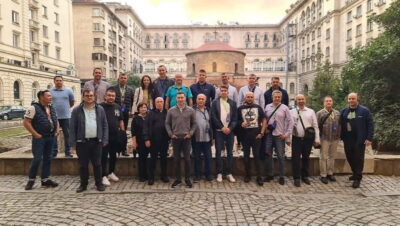
City Monuments Guided Walking Tour with Audio Guide
Read our review →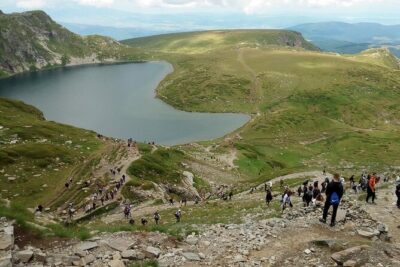
Rila Monastery and 7 Rila Lakes Self-Guided Shared Trip from Sofia
Read our review →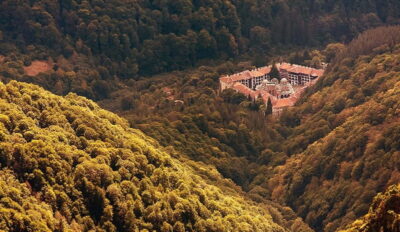
Rila Monastery & Boyana Church – Audio guided tour
Read our review →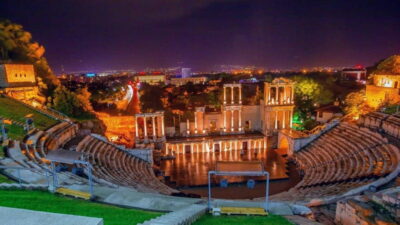
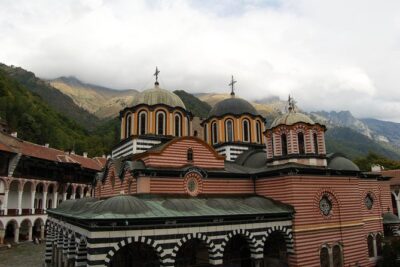
Rila Monastery and Boyana Church Self-Guided Day Trip from Sofia
Read our review →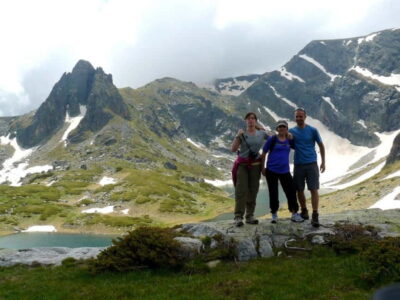
Browse the lists this tour appears in