Review · TOURS
Skip the Line: Medieval Tuida Fortress tours
Tuida Fortress in Sliven feels like a layered history lesson. You walk among Roman-era walls and later Bulgarian rebuilds, then you hit the standout Early Christian complex, including a baptistery with murals and mosaics. It is a 1-day stop that mixes real archaeology with hands-on fun when you book the activity options.
I especially love two things: the way Tuida’s story jumps across multiple eras, from Roman Emperor Anastasius I to the First Bulgarian Empire, and the fact that the tour is built for practical touring, with a mobile ticket and an e-guide even beyond the guided option. The optional archery and medieval dresses also turn the ruins from just looking at stones into doing something within the theme of the place.
One possible drawback: if you expect a dramatic fortress from the outside, you may feel a little underwhelmed before you get inside and get context. Without choosing the guiding option, some signage can be hard to read, and walking around the ruins may feel less clear.
In This Review
- Key things you will notice at Tuida Fortress
- Where Tuida Fortress fits in your Sliven day
- Price and what makes it feel like value
- Entering Tuida: what the ruins are actually showing you
- Stop 1: Medieval Tuida Fortress, from Roman walls to Bulgarian marble
- Fortress walls, towers, and gates
- Marble pedestals and the name Tuida, or Suida
- The cult complex and the Early Christian basilica
- Optional archery and medieval dresses: fun, but also thematic
- The role of guiding and the included e-guide
- What to expect from your timing and logistics
- Who this Tuida Fortress tour is best for
- Should you book the skip-the-line Tuida Fortress tour?
- FAQ
- Is the Tuida Fortress tour offered in English?
- How much does the tour cost?
- What is included, and what should I budget for separately?
- How long is the experience?
- Are archery and medieval dresses part of the tour?
- What is the group size limit?
- Can I cancel and get a full refund?
Key things you will notice at Tuida Fortress
- Skip-the-line plus a mobile ticket helps you spend more time in the site, less time sorting tickets.
- Two activity add-ons can be booked: archery and medieval dress-up.
- Roman and Bulgarian layers sit side-by-side, from Anastasius I rebuilding to Bulgarian repairs and marble slabs from Veliki Preslav.
- Early Christian highlights include a basilica complex and a unique baptistery decorated with murals and mosaics.
- Archaeology details you can spot include inscriptions mentioning Tuida or Suida, plus dedications to Apollo and Zeus.
Skip-the-queue tickets in Bulgaria:
- Skip the line Christmas Market tour★ 4.0 · 1 review
Where Tuida Fortress fits in your Sliven day
Tuida Fortress is just outside the Bulgarian city of Sliven, and it is an excellent choice when you want more than a quick look at one monument. You get a concentrated, single-site experience that is easy to plan into a day trip format, especially if you are already exploring Sliven’s cultural sites.
The tour is priced at $8.16 per person, with English offered. It is also capped at up to 50 people, which matters. Smaller groups tend to make it easier to follow a guide’s pacing, ask questions, and actually see what you came for.
If you are traveling with kids or you want something more active than a walking tour, the optional archery and medieval dresses can help. If you prefer a slower pace, the included e-guide supports self-paced exploring alongside the site visit.
Price and what makes it feel like value
At $8.16, the big value is not that this is a big-ticket “all day everything” tour. It is the mix of practical access and interpretive help for a place that can otherwise feel like “walls in nature.”
Here is what you get in the package:
- An e-guide
- Taking photos included
- Guiding if you book that option
- Archery and medieval dresses if you book those options
What is not included:
- Food and drinks
- Personal expenses
That structure is honest. You are paying for interpretation and themed activities, not for a meal plan. So if you show up ready to walk and you bring snacks or plan a meal later, you will keep the day smooth and low-stress.
Entering Tuida: what the ruins are actually showing you
Tuida has a long, interrupted life. That matters because it explains why the site feels like more than one set of ruins.
The story starts with a fortress that survived the invasions of the Goths in 378 AD, only to be destroyed later during the invasions of the Huns in the 5th century AD. It was rebuilt during the reign of Roman Emperor Anastasius I (491 to 518 AD). Then the fortress was ultimately destroyed around 598 to 599 AD, likely during an invasion of Avars and Slavs.
You can think of Tuida as a palimpsest. New powers did not just move in. They rebuilt, repaired, and reused key structures, including fortress walls and an aqueduct. In other words, you are not only looking at a “dead monument.” You are seeing how people adapted the same ground for centuries.
When the First Bulgarian Empire expanded into the Zagore region around 705 AD, a Bulgarian settlement rose where Tuida once stood. A lead seal tied to Knyaz Boris I Mihail (852 to 889 AD) was found there. That is a clue that the site stayed important well beyond the Roman period.
Stop 1: Medieval Tuida Fortress, from Roman walls to Bulgarian marble
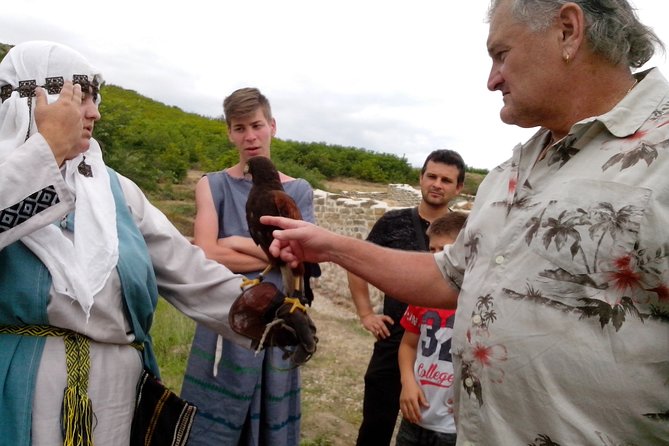
This entire experience centers on the Medieval Tuida Fortress site. The best way to enjoy it is to walk in layers: keep your eyes open for the physical structure, then match it to the time periods you are hearing about.
A different sort of day from the same city:
- From Sofia: Rila Monastery & Boyana Church Day Tour
★ 4.7 · 5,107 reviews - From Sofia: Must-See Rila Monastery & Boyana Church Day Tour
★ 4.6 · 3,322 reviews - From Sofia: Guided Day Tour of Plovdiv’s Must-See Sights
★ 4.6 · 1,688 reviews
Fortress walls, towers, and gates
You will see the fortress walls, towers, and gates, along with remains of buildings. The site covers about 40 decares (around 10 acres), which is big enough that you can explore without feeling cramped, but you still need good shoes and a bit of stamina.
If you have a guide, this is where the explanations pay off. The stones look similar until you know what to look for: where the fortification line likely sat, how the later repairs changed what you see, and why certain spaces mattered.
Marble pedestals and the name Tuida, or Suida
One of the most interesting details is the presence of marble pedestals dedicated to gods Apollo and Zeus, and they include the name of the fortress as Tuida or Suida (also known in written sources as Tsoida). That sort of detail is gold because it links the archaeology to the written record. Even if you do not catch every inscription word-for-word, it gives you a strong sense of continuity.
The cult complex and the Early Christian basilica
This is the part that tends to impress. Archaeology revealed a cult complex used between the 4th and the 13th century, centered on a three-nave one-apse Early Christian basilica.
Inside that wider story is a unique baptistery decorated with murals and mosaics. If you like religious art, this is where you can slow down and actually look. The building is not just an empty ruin, it is an artistic space that survived long enough to leave clear traces.
There is also evidence of a larger basilica outside the fortress walls, which suggests the settlement was not confined only to the fortified area. You can picture a community that extended beyond the walls, with the fortress acting as a focal point rather than the only center of life.
Optional archery and medieval dresses: fun, but also thematic
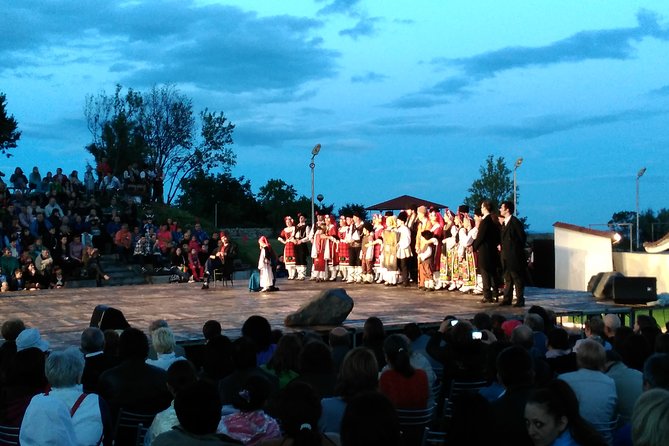
This is one of the most practical reasons to book the add-ons, especially if you are visiting with family or you just want a change from steady walking.
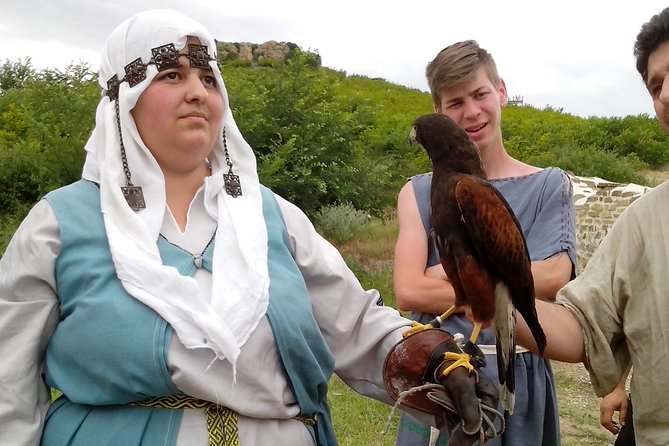
When the archery and medieval dress option is booked, you get themed activities connected to the story of the fortress. The dress-up piece also helps you shift perspective. Instead of thinking of medieval life as distant, you start imagining how people moved, dressed, and celebrated in a place like Tuida.
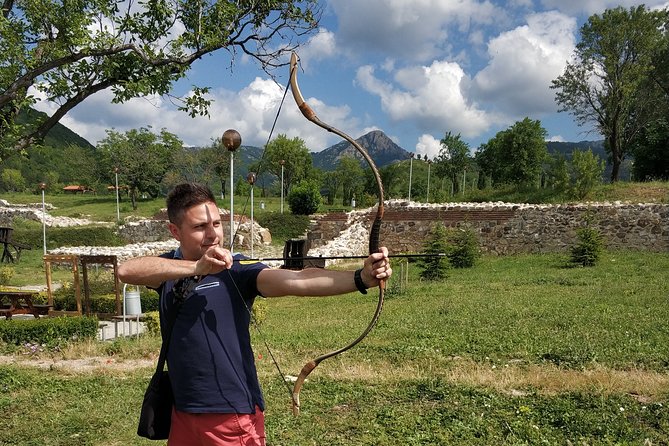
Archery can be a great choice if you want a physical activity on your Bulgaria trip that is still culturally grounded. The key here is that it is optional. You can match your day to your energy and your interests.
The role of guiding and the included e-guide

Tuida can be a lot easier with context. The site contains multiple layers, and some details are small. That is why I like the way this experience offers both guiding (when you choose that option) and an e-guide as support.
Guiding tends to help you:
- Connect what you see to the eras, like Roman rebuilding under Anastasius I and later Bulgarian modifications.
- Spot the meaningful items, such as the dedications to Apollo and Zeus or the baptistery design.
- Follow the “why” behind the excavations, including what resumed in 2004 after earlier work began in 1982.
Even if you skip the guided option, the e-guide helps you keep moving with purpose. You are not stuck trying to guess what you are looking at.
One word on photos: photo taking is included, so you can take your time with angles inside the fortress area and around the best views.
What to expect from your timing and logistics
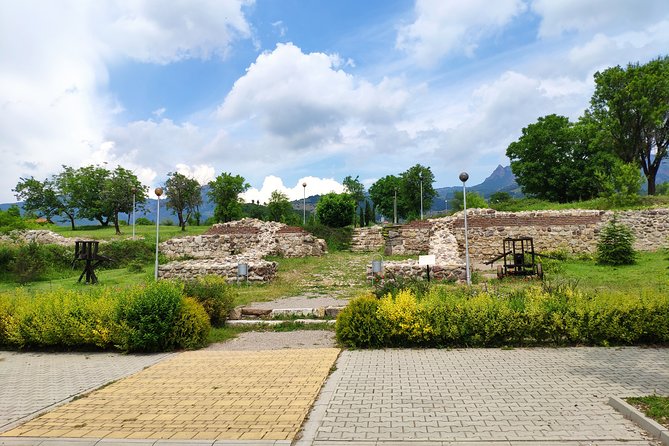
This is listed as a 1-day experience (approx.). In practice, plan for a focused visit rather than a “see everything in Sliven” day. The value is in staying with one site long enough to absorb the layers.
A few practical tips based on how these sites usually feel:
- Wear comfortable shoes. The site is ruin-based and uneven, and you may do more walking than you expect.
- Bring a small water plan. Food and drinks are not included, so you will want to handle snacks on your schedule.
- If you care about smooth entry, use the mobile ticket. It is designed to reduce friction at the start.
Because the maximum group size is 50, the pacing should still feel organized, not chaotic.
Who this Tuida Fortress tour is best for
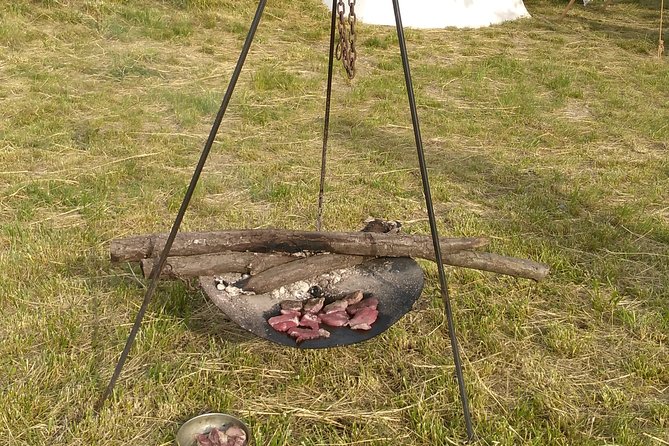
This experience works well if you like:
- Historical places that show layers of occupation, not just one “snapshot” era
- Religious architecture and the art inside the baptistery and basilica complex
- Families who want learning plus a bit of play with archery and medieval dress-up
It may feel less ideal if you:
- Want a very polished museum-style setting
- Expect a fully intact castle experience from start to finish
- Prefer a day built around multiple stops, since this tour centers on Tuida Fortress as the main focus
If you are on the fence, choose the guiding option. Tuida rewards attention, and context turns “some walls” into an organized story with a beginning, middle, and multiple endings.
Should you book the skip-the-line Tuida Fortress tour?
I would book it if you are in Sliven and you want a meaningful cultural stop that still feels active. The price is low, and the included e-guide plus optional activities make it easy to tailor. If you want the clearest experience, add the guiding option so you get the full payoff from the Roman, Bulgarian, and Early Christian layers.
Skip it only if you are strictly looking for a big, dramatic fortress scene and you plan to wander without any support. Tuida is more rewarding when you show up with a plan, comfortable shoes, and the right type of curiosity.
If that sounds like you, you will likely end your day feeling you saw more than walls. You will have traced how people repeatedly rebuilt on the same ground, then left behind art and inscriptions that still speak.
FAQ
Is the Tuida Fortress tour offered in English?
Yes. The tour is offered in English.
How much does the tour cost?
The price is listed as $8.16 per person.
What is included, and what should I budget for separately?
Included items are an e-guide, taking photos, and optional guiding plus optional archery and medieval dresses if you book those options. Food, drinks, and personal expenses are not included.
How long is the experience?
It is listed as about 1 day (approximately).
Are archery and medieval dresses part of the tour?
They are included only if you book the option. The listing also includes archery and medieval dresses as part of the offered features.
What is the group size limit?
The tour has a maximum of 50 travelers.
Can I cancel and get a full refund?
Yes, free cancellation is available. You can cancel up to 24 hours in advance for a full refund. If you cancel less than 24 hours before the experience start time, the amount paid is not refunded.
Added recently around Bulgaria
- Architectural Open Air Museum – Etara and Veliko Tarnovo★ 5.0 · 1 review
- Private One-way Transfer Varna Airport to Hotel or vice versa★ 5.0 · 1 review
- Private Transfer from Varna (VAR) Airport to Albena★ 5.0 · 1 review
- Stone Forest and Aladzha Monastery Experience★ 5.0 · 1 review
- Private Quad around Borovets★ 5.0 · 1 review
- Ski & snowboard private lessons in Borovets★ 3.0 · 1 review
- Half-Day Hiking with Private Mountain Guide in the Seven Rila Lakes★ 5.0 · 1 review
Tours, compared.
Must-See Rila Monastery & Boyana Church Day Tour
Read our review →