
Review · 1-DAY TOURS
Skopje to Sofia Full-Day Trip
One long day, two capitals, centuries of stories. This full-day trip clicks for two reasons: you get Serdica Roman leftovers right in central Sofia, and you walk to St. Alexander Nevski Cathedral, one of the biggest Orthodox churches in the world. The main drawback is simple, you will spend a lot of the day in transit, with more hours on the road than deep inside the city.
I like how the schedule is built to help you understand Sofia in layers, Thracian to Roman to medieval, not just one highlight photo. You are picked up from your hotel in Skopje and driven in a comfortable A/C vehicle with an experienced English-speaking guide/driver, and you do cross the border with a real border control stop. Just plan ahead with your passport, since you will need it for the crossing.
In This Review
- Key moments that shape the day
- Day-Trip Reality Check: drive time, border control, and how the day feels
- The Archaeological Museum in a former 1496 mosque: where Sofia’s layers start
- Serdica ruins from a metro dig: seeing Roman Sofia in the middle of modern streets
- St. Alexander Nevski Cathedral: why this church leaves an impression
- Lunch break in Sofia’s central square, then the long return to Skopje
- Price and value: what $341 per person really covers
- Practical tips to make the day smoother
- Who should book this Skopje to Sofia day trip?
- Should you book it?
- FAQ
- How long is the Skopje to Sofia full-day trip?
- What is included in the price?
- Are food and drinks included?
- Are entrance fees included?
- Do I need a passport?
- Is there border control during the trip?
- Can I cancel for a refund?
Key moments that shape the day
- A 13-hour door-to-door day that combines sightseeing with the 250 km drive
- A museum housed in a former mosque from 1496, showing Thracian, Roman, and medieval artifacts
- Serdica ruins discovered during metro construction, including a pocket of streets, an early Christian church, and a bathhouse
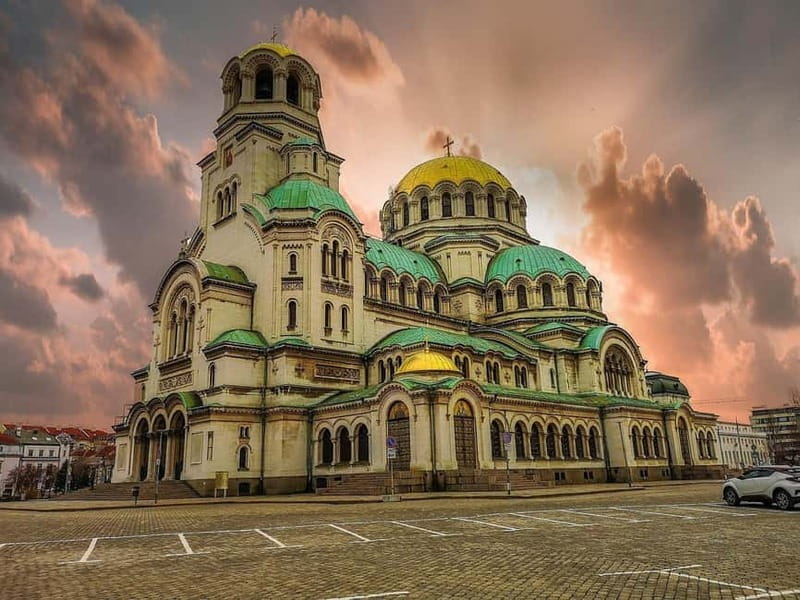
- St. Alexander Nevski Cathedral on foot, a major Orthodox landmark with huge visual impact
- A lunch break in Sofia’s central square, so you can eat on your own terms
- Private group comfort, handled by one English-speaking guide/driver
Others booked out of Bulgaria the same week:
- From Sofia: Rila Monastery & Boyana Church Day Tour★ 4.7 · 5,107 reviews
- From Sofia: Must-See Rila Monastery & Boyana Church Day Tour★ 4.6 · 3,322 reviews
- From Sofia: Guided Day Tour of Plovdiv’s Must-See Sights★ 4.6 · 1,688 reviews
- From Sofia: 7 Rila Lakes and Rila Monastery Extended Trip★ 4.7 · 1,189 reviews
Day-Trip Reality Check: drive time, border control, and how the day feels
This is a long but focused outing. The route is about 250 km each way, roughly 3 hours and 30 minutes of driving, and your total day runs 13 hours. You will leave Skopje early in the morning, which is good because it gives you time to see several major sites in Sofia rather than arriving late and rushing everything.
One thing to know up front: crossing the Macedonian-Bulgarian border means a border control stop on the way. That can add some waiting time, so treat your schedule like a guide, not a clock you can set your watch by. The good news is the driving part is done in a comfortable A/C car or minivan, and you are not navigating or arranging anything on your own.
Also, the sightseeing includes walking. You can expect you will move between the Archaeological Museum area, the Serdica ruins, and St. Alexander Nevski Cathedral, plus a walk into the central square for lunch. The trip is not suitable for people with mobility impairments, so if that applies to you, it’s better to look for a different format.
Finally, entrance fees and food/drinks are not included. In practice, that means you should budget a bit for museum entry and meals, and plan what you want to spend at lunch rather than assuming everything is covered.
The Archaeological Museum in a former 1496 mosque: where Sofia’s layers start
You begin at the Archaeological Museum, and I love that choice because it frames everything that comes after. The museum is in a former mosque dating from 1496, which means you are not just looking at artifacts behind glass. You are also stepping inside a building that already carries Sofia’s complicated religious and cultural history.
Inside, you can see Thracian, Roman, and Medieval artefacts. That matters because the rest of the day is basically a physical timeline: you move from earlier periods in the museum to Roman-era Serdica ruins you can view in the city center, and then you end with the big Orthodox statement of St. Alexander Nevski Cathedral. Even if you only skim labels, the mix helps you recognize what you are looking at later.
One practical perk is pacing. Starting indoors means you get your bearings without immediately being dropped into long outdoor ruins. It’s also a good way to manage energy during a day that already has a lot of driving. If you like history but get overwhelmed by too many sites too fast, this museum stop gives your brain a simple structure.
Potential drawback: museums can be slow, and your schedule is tight. If you tend to read everything, you might feel rushed. If you skim selectively, you will likely enjoy the flow and still keep the day’s momentum.
Serdica ruins from a metro dig: seeing Roman Sofia in the middle of modern streets
Next comes the most visually satisfying stop for many people, the remaining ruins of Serdica, the ancient Roman city in the center of Sofia. What makes it especially interesting is how it was discovered: the ruins were uncovered during construction for a new metro station. So you are standing where modern Sofia literally met the Roman past.
The excavated portion you can visit is partial, but it still tells a story. You can see a small section of eight streets, plus an early Christian church and a bathhouse. Those details are not random. Streets help you imagine daily movement and city planning. The church points to how communities evolved as Christianity spread. The bathhouse gives you a peek at the everyday habits of Roman urban life, where public bathing was part of the culture.
Here is what you should do to get the most from this stop. Look at the layout before you zoom into single sights. Try to visualize how people would have moved along those streets, where they might have gathered, and how the bathhouse would have functioned as a social hub. Even though it is only partially excavated, the site still feels like a real place, not just a pile of stones.
The drawback is that it is not a full Roman city open to endless wandering. You are seeing a limited slice, and the rest is still under the city. That said, the fact that you can see so much in the middle of Sofia is the point, it is history in your line of sight.
St. Alexander Nevski Cathedral: why this church leaves an impression
After the Roman layer, you shift to the grand Orthodox landmark, St. Alexander Nevski Cathedral. The highlight is clear: it is one of the largest Orthodox temple churches in the world. Walking toward it from the earlier stops also helps you feel the contrast, from buried stone city blocks to a monumental place built to dominate the skyline and anchor civic life.
On a day trip like this, the cathedral works for two reasons. First, it is a single destination with a strong visual presence, so you do not waste time searching around. Second, it caps the history arc. You start with Thracian and medieval artefacts, move through Roman street life at Serdica, and then end with an architectural statement of the Orthodox tradition.
What to watch for during your visit is the overall scale and the sense of symmetry and design. Even without deep architectural knowledge, the sheer size and careful setting make it easy to understand why it is considered a major spiritual and cultural landmark.
Because this is part of a fixed schedule, you will likely have a limited amount of time here. Plan to prioritize the big views and key angles for photos, then take a slower moment rather than trying to do everything at once.
A different sort of day from the same city:
- Sofia: Communist Walking Tour
★ 4.9 · 1,106 reviews - From Bucharest: Full-Day Trip to Bulgaria
★ 4.6 · 1,008 reviews - From Sofia: The Seven Rila Lakes Full-Day Hiking Tour
★ 4.7 · 923 reviews
Lunch break in Sofia’s central square, then the long return to Skopje
Once you finish at the cathedral, the tour heads to the central square for a lunch break. This is useful because it keeps you in the heart of the city, where you can choose what you want to eat instead of being locked into one option.
Since food and drinks are not included, you can use lunch to match your budget and appetite. If you want something quick, pick a casual spot near the center. If you want a proper sit-down meal, you have the freedom to do that too.
Keep in mind that you are not finishing the day in Sofia. After lunch, you drive back to Skopje. That means your time is best used for food, a last stroll for photos, and then settling in for the ride home.
Practical tip: if you do not buy water during the day, plan for the fact that you will be traveling for a while after lunch. It’s one of those small comfort details that can make a long day feel easier.
Price and value: what $341 per person really covers
At $341 per person, this is not an ultra-budget option. But it does include the parts that are usually the most annoying on a day trip.
What you are paying for:
- Pickup and drop-off at your hotel or another address in Skopje
- All transfers by comfortable A/C car or minivan
- An experienced English-speaking guide/driver
- A schedule that stacks Sofia’s top layers efficiently into a 13-hour day
What you are not paying for:
- Food and drinks
- Entrance fees
So the value depends on your priorities. If you want a private day with a guide to connect the story between stops, and you do not want to manage transport across the border yourself, the price can make sense. If you are mainly interested in one site and would rather travel independently, it may feel heavy because the day includes substantial driving time.
Also, because it’s a private group, you are not sharing the guide’s attention with strangers. That can be a real perk if you like asking questions or you want a bit more flexibility in pacing during the walking parts.
Practical tips to make the day smoother
A few details can turn this from simply OK into genuinely enjoyable.
- Bring your passport. Border control requires it.
- Wear comfortable shoes. You will walk between stops, including the areas around Serdica.
- Build in patience for the border stop. This is the part you cannot control.
- Budget for lunch and possible entrance fees, since neither is included.
- If you need mobility assistance or limited walking, this trip is not suitable, so save yourself the hassle.
One small mindset shift helps too. This trip is about layers and highlights, not about lingering. If you treat it like a guided overview with meaningful stops, you will probably leave satisfied, even if your legs and your schedule are a bit tired.
Who should book this Skopje to Sofia day trip?
This tour fits best if you:
- Want a guided introduction to Sofia’s major historical eras
- Enjoy seeing history where it still lives in modern city space, especially with the Serdica ruins
- Prefer a private group and an English-speaking guide/driver handling transport across the border
- Are comfortable with a long day and long travel time
You might want to skip it if:
- You dislike road-heavy itineraries or you need a more relaxed pace
- You require wheelchair-friendly or low-walking logistics, since the trip is not suitable for mobility impairments
- You only care about one attraction, since the value comes from seeing several key sites in one go
Should you book it?
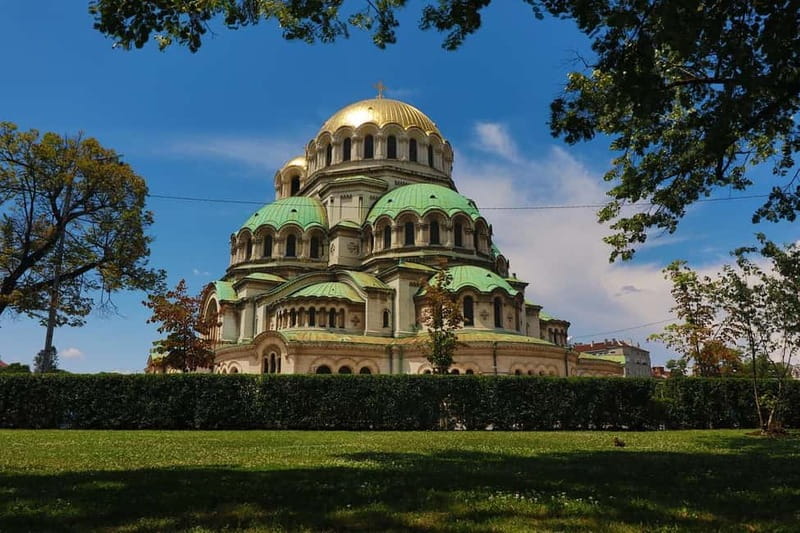
If you are excited by history you can actually walk through, this is a smart way to spend one day. The combination of a museum housed in a 1496 structure, the Serdica ruins discovered during metro construction, and the scale of St. Alexander Nevski Cathedral creates a clean storyline from one era to the next.
My call: book it if you can handle the long driving day and you appreciate a guided, layered overview. Skip it if you want more free time, fewer transfers, or an itinerary that is easier on the feet. For the right kind of traveler, this is a lot of Sofia for one day, even with the road time doing most of the work.
FAQ
How long is the Skopje to Sofia full-day trip?
The total duration is 13 hours.
What is included in the price?
Pickup and drop-off at your hotel or a preferred location in Skopje, all transfers by comfortable A/C car or minivan, and an experienced English-speaking tour guide/driver.
Are food and drinks included?
No. Food and drinks are not included.
Are entrance fees included?
No. Entrance fees are not included.
Do I need a passport?
Yes. You need a passport because the trip crosses the border.
Is there border control during the trip?
Yes. Since you cross the border, there is a stop for border control on the way.
Can I cancel for a refund?
Yes. Free cancellation is available up to 24 hours in advance for a full refund.
Added recently around Bulgaria
- Architectural Open Air Museum – Etara and Veliko Tarnovo★ 5.0 · 1 review
- Private One-way Transfer Varna Airport to Hotel or vice versa★ 5.0 · 1 review
- Private Transfer from Varna (VAR) Airport to Albena★ 5.0 · 1 review
- Stone Forest and Aladzha Monastery Experience★ 5.0 · 1 review
- Private Quad around Borovets★ 5.0 · 1 review
- Ski & snowboard private lessons in Borovets★ 3.0 · 1 review
- Half-Day Hiking with Private Mountain Guide in the Seven Rila Lakes★ 5.0 · 1 review
1-Day Tours, compared.
Day Trip to Bulgaria and Veliko Tarnovo from Bucharest
Read our review →
Private Day Trip to Boyana Church and Rila Monastery
Read our review →
Browse the lists this tour appears in