Review · TOURS
Sofia: Augusta Trayana – From Neolithic to Modern Times Tour
Neolithic houses and Roman streets, all in one day. This Sofia to Stara Zagora trip hits the Neolithic Dwellings Museum and then follows with Roman streets in Augusta Trayana. I also really like how the stops stay hands-on, from built spaces you can walk through to artifacts that explain how people lived, not just what existed. The main thing to watch is the long day length (11 hours) and that food and drinks are not included, so you need a plan.
You’ll go in a small group (up to 8) with an English live guide, and you get hotel pickup and drop-off, so you are not doing any annoying transit wrangling on your own. One particularly memorable stop is the Museum of Religions, housed in a surviving Ottoman-era mosque, which makes the religious story feel more real than a slide show.
In This Review
- Key highlights that make this tour work
- Sofia to Stara Zagora in an 11-hour time shift
- Neolithic Dwellings Museum: where Stone Age homes feel readable
- Augusta Trayana forum walk: Decumanus Maximus and Cardo Maximus in real space
- Archaeological Museum plus a Late Roman home with early Christian mosaics
- Museum of Religions in an Ottoman mosque: faith told through architecture
- Price and logistics: what $116 covers and what it does not
- Tips to make the day smoother (and more fun)
- Who should book this Augusta Trayana day trip from Sofia
- Should you book Augusta Trayana: From Neolithic to Modern Times?
- FAQ
- How long is the Sofia to Augusta Trayana tour?
- Where is the tour located?
- What are the main stops on the tour?
- Is there a hotel pickup and drop-off?
- Is the tour guide English?
- What is the group size?
- Is food included?
- What does the tour price include?
- Is the tour wheelchair accessible?
- What is the cancellation policy?
- Are there different starting times?
Key highlights that make this tour work
- Neolithic Dwellings Museum for true prehistory, not just pottery
- Roman street layout in Augusta Trayana on the Decumanus Maximus and Cardo Maximus
- Archaeological Museum time jump across Neolithic, Roman, Thracian, medieval Bulgarian, and Ottoman periods
- Late Roman private home mosaics with early Christian style details
- Museum of Religions inside an Ottoman mosque for architectural and cultural context
- Pickup and drop-off from Sofia plus entrance fees included, so you travel lighter
Other Sofia days worth a look
- From Sofia: Rila Monastery & Boyana Church Day Tour★ 4.7 · 5,107 reviews
- From Sofia: Must-See Rila Monastery & Boyana Church Day Tour★ 4.6 · 3,322 reviews
- From Sofia: Guided Day Tour of Plovdiv’s Must-See Sights★ 4.6 · 1,688 reviews
- From Sofia: 7 Rila Lakes and Rila Monastery Extended Trip★ 4.7 · 1,189 reviews
Sofia to Stara Zagora in an 11-hour time shift
This is an early start kind of day. You get pickup in Sofia and then travel to Stara Zagora for about 3 hours, with the tour feeling like one long, well-paced loop through major eras. Even though the day is long, it is efficient: you are not spending the time hunting down sites or figuring out how to connect buses between museums.
The small-group size matters. With a limit of 8 people, the guide can slow down when questions come up, and you are more likely to actually hear the explanations instead of competing with a larger crowd. Also, the tour is wheelchair accessible, which is a quiet but important detail for planning your day.
Just remember: with no included food and drinks, this day can feel more demanding than the headline suggests. If you tend to get cranky when your stomach is empty, pack a snack strategy or plan to buy something during the gaps.
Neolithic Dwellings Museum: where Stone Age homes feel readable
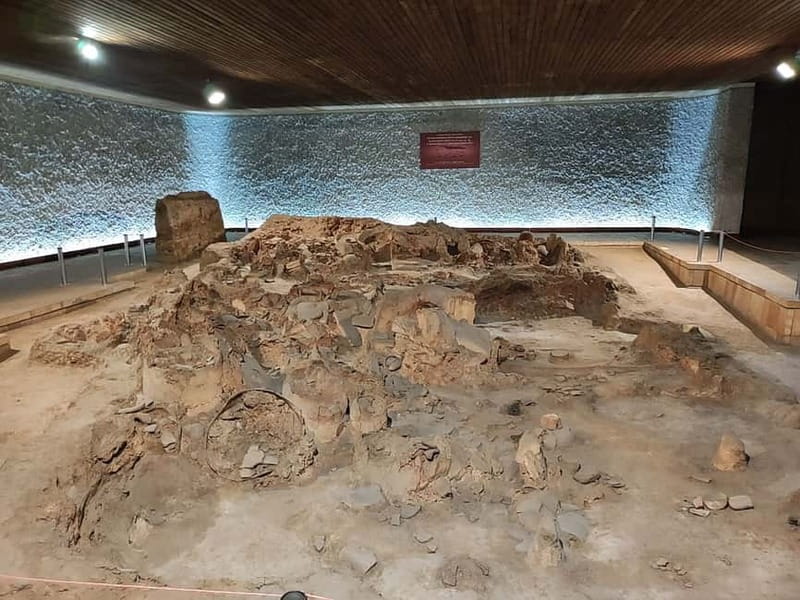
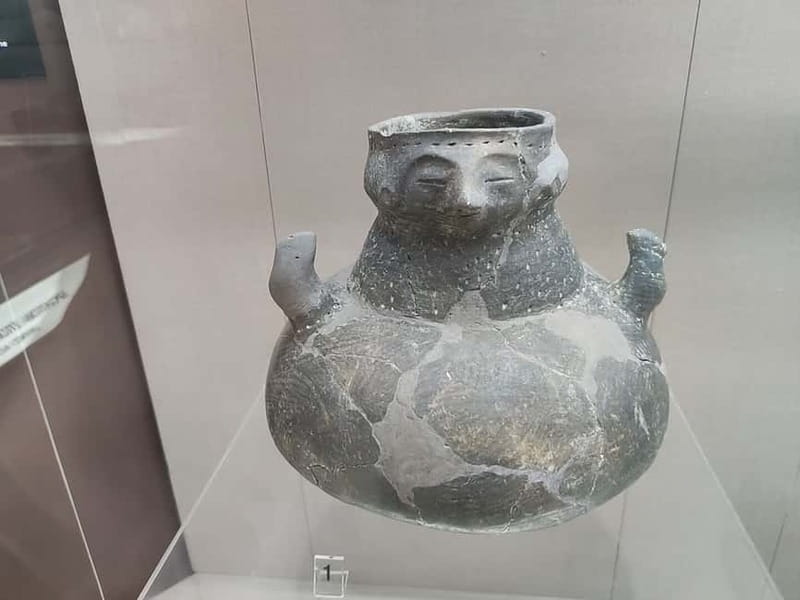
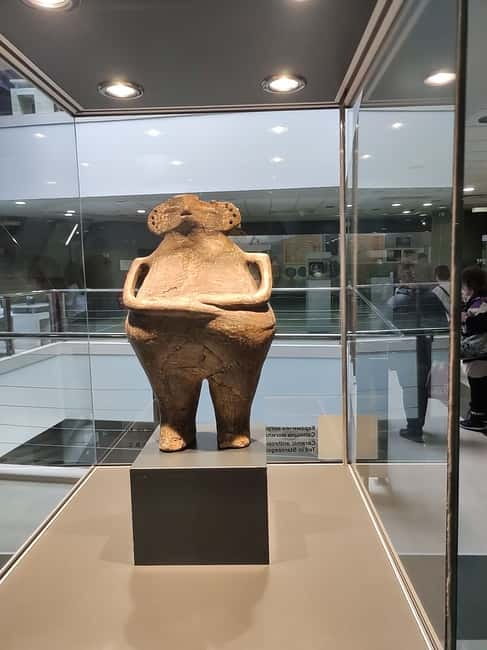
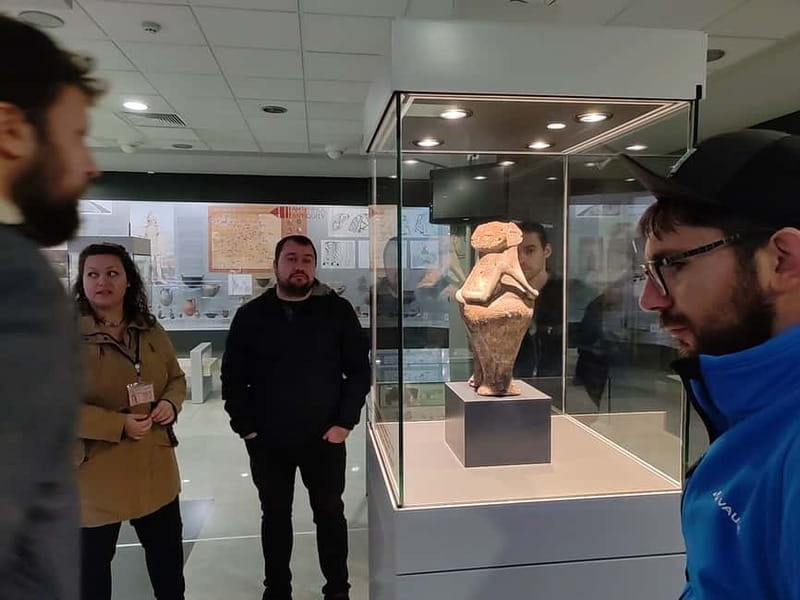
The day starts with the Neolithic Houses of the city area, at the Neolithic Dwellings Museum. This is one of the big reasons the tour feels special. You are not only looking at objects; you are seeing built space from the Stone Age. The houses here are described as some of the best-preserved prehistorical buildings in Europe, and that preservation is the point. It lets you picture how daily life might have looked when these structures were new, not when they were already ruins.
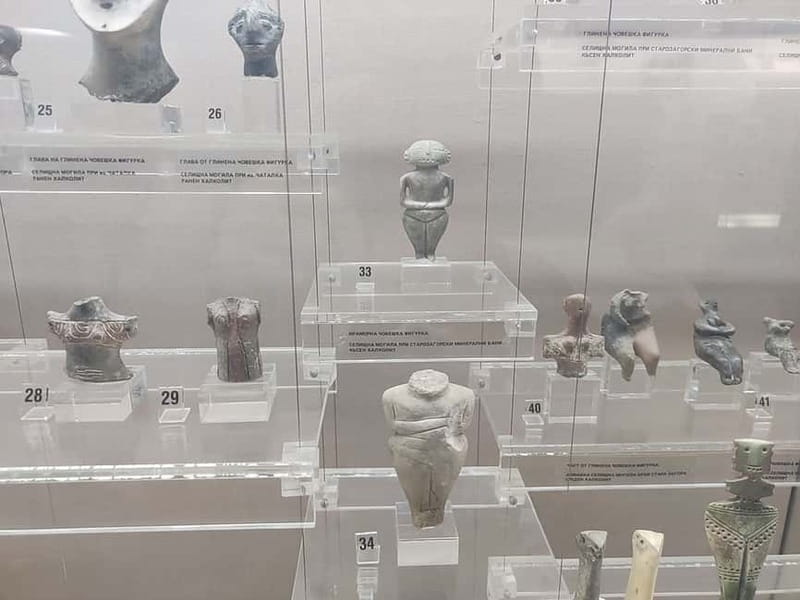
What I like about this stop is the way it links the physical and the human. You will see a collection of archaeological artifacts connected to the culture and religion of the Stone Age people. That matters because you get more than decoration. You get a sense of what people valued, what they used, and how belief could shape daily routines.
Practical tip: treat this as your mental warm-up. After the long drive, focus first on the layout and the scale of the dwellings. Then let the artifacts explain the life that would have filled those rooms.
Possible consideration: if you are the type who likes quiet museums and minimal walking, this part can still feel active because you are exploring preserved structures. Comfortable shoes are your friend.
Augusta Trayana forum walk: Decumanus Maximus and Cardo Maximus in real space
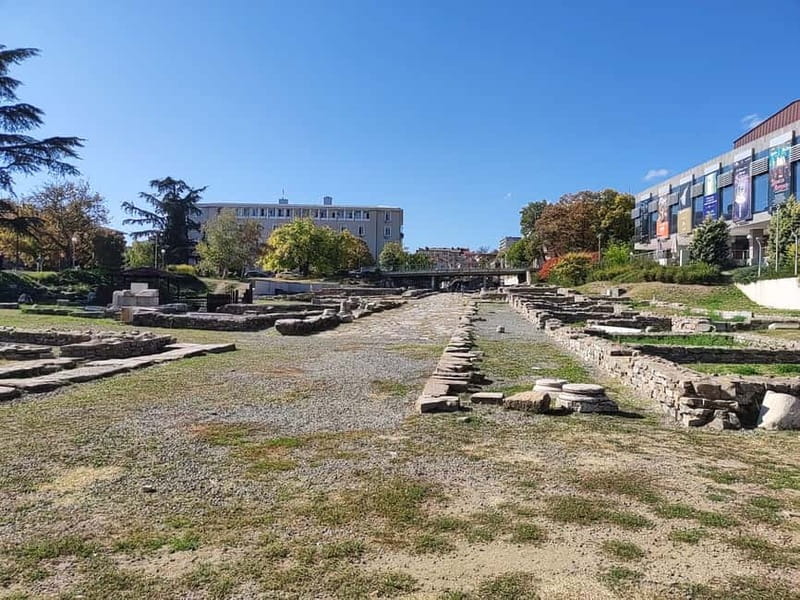
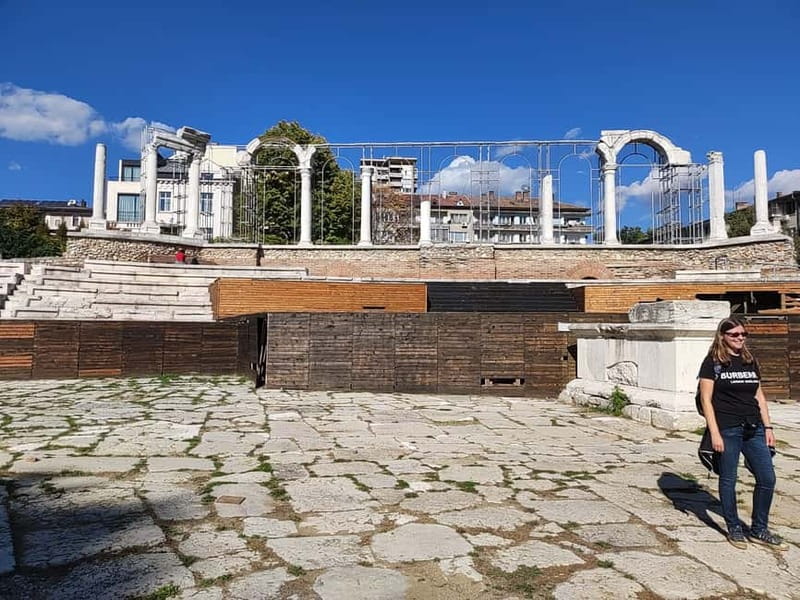
Next comes the Roman city of Augusta Trayana, and the tour makes a smart move here. Instead of keeping you stuck inside, it sends you to walk the street grid. You will walk on the original Decumanus Maximus and Cardo Maximus, at their intersection in the forum area.
This is where the Roman world becomes more than dates. In the forum space, you can understand how the city worked as a decision-making center. The forum is where the city council made important decisions, and where gladiator fights took place. Yes, those are very different activities, but that contrast is exactly what makes the intersection meaningful. It shows how Roman civic space blended politics, entertainment, and public life in the same built framework.
I like this stop because it teaches you how to “read” ruins. You start noticing the logic of the planning: main roads, intersections, and why certain places would have been high-visibility. If you walk slowly, you can connect the physical street layout to the social function of the city.
Practical tip: on a Roman forum walk, you will rely on your own pace more than you expect. If you like photos, you may want to pause often, but also keep one eye on footing and shadows.
Archaeological Museum plus a Late Roman home with early Christian mosaics
After the Roman streets, you visit the Archeological Museum. This part is valuable because it acts like a translator between eras. Objects discovered in the city cover everything from the Neolithic period and Roman times, through the Thracians, then into Medieval Bulgarian history, and later Ottoman rule.
That long timeline is a big deal for your understanding. It prevents the common mistake of treating each period like a separate country. The museum shows the continuity and overlap: artifacts and influences moving through time, rather than history resetting every few centuries.
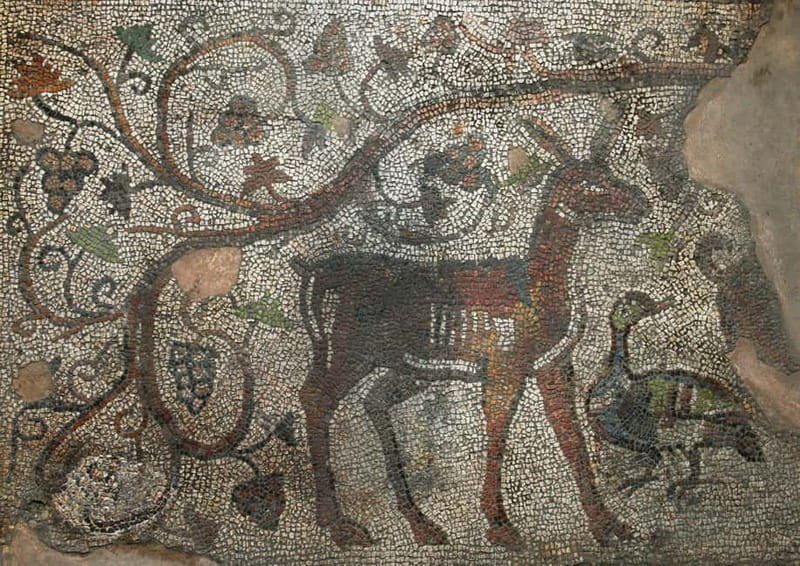
Then the tour adds a stop that feels more intimate: a Late Roman private home where you will see mosaics, including early Christian style mosaics. This is one of those moments that hits differently than an outdoor ruin. In a private home, mosaics are not just decoration. They are a statement. They suggest taste, beliefs, and what kinds of symbols people wanted to live with every day.
If you enjoy “how people expressed themselves,” this is a highlight. You will likely find yourself looking at patterns and imagery and thinking about what those choices meant at the time.
Possible drawback: mosaics and museum galleries can mean longer indoor time and more rules about photography. One review experience mentioned strict photo limitations at a museum stop, where a small traveling camera was not allowed while a phone was. So if photos matter to you, be ready for device-specific rules and follow what staff ask.
A different sort of day from the same city:
- Sofia: Communist Walking Tour
★ 4.9 · 1,106 reviews - From Sofia: The Seven Rila Lakes Full-Day Hiking Tour
★ 4.7 · 923 reviews - Rila Monastery and Boyana Church Full-Day Tour
★ 4.5 · 918 reviews
Museum of Religions in an Ottoman mosque: faith told through architecture
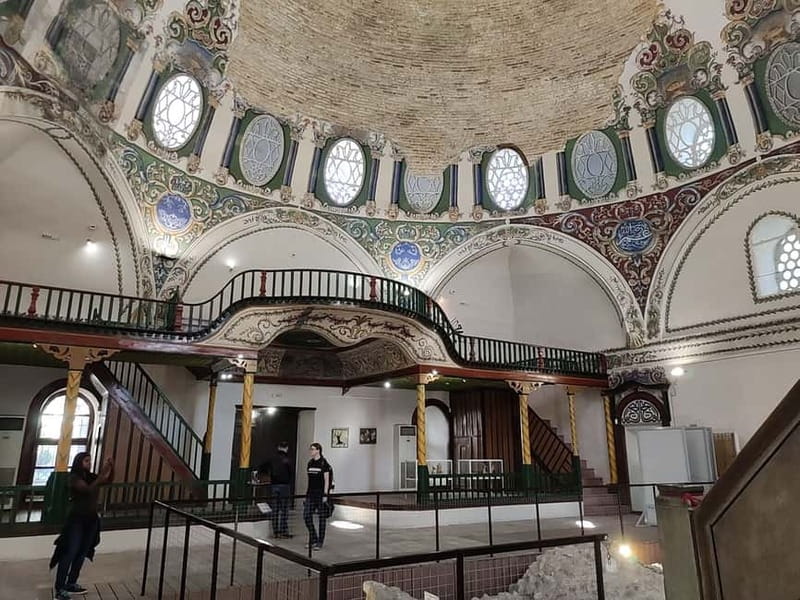
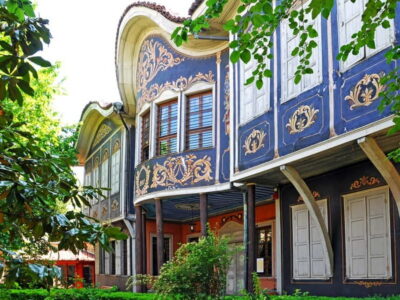
The final major cultural stop is the Museum of Religions, housed in a former Mosque that survives from the Ottoman Era. This is one of those locations where the building helps you understand the message. When the museum is literally inside an Ottoman-era structure, the architecture becomes part of the story rather than a backdrop.
What I like here is that the tour closes with a shift in perspective. Earlier stops are mostly about what people built and how cities functioned. The Museum of Religions is about worldview, space, and the way belief systems leave physical traces. You get a lesson in layered history: how a place can serve different communities across time, and how culture can be read through both objects and the spaces that hold them.
Practical tip: take your time on the transitions between rooms or exhibit themes. Museums like this work best when you let the guide’s explanations connect the building features to the broader history.
Price and logistics: what $116 covers and what it does not
At $116 per person for an 11-hour day, this tour is not trying to be cheap, but it also is not one of those overpriced “just a drive and a photo stop” deals. You are getting:
- Professional, highly educated guide
- Hotel pickup and drop-off in Sofia
- Transport by modern vehicle
- Entrance fees
That last part is key. Entrance fees add up fast when you are doing multiple stops across different museums and archaeological areas. By including them, the tour reduces the mental load on your planning.
The one cost you should budget for is food and drinks. The tour does not include meals, so you will need to buy lunch or bring your own snack and plan for breaks. If you are the kind of traveler who needs a sit-down meal to keep energy steady, this is worth thinking through before you book.
Also note the English live guide and that the group size is capped at 8. That is part of the value, because it supports better pacing and more real-time questions.
Tips to make the day smoother (and more fun)
Here are the practical things that will help you enjoy the day without getting stressed.
- Wear shoes with grip. You are moving between museums and walking in Roman spaces.
- Bring something to eat or plan to buy food. Food and drinks are not included, and the day is long.
- If you care about photography, be ready for different rules inside different museum rooms. One reported issue involved a camera not being allowed even though a phone was, so follow staff instructions and stay flexible.
- Use the long-ride time well. The drive to Stara Zagora is about 3 hours, so bring something to keep your brain engaged, a book or saved notes about what you want to learn from each era.
- Ask your guide for connections, not just facts. The tour has multiple periods stacked together, and the best learning happens when you ask how one period influences the next.
Who should book this Augusta Trayana day trip from Sofia
This tour is a strong match if you like archaeology, ancient cities, and seeing how one place changes over thousands of years. It is also a great fit for visitors who want a guided, structured day without renting a car or figuring out multi-stop transport.
You will probably enjoy it most if you:
- Like walking through historical spaces, not only looking at objects behind glass
- Enjoy mosaics and the stories they can suggest about belief and everyday life
- Want a single day that covers Neolithic, Roman, and later periods in one flow
If you only want one narrow time period, this might feel like a lot of eras in one go. And if you need frequent included meals or shorter travel days, you will want to think carefully because this is an 11-hour outing.
Should you book Augusta Trayana: From Neolithic to Modern Times?
I think you should book it if you want one guided day that mixes Neolithic houses, Roman forum street walking, museum artifacts across multiple periods, and mosaics, then ends with the Museum of Religions in an Ottoman-era mosque. The included entrances and Sofia pickup and drop-off add real value, and the small group size gives the guide room to explain and respond.
I would not book it if you hate long days, or if you know you will forget food needs and end up hungry and tired. Also, if you are a serious camera user, assume photo rules can be strict in at least one museum setting and plan to follow whatever they allow.
If this sounds like your kind of day, go for it. It is a well-structured way to see Stara Zagora Province as more than a dot on the map, with layers you can actually walk through.
FAQ
How long is the Sofia to Augusta Trayana tour?
The tour lasts 11 hours.
Where is the tour located?
It is in Stara Zagora Province, Bulgaria, with activities around Stara Zagora.
What are the main stops on the tour?
Key stops include the Neolithic Dwellings Museum, the Antique Forum Augusta Trayana, the Museum of Religions (in a former mosque), and time in Stara Zagora with museum visits and a Late Roman private home with mosaics.
Is there a hotel pickup and drop-off?
Yes. The tour includes hotel pickup and drop-off in Sofia.
Is the tour guide English?
Yes. The live tour guide is English.
What is the group size?
It is a small group limited to 8 participants.
Is food included?
No. Food and drinks are not included.
What does the tour price include?
Entrance fees, transport by modern vehicle, and a professional guide are included.
Is the tour wheelchair accessible?
Yes, it is wheelchair accessible.
What is the cancellation policy?
You can cancel up to 24 hours in advance for a full refund.
Are there different starting times?
Starting times depend on availability, so you will want to check what is offered for your date.
Added recently around Sofia
- Archaeological tour-From the Neolithic to Modern times in Augusta Trayana★ 5.0 · 1 review
- Sofia Full Day Tour★ 5.0 · 1 review
- PRIVATE adventure to Rila Lakes – GROUP price for 6★ 5.0 · 1 review
- 05.12.2026 Night of the Stars Show Ticket with Exclusive Access★ 5.0 · 1 review
- Melnik & Rozen Monastery Tour: Wine Tasting, History, Scenic Walk★ 5.0 · 1 review
- Small-group Weekend trip to Bulgaria’s most famous sites★ 5.0 · 1 review
- Exclusive Afternoon Wine & Appetizers with Local★ 5.0 · 1 review
Tours, compared.
Must-See Rila Monastery & Boyana Church Day Tour
Read our review →