
Review · BUZLUDZHA & SOCIALIST LANDMARKS
Communist Walking Tour of Sofia
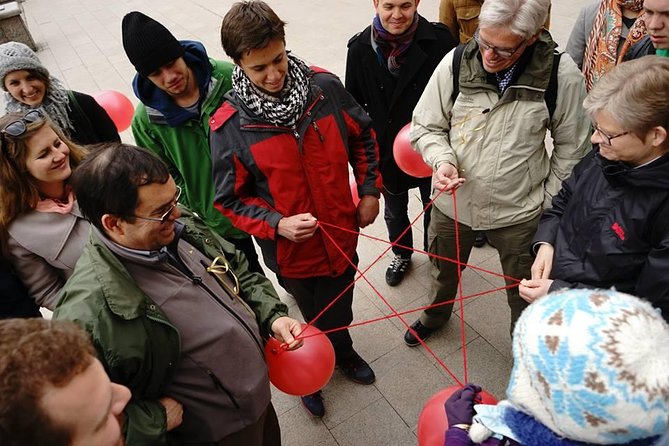
Sofia has Soviet echoes on every corner. This 3-hour Communist Walking Tour of Sofia is a guided walk through the symbols, buildings, and everyday stories of the Cold War, with an English speaking guide and a route that ends where Sofia keeps a piece of the Berlin Wall.
I really like how the walk links major landmarks like the Monument to the Soviet Army and the National Palace of Culture (NDK) to the ideology behind them. I also like the practical setup, including free entry at the stops, a mobile ticket, and a cap of 25 people that makes it easier to ask questions as you go.
One thing to consider: the tour starts at 4:00 pm, and in winter you can end up walking and photographing in low light, plus it is still a solid walking route.
In This Review
- Key highlights to look for
- Why this tour makes Sofia click
- Price and what $21.77 buys you in real value
- 4:00 pm start, central meet, and a clear finish at the Berlin Wall
- The route: Sofia’s communist era, stop by stop
- Stop 1: Sofia Court House, the start of the “state power” story
- Stop 2: Palace of Justice area, regime optics in institutional form
- Stop 3: Saint Parascheva (Old St. Petka), religion under communist pressure
- Stop 4: The Presidency Building, the Soviet arrival theme
- Stop 5: Former Bulgarian Communist Party Headquarters, Largo Complex symbols
- Stop 6: City Garden and the Mausoleum, memory in public space
- Interlude stop: the former royal palace building in early communist days
- Stop 7: Soviet Army Monument, controversy you can see and hear
- Stop 8: National Palace of Culture (NDK), the big cultural machine
- Stop 9: The Berlin Wall piece, how the story ends
- What makes the guides matter on this tour
- Walking comfort: what to wear and how to pace yourself
- Who should book this Communist Walking Tour of Sofia?
- Should you book it?
- FAQ
- How long is the Communist Walking Tour of Sofia?
- What is the price per person?
- What language is the tour offered in?
- What time does the tour start and where does it meet?
- Where does the tour end?
- Are there admission fees for the stops?
- Do I get a ticket on my phone?
- What is the group size limit?
- Are children allowed?
- Is there free cancellation?
Key highlights to look for
- A Cold War story told through Sofia’s architecture instead of dates in a vacuum
- Soviet-era landmarks plus the places where people pushed back, including graffiti and controversial sites
- A “pros and cons” approach to understanding why communism rose and fell in Bulgaria
- Stops with free entry at each main point, so you spend time seeing, not paying
- Small-group pacing with breaks planned for weather, even in very cold or rainy conditions
- A strong guide experience, with many named guides like Nikola, Vasko, Yoan, Niki, Stefan, and Martin leading groups
Further Walking Tours in Sofia
- Sofia: Communist Walking Tour★ 4.9 · 1,106 reviews
- Sofia: City Monuments Guided Walking Tour with Audio Guide★ 4.5 · 825 reviews
- Sofia Highlights 2 Hour Sightseeing Walking Tour★ 5.0 · 442 reviews
- Guided Walking Tour of Sofia★ 5.0 · 143 reviews
Why this tour makes Sofia click
Sofia can look like just another big European capital, until you start connecting the dots. This tour does that job fast. You walk past buildings that were designed to project power, then you hear the human side: how communist ideology shaped daily life, and why it eventually lost its grip in Bulgaria.
What I like most is that you do not just memorize political slogans. The guide ties the Cold War story to what you can literally see on the street. The result is that Sofia stops feeling like random sightseeing and starts feeling like a living timeline.
And if you are the type who usually skips political history, you may still enjoy this, because the tour leans on real-life details and on-the-ground context rather than dry lectures.
Price and what $21.77 buys you in real value
At $21.77 per person for about 3 hours, this is priced like a “no excuses” history add-on. You are not paying for expensive museum tickets, and the main stops are listed as free admission, so your money goes into the guide and the route itself.
That matters because the hard part of this topic is interpretation. Soviet and communist-era architecture can look impressive or strange depending on your angle. A good guide helps you see what was intended, what was experienced, and what changed after the regime. In the reviews, guides like Nikola and Vasko stand out for making stories feel personal and for handling questions well, which is exactly where a walking tour like this earns its keep.
Also, the tour is offered in English and uses a mobile ticket. If you like smooth logistics, that keeps the focus on the walking and the storytelling.
4:00 pm start, central meet, and a clear finish at the Berlin Wall
The tour meets in the Old City Center area, at Sofia City Court, bul. Vitosha 2, 1000 Sofia. Then you finish near the National Palace of Culture (NDK), next to a piece of the Berlin Wall on the left side of the park.
That end point is not just a nice landmark. It is a thematic punchline: the walk begins with institutions that represented the new order and ends with a symbol of how that order changed in Europe. If you like your tours to have a real narrative arc, this one delivers.
The practical consideration is the time of day. A 4:00 pm departure can be great in spring and summer, but in winter it gets dark early. One of the best planning tips here is to dress for cold and wind, and to bring a layer for wet weather. Multiple guides have been ready to adjust pacing and offer short breaks when conditions turn bad.
The route: Sofia’s communist era, stop by stop
You’ll cover a mix of civic buildings, religious sites that carried meaning under pressure, and major monuments that still spark debate. Some stops are short photo stops, but the guide’s context is what makes each one land.
More concrete-and-communism day trips:
- Sofia: Museum of Socialist Art and Buzludzha Monument Tour
★ 4.9 · 86 reviews - From Sofia: The Rose Valley & Buzludzha Monument Day Tour
★ 4.8 · 77 reviews - Sofia Communist History 2-Hour Tour in a Classic Trabant
★ 5.0 · 45 reviews
Stop 1: Sofia Court House, the start of the “state power” story
The tour begins at the Sofia Court House. Even though the stop itself is brief, it sets a tone: the communist system was not only about monuments. It was also about institutions, rules, and control over public life.
You’ll get a sense of how the state positioned itself as legitimate and permanent. This helps later when you see buildings meant to embody ideology at full scale.
Stop 2: Palace of Justice area, regime optics in institutional form
The second stop connects to the Palace of Justice in Sofia, associated with 365 Association Sofia Tours as the starting point. Again, it’s a short stop, but this is where the guide can explain how official architecture and grand civic spaces were used to signal authority.
Look at scale. Look at design language. The point is not to judge the building as pretty or ugly. The point is to understand why this kind of space mattered to the regime.
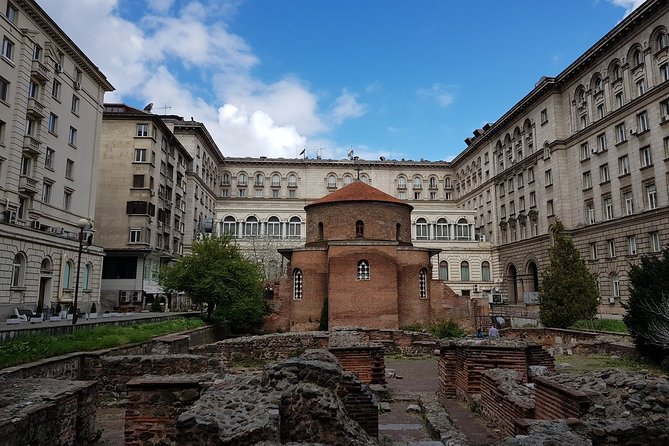
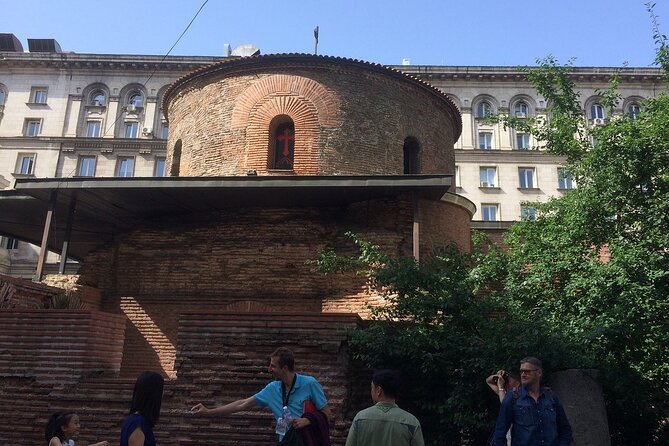
Stop 3: Saint Parascheva (Old St. Petka), religion under communist pressure
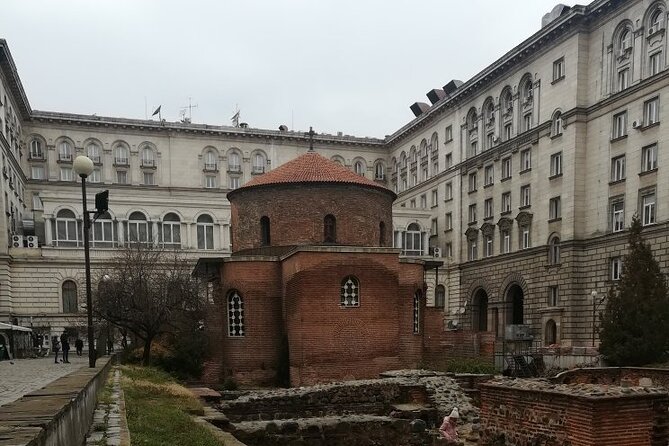
Next comes Ancient Orthodox Church Saint Parascheva, often referred to as the old St. Petka. This is a key change of pace in the tour because it deals with religion during the Communist period.
Why this matters is simple. Under communism, religion was not treated the same way it is in many other European contexts. The guide uses this stop to show how beliefs continued, survived, and also faced restrictions.
Even if you are not religious, churches like this help you understand what people held onto.
Stop 4: The Presidency Building, the Soviet arrival theme
The Presidency Building stop focuses on the arrival of the Soviet Army in Bulgaria. This is where the Cold War story becomes concrete. Instead of staying at the level of politics, you hear about how outside power translated into local control.
This is also a useful moment to notice that Sofia’s landscape includes both officialdom and foreign influence, and that those threads were woven together.
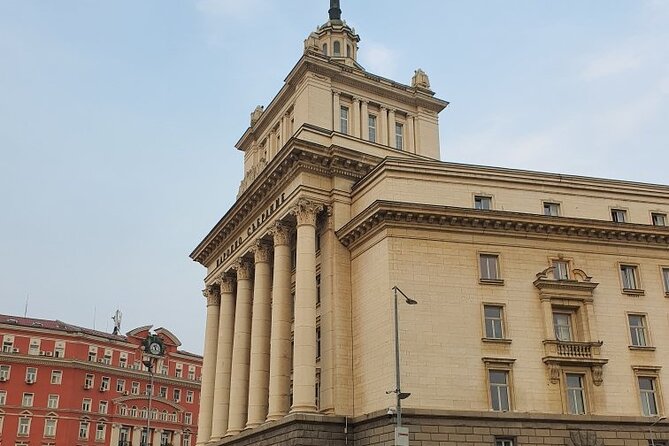
Stop 5: Former Bulgarian Communist Party Headquarters, Largo Complex symbols
Then you reach the Former Bulgarian Communist Party Headquarters at the Largo Complex. This stop centers on the Red Star and the Statue of Lenin story.
This is one of those moments where the guide’s interpretation really helps. Communist symbols were designed to be seen, repeated, and remembered. By the time you reach this stop, you should already be thinking about how ideology can become physical.
You might also start noticing the “afterlife” of symbols, what remains, what was removed, and what replaced it. In some cases, the city still carries visible hints of the past.
Stop 6: City Garden and the Mausoleum, memory in public space
At City Garden, you hear about the Mausoleum story. This is another stop where the politics runs deep, because funerary memory and public ritual were part of how regimes shaped identity.
A regime does not only try to control the present. It tries to manage how people remember the past, especially who gets honored and why.
Interlude stop: the former royal palace building in early communist days
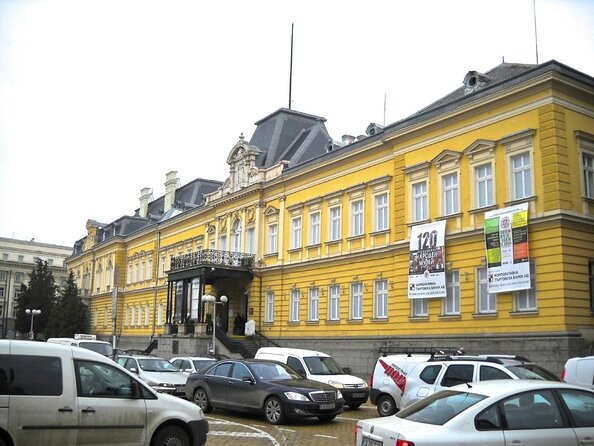
The route also includes a stop on the building of the Former Royal Palace during the early communist days. The idea here is powerful. New power often needs to use old space, at least at first, and it sends a message when leaders take over existing prominence.
Even if the architectural details you see today are changed over time, the meaning is in the transition story: old order, new order, and the contest over legitimacy.
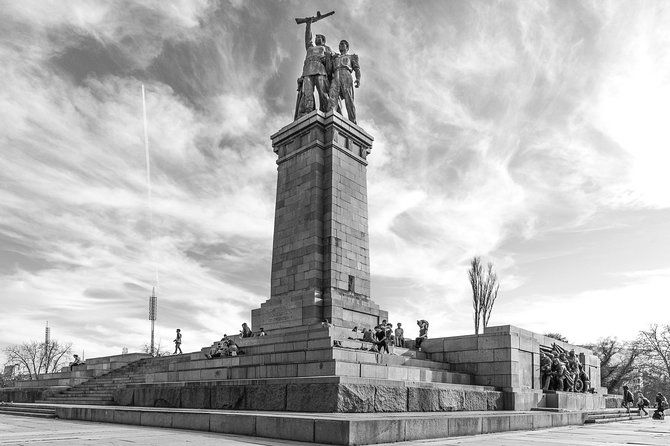
Stop 7: Soviet Army Monument, controversy you can see and hear
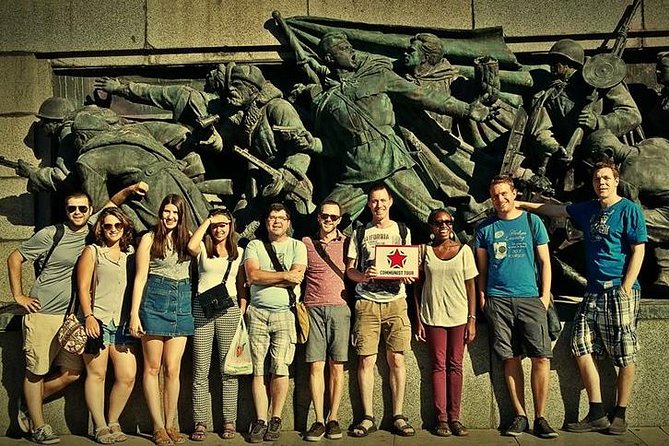
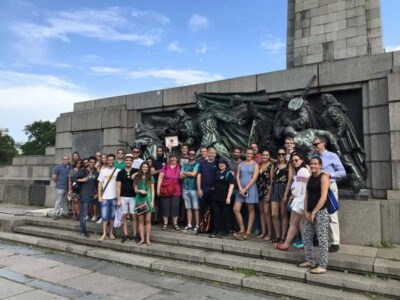
The tour then reaches the Soviet Army Monument, which is described as Sofia’s most controversial monument and includes references to graffiti art. The guide also connects it to early uprisings against the communist regime.
This stop is likely to feel emotionally heavier than some of the others. It is also a useful reminder that monuments are not neutral. They can represent mourning, propaganda, defiance, and everything in between, depending on who is looking.
If you care about understanding why some sites still cause friction today, this is a must-not-miss stop.
Stop 8: National Palace of Culture (NDK), the big cultural machine
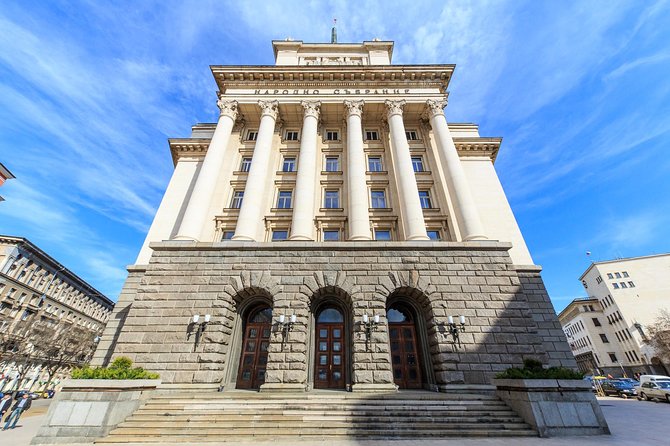
Next is the National Palace of Culture (NDK). It is Sofia’s biggest communist landmark, and it is also known as a famous cultural hub.
That combination is part of what makes this stop interesting. Cultural spaces can be used to control narratives, but they can also become places where people gather and build life anyway. The guide helps you see both sides.
So even if you came for the political story, you may end up appreciating the architecture and the way Sofia still uses these buildings for events and community life.
Stop 9: The Berlin Wall piece, how the story ends
The final stop is the Berlin Wall story. On this tour, it is literally your endpoint. You finish next to a piece of the Berlin Wall in the park area of the Palace of Culture.
Ending here gives the walk closure. You start at institutions and symbols of the communist era and end with a European marker of how that system fell apart.
Even in a short time, the emotional arc makes the history easier to remember.
What makes the guides matter on this tour
The single biggest pattern across the guides named for this tour is that they do not treat communist history like an exam. Guides such as Nikola, Vasko, Yoan, Niki, Stefan, and Martin are praised for story telling and for answering questions without rushing people.
A standout style is mixing facts with personal context, often described as rooted in the guide’s own family experience. That is exactly what turns a political topic into something you can picture.
If you like tours where you can ask follow-ups, this structure helps. You see the building, you hear what it symbolized, then you ask what changed and why.
Walking comfort: what to wear and how to pace yourself
This is a walking tour with a fair amount of walking. One review note that sticks is that it is not the best pick for people with limited mobility. You are also outside for the majority of the 3 hours, so plan like it is winter weather or rain weather, even if you think it will be mild.
My practical advice:
- Wear good shoes with grip, since you might be moving between sites quickly.
- Bring a warm layer. Even cold weather guides have handled -6 degree conditions with engaging pacing.
- If it storms, you may be offered a short break nearby, such as at a café, before you continue. Do not plan on rushing through without time for weather pauses.
If you are the type who likes photos, come prepared. Many of the stops are visually strong, but low light at the end of a 4:00 pm tour in winter can limit your best shots.
Who should book this Communist Walking Tour of Sofia?
This works best if you want:
- A Sofia introduction that also explains how modern Bulgaria got shaped
- A guided focus on the communist era in Bulgaria, including everyday life and ideology
- A walking format where buildings are the textbook
- English commentary and an easy-to-follow path with a clear starting and ending point
It is also a good choice if you have already seen the standard highlights and you want something a bit different. Sofia’s communist layers are not as widely explained as, say, older medieval history, but once you know what to look for, the city feels much more legible.
If you strongly prefer minimal walking, or you want only glamorous, photo-perfect sites with no controversy, you might find this tour heavier than expected, especially at the Soviet Army Monument.
Should you book it?
Yes, I think you should book this tour if your goal is to understand Sofia beyond the surface. For the price, you get a structured 3-hour route with free-entry stops, an English guide, and a strong narrative that starts with state institutions and ends at a Berlin Wall marker.
I’d especially recommend it if you enjoy political and social history that is tied to real streets and real buildings. And if you are flexible about winter darkness and willing to wear layers, it becomes an excellent use of your afternoon.
If your idea of a perfect day is short stops with lots of indoor time, then this may not fit. But for a walk that turns Sofia into a story you can actually picture, this one is hard to beat.
FAQ
How long is the Communist Walking Tour of Sofia?
The tour lasts about 3 hours.
What is the price per person?
The price is $21.77 per person.
What language is the tour offered in?
The tour is offered in English.
What time does the tour start and where does it meet?
It starts at 4:00 pm. The meeting point is Sofia City Court, bul. Vitosha 2, 1000 Sofia, Bulgaria.
Where does the tour end?
The tour ends at the National Palace of Culture (NDK), blvd. Bulgaria, 1463 Sofia, Bulgaria, next to a piece of the Berlin Wall on the left side of the park.
Are there admission fees for the stops?
The listed stops show free admission tickets.
Do I get a ticket on my phone?
Yes. It includes a mobile ticket.
What is the group size limit?
The tour has a maximum of 25 travelers.
Are children allowed?
Children must be accompanied by an adult.
Is there free cancellation?
Yes, you can cancel for a full refund if you cancel up to 24 hours in advance of the experience start time.
Added recently around Sofia
- Archaeological tour-From the Neolithic to Modern times in Augusta Trayana★ 5.0 · 1 review
- Sofia Full Day Tour★ 5.0 · 1 review
- PRIVATE adventure to Rila Lakes – GROUP price for 6★ 5.0 · 1 review
- 05.12.2026 Night of the Stars Show Ticket with Exclusive Access★ 5.0 · 1 review
- Melnik & Rozen Monastery Tour: Wine Tasting, History, Scenic Walk★ 5.0 · 1 review
- Small-group Weekend trip to Bulgaria’s most famous sites★ 5.0 · 1 review
- Exclusive Afternoon Wine & Appetizers with Local★ 5.0 · 1 review
Buzludzha & Socialist Landmarks, compared.
Museum of Socialist Art and Buzludzha Monument Tour
Read our review →
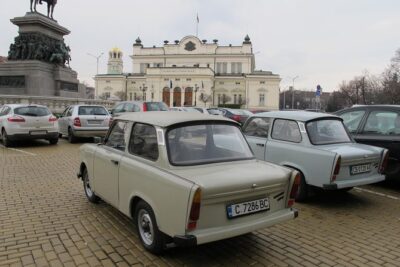
Sofia Communist History 2-Hour Tour in a Classic Trabant
Read our review →
Sofia Food & Tasting Tour with Communist-Era Tram Ride
Read our review →Buzludzha Monument and the Museum of Socialist Art
Read our review →
5-Stop Food & Culture Tour by Communist-Era Tram
Read our review →Browse the lists this tour appears in