
Review · WALKING TOURS
Sofia Highlights 2 Hour Sightseeing Walking Tour
Sofia clicks fast on this 2-hour walk. You start at St. Alexander Nevsky Cathedral, then hop across centuries of churches, mosques, and Roman remains with an official English guide. It is a lot of ground covered, but the pace stays friendly, with frequent stops for photos and quick context.
I love how much you get for the money. St. Alexander Nevsky Cathedral is included, so this is not just a look-at-the-building kind of tour. I also like the practical surprises, like the chance to try Sofia’s mineral water springs, plus the quick story behind each faith community and landmark.
One possible drawback is that not every stop includes admission. The National Art Gallery and some museum sites are listed as ticket not included, so you may do more outside viewing unless you plan to pay on your own. Also, the tour requires good weather.
In This Review
- Key Highlights Worth Packing Your Camera For
- Why This 2-Hour Walk Works in Sofia Center
- Meet at St. Alexander Nevsky, Then Step Inside the Main Event
- Unknown Warrior to the City Name: Quick Hits That Add up
- Stroll Through Royal Squares, Theater Beauty, and Famous Yellow Cobblestones
- Sofia’s Oldest Layers: Roman St. George and a Former Mosque Museum
- Presidency, Guards, and the Postwar Layout of Power
- Sofia History Museum and the Buildings That Used to Be Something Else
- Try the Mineral Water Springs, Then Understand Why Sofia Existed
- Religious Sofia in Miniature: Synagogue, Banya Bashi Mosque, Catholic and Orthodox Cathedrals
- Serdica Under Your Feet and the Saint Sofia Monument Controversy
- Practical Tips for Making the Most of the Walk
- Price and Value: What $19.35 Buys You in Real Life
- Who This Tour Suits Best
- Should You Book Sofia Highlights on Foot?
- FAQ
- How long is the Sofia Highlights walking tour?
- What time does the tour start, and where does it meet?
- Where does the tour end?
- Is the tour in English, and do I need a paper ticket?
- Is admission included for all stops?
- Can I cancel for a full refund?
Key Highlights Worth Packing Your Camera For
- St. Alexander Nevsky Cathedral entry included so you get inside, not only outside photos
- A fast route of major landmarks with many short stops that still feel organized
- Sofia’s mineral springs tasting moment tied to why the city formed here
- Religious Sofia in a compact loop from Orthodox to Russian, Catholic, Jewish, and Muslim sites
- Roman Serdica excavations near the city center for that wow, you are still in town feeling
- Small-group feel with a max of 30 travelers
Further Walking Tours in Sofia
- Sofia: Communist Walking Tour★ 4.9 · 1,106 reviews
- Sofia: City Monuments Guided Walking Tour with Audio Guide★ 4.5 · 825 reviews
- Communist Walking Tour of Sofia★ 5.0 · 690 reviews
- Guided Walking Tour of Sofia★ 5.0 · 143 reviews
Why This 2-Hour Walk Works in Sofia Center
This tour is built for people who want Sofia to make sense quickly. In about two hours, you cover a long list of sights without needing buses or a complicated plan. The key is the structure: lots of short segments, but enough time at major points for a real sense of place.
The price is $19.35 per person, which is solid for a licensed local guide and an entry included at the big starting stop. If you like to see multiple neighborhoods without overplanning, you will appreciate that most of the listed highlights are marked free, with only a few attractions requiring separate tickets.
The group size stays capped at 30, which helps the experience feel more conversational than a cattle-car tour. It is also scheduled to start at 11:00 am, and it runs in English with a mobile ticket.
Meet at St. Alexander Nevsky, Then Step Inside the Main Event
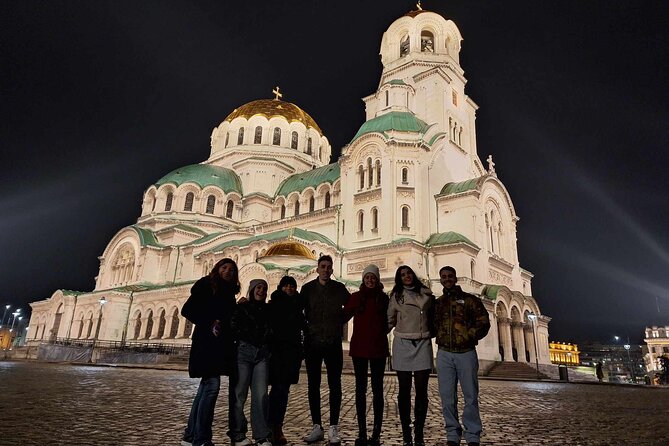
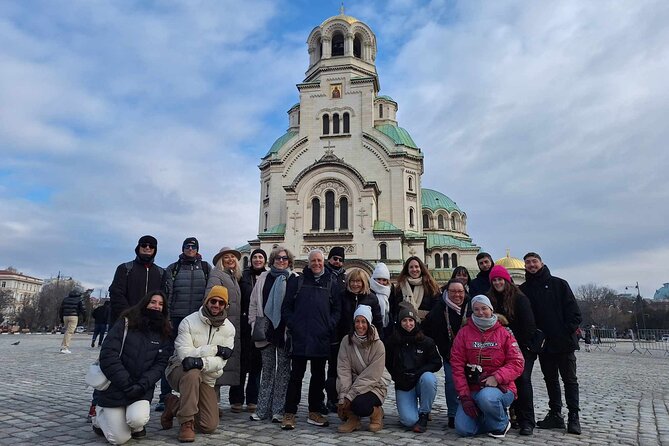
The tour begins right in front of St. Alexander Nevsky Cathedral, at pl. Sveti Aleksandar Nevski. This matters because it gets you oriented immediately. Your guide starts with an overview of Sofia and Bulgaria, then zooms in on the cathedral’s background so the building does not feel like a random stop.
What makes this start especially good is that you can enter the building. The cathedral is not treated like a quick roadside glance. You get an introduction first, then you step inside and see the scale and details up close.
You also get a clear “why this first” moment. The guide uses the cathedral as a starting point to explain how Sofia’s story layers over time, and that makes later stops easier to understand. If you are the type who likes context, this opening does a lot of heavy lifting.
Unknown Warrior to the City Name: Quick Hits That Add up
From the cathedral area, the tour moves into a set of shorter, high-value stops. Each one is only a few minutes, but they are not random. They fill in symbols, naming, and local storytelling.
Next is the Monument to the Unknown Warrior. You will see the lion statue and the memorial complex, and you will learn what the lion represents here. It is one of those moments where one object can summarize an entire national idea of remembrance.
Then you get the Basilica of Saint Sofia, where the guide explains the story behind the church that gave the city its name. That naming thread is worth paying attention to. It is an easy way to understand why locals talk about Sofia the way they do.
Right after that comes Saint Nikolas Russian Church, described as a place where wishes come true. Even if you approach that detail with a smile, it is a useful prompt to notice how different communities express hope, faith, and tradition in distinct architectural choices.
Stroll Through Royal Squares, Theater Beauty, and Famous Yellow Cobblestones
Sofia shifts from religious landmarks to cultural icons quickly. This is where the walk starts to feel like a picture scavenger hunt, with context added so it is not just snapshots.
The National Art Gallery is housed in Bulgaria’s former Royal Palace, and the guide ties in what is now there. You will also hear the story behind the yellow cobblestones around it. That kind of small detail is the difference between seeing “a palace building” and noticing how the city’s surface and style contribute to the overall look.
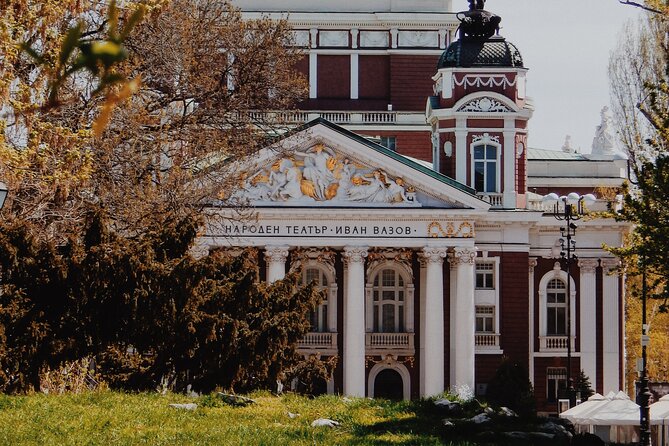
You will also pass the Ivan Vazov National Theater, one of Sofia’s most beautiful buildings, dedicated to Ivan Vazov. The stop is brief, so treat it as an exterior appreciation. If you are the kind of person who can stare at ornate facades for minutes, this is your kind of break.
Here is the practical consideration: the National Art Gallery and the theater stops are listed as admission ticket not included. So you are typically looking from outside, unless you choose to go in separately on your own. If you want museum time, plan it as add-ons, not as part of the core tour cost.
A different sort of day from the same city:
- From Sofia: Rila Monastery & Boyana Church Day Tour
★ 4.7 · 5,107 reviews - From Sofia: Must-See Rila Monastery & Boyana Church Day Tour
★ 4.6 · 3,322 reviews - From Sofia: Guided Day Tour of Plovdiv’s Must-See Sights
★ 4.6 · 1,688 reviews
Sofia’s Oldest Layers: Roman St. George and a Former Mosque Museum
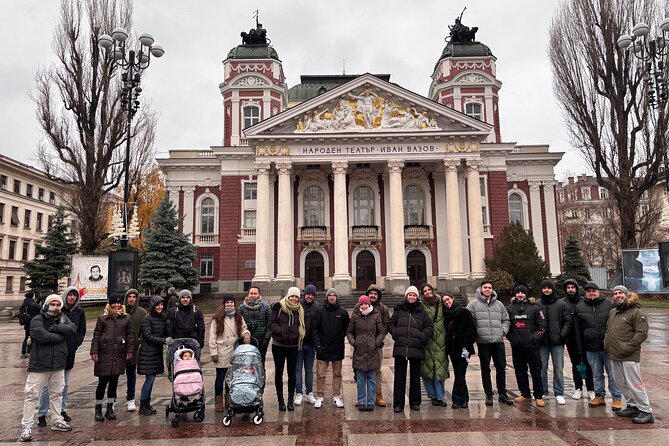
One of my favorite parts of Sofia is how old structures survive in plain sight. This tour leans into that, and you feel it when the route includes Sofia’s earliest building layer.
The Rotunda Church of St George is marked as Sofia’s oldest building, and it is described as well hidden. You get a short stop with a big payoff: a reminder that Roman Sofia is not some faraway history lesson. It sits under and around the modern city.
Then you visit the National Institute of Archaeology with Museum, described as once a mosque and now Sofia’s oldest museum. That continuity theme is important. You see how spaces and buildings change purpose over time while still carrying the imprint of earlier cultures.
These are fast stops, so do not expect long museum time unless you schedule it elsewhere. But if you like “find the layers” sightseeing, these moments give you real momentum for the rest of the walk.
Presidency, Guards, and the Postwar Layout of Power
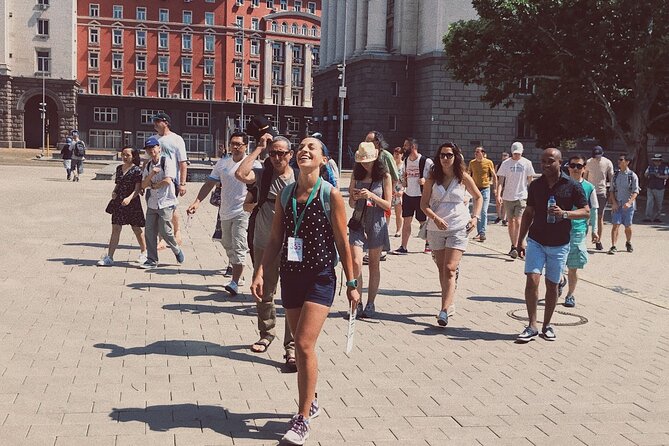
After the deep-history stops, the tour moves into the political heart of Sofia. This section is visually dramatic and conceptually useful.
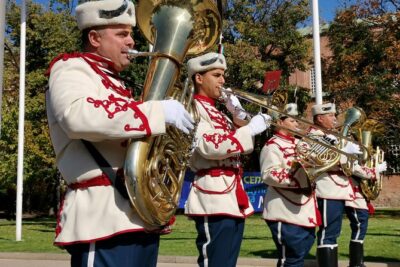
At the Presidency building, Bulgarian National Guards stand right in front. You can take a picture with them, and the guide explains the symbolism behind this unusual job. It is a practical photo moment, but also an easy way to understand how ceremony and public roles work here.
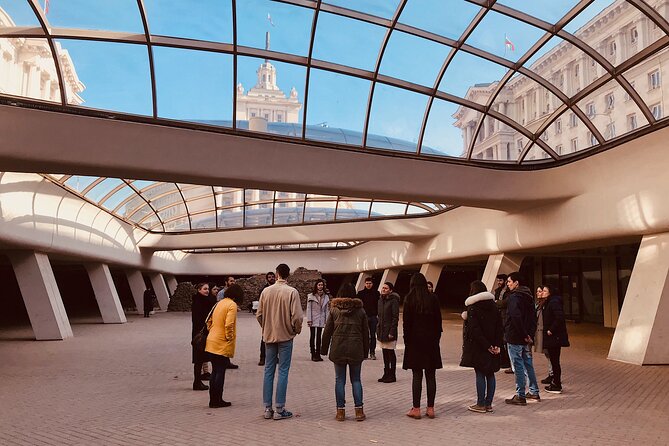
Then you continue to the National Assembly of the Republic of Bulgaria. The tour framing includes the idea that after WWII ruins, the Largo of Sofia was constructed by the new communist power. You will be shown the Council of Ministers, the National Assembly, and the Presidency from the same broader civic viewpoint.
This is short and exterior-focused, but it gives you a mental map. After this stop, you stop guessing which building is what, and you start reading the layout like a local.
Sofia History Museum and the Buildings That Used to Be Something Else
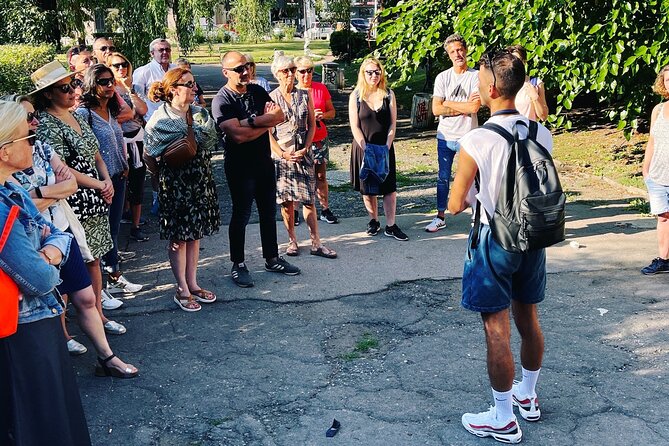
The Sofia History Museum stop comes in with a neat transformation story. The building once housed Sofia’s Central Mineral Baths, and now it is the Sofia Museum.
That matters because Sofia’s identity is tied to its minerals and springs. You are not just visiting “another museum building.” You are seeing a location that physically changed roles as the city evolved. It is a good kind of context, especially if you are the type who hates feeling like you are just collecting landmarks.
Admission for this stop is listed as ticket not included, so again, expect more of a look-and-listen moment rather than guaranteed entry. Still, you leave with a better understanding of why this area feels important.
Try the Mineral Water Springs, Then Understand Why Sofia Existed
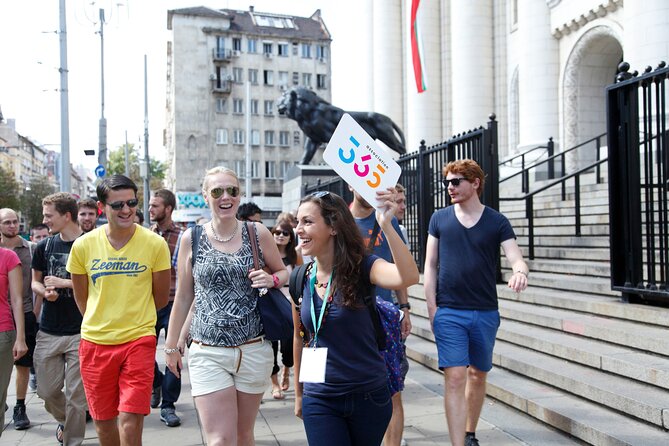
Sofia exists, at least in part, because of its mineral waters, and the tour makes that point directly. At the mineral water springs stop, you get the chance to try them.
The description adds that the mineral water is believed to have healing powers. I would treat that as local belief rather than a lab result, but it is still a fun and memorable experience that turns “history” into something physical.
This stop is also a helpful reset during a busy route. After cathedrals and civic buildings, tasting something local makes the experience feel grounded.
Religious Sofia in Miniature: Synagogue, Banya Bashi Mosque, Catholic and Orthodox Cathedrals
This walking tour does something smart here. It spreads religious architecture across the day, without making you choose one theme. You see Orthodox, Russian Orthodox, Jewish, Muslim, and Catholic sites in a compact format.
You will see the Sofia Synagogue, described as the biggest on the Balkan peninsula. The guide shares the extraordinary history of the Bulgarian Jewish community. Even if you only get a quick viewing stop, that context changes how you perceive the building. It stops being just pretty architecture and becomes a sign of community presence and survival.
Next is Banya Bashi Mosque, described as Sofia’s only functioning mosque today. You will learn the story of the Bulgarian Muslim community. When a tour includes a functioning place of worship, the respectful framing matters, and this stop is clearly presented as part of a living story, not just a museum artifact.
Then you pass the Catholic Cathedral of St Joseph, described as Sofia’s biggest Catholic church, plus the story of the small Catholic community in Bulgaria. After that comes Saint Nedelya Orthodox Cathedral, where the guide shares the tragic story of the biggest terrorist attack ever to take place in Bulgaria.
This section is emotional by nature because of the subject matter. If you prefer upbeat sightseeing only, keep that in mind. But if you want Sofia to feel real, this is where you understand why landmarks carry meaning beyond photos.
Serdica Under Your Feet and the Saint Sofia Monument Controversy
The final stretch brings you back to the idea of Sofia layered under Sofia. The highlight here is the Ancient Serdica Archaeological Complex.
The tour describes it as ancient city ruins under Sofia’s modern-day center. You will walk around the impressive excavations. It is a powerful moment because the scale and location make you feel like you are still in the present while looking at something much older.
Then you end with the Monument of Saint Sofia, patron of the city, and you hear about the controversy surrounding it. That kind of information is useful. It tells you that Sofia is not just preserved history. It is an active city with debates, memory, and identity questions.
The tour finishes near Vitosha Boulevard, Sofia’s main pedestrian street. That is a great ending logic. You are dropped exactly where you can keep going, snack, and follow your own interests afterward.
Practical Tips for Making the Most of the Walk
This is a compact, stop-and-go sightseeing route. To get the most value, I suggest you go into it with two expectations: you will see a lot, and you will not linger long at most locations.
Wear shoes you trust. Even though each stop is short, you will be walking between many points in the center.
Bring a light plan for museum cravings. Since several attractions are listed as admission ticket not included, you may want to add time elsewhere after the tour. Use the tour to decide what you actually want to explore further.
If you care about photos, charge your phone and clear storage. There are multiple exterior-worthy stops and one major inside entry, so you will likely take more pictures than you think.
Price and Value: What $19.35 Buys You in Real Life
The headline value here is simple. You pay $19.35 for an official licensed local guide, a route that covers big-name landmarks, and an entry included at St. Alexander Nevsky Cathedral. Most other listed stops are shown as free, so you avoid surprise ticket costs for the core experience.
Where value can shift is at the stops that list admission ticket not included. If you expect full museum entry at every stop, you may feel the tour is more “story and viewpoints” than “all-access to interiors.” Still, for many visitors, that is the right trade. Two hours is short, and the tour uses that time to cover a broad slice of the city.
It also helps that you can often choose your own follow-up after Vitosha Boulevard. The tour is essentially your Sofia sampler platter, then you pick the best leftovers.
Who This Tour Suits Best
This tour fits best if you:
- Want a quick overview of Sofia’s major landmarks without planning a complex route
- Like guided context, not just sightseeing by map
- Are happy with short stops, photos, and outside viewing at some sites
- Want a manageable group size with an official local guide
- Travel in English and prefer a mobile ticket
It also works for many travelers who do not want a long walking day. Service animals are allowed, and the tour notes that most travelers can participate.
If you are in Sofia for a short stay, this is a smart way to avoid the classic problem of seeing three highlights and missing the bigger pattern.
Should You Book Sofia Highlights on Foot?
Yes, if you want a fast, well-structured overview that connects religious, civic, and ancient layers into one walk. The included entry at St. Alexander Nevsky Cathedral and the guided explanations across multiple communities make the tour feel more than a checklist.
Skip it or plan add-ons if you specifically want lots of museum interior time, since several major cultural stops are marked as ticket not included. Also, since the tour requires good weather, check the forecast and keep a flexible mindset.
If you want Sofia to feel understandable by lunchtime, this one is built for that.
FAQ
How long is the Sofia Highlights walking tour?
The tour runs for about 2 hours.
What time does the tour start, and where does it meet?
It starts at 11:00 am, and you meet in front of St. Alexander Nevsky Cathedral at pl. Sveti Aleksandar Nevski, Sofia center.
Where does the tour end?
The tour ends right by the start of Vitosha Boulevard in Sofia Center, at bul. Vitosha 1.
Is the tour in English, and do I need a paper ticket?
Yes, it is offered in English. You use a mobile ticket.
Is admission included for all stops?
No. St. Alexander Nevsky Cathedral entry is included, and many other stops are free, but some places like the National Art Gallery and certain museum sites are listed as admission ticket not included.
Can I cancel for a full refund?
Yes. You can cancel up to 24 hours in advance for a full refund.
Added recently around Sofia
- Archaeological tour-From the Neolithic to Modern times in Augusta Trayana★ 5.0 · 1 review
- Sofia Full Day Tour★ 5.0 · 1 review
- 05.12.2026 Night of the Stars Show Ticket with Exclusive Access★ 5.0 · 1 review
- PRIVATE adventure to Rila Lakes – GROUP price for 6★ 5.0 · 1 review
- Melnik & Rozen Monastery Tour: Wine Tasting, History, Scenic Walk★ 5.0 · 1 review
- Small-group Weekend trip to Bulgaria’s most famous sites★ 5.0 · 1 review
- Exclusive Afternoon Wine & Appetizers with Local★ 5.0 · 1 review
Walking Tours, compared.
City Monuments Guided Walking Tour with Audio Guide
Read our review →
Seven Rila Lakes Snowshoe Walk & Thermal Spring Pools
Read our review →Browse the lists this tour appears in