
Review · PLOVDIV TOURS
From Plovdiv: Sofia – A Story of an Ancient State Day Tour
Sofia in one day, with real layers. This tour is interesting because it pairs UNESCO Boyana Church with the bigger Sofia story, from ancient Serdica to socialist-era buildings. I especially like the small group feel, which helps your guide keep moving while still answering questions.
I love how the day is built around walkable highlights, including Roman Serdica ruins plus the ornate center around major churches and institutions. One thing to consider is that food and drinks are not included, so you’ll want a plan for lunch and snacks during the walking stretch.
In This Review
- Key highlights at a glance
- Sofia in a single day: how the timing actually works
- The drive into Sofia: why that old Silk Road line matters
- Serdica in the city core: Roman ruins, St. Sofia Church, St. George Rotunda
- Alexander Nevsky and the official face of Bulgaria
- The Communist era monuments: what you see and what it means
- The National History Museum: 13,000 years inside a former power seat
- Boyana Church UNESCO: the frescoes are the star
- Park The Bells: Communist-era peace told by children
- Walking comfort and planning for meals
- The real value: included entrances, small-group pacing, and expert guiding
- Who this Sofia day tour is for
- Should you book this Plovdiv to Sofia day tour?
- FAQ
- What time does pickup happen in Plovdiv?
- How long is the tour?
- How many people are in the group?
- Is the tour guided in English?
- Is food included in the price?
- What UNESCO site is visited?
- Will entrance fees be covered?
- How much walking should I expect?
- What should I bring?
- Is free cancellation available?
Key highlights at a glance
- Hotel pickup at 09:00 in Plovdiv so you start straight away and skip the logistics.
- About 2 hours of highway driving into Sofia, following the corridor of the Silk Road to Rome connection.
- 3 hours of guided walking in Sofia’s historical core, with multiple stops tied together by theme.
- National History Museum in the former Communist residence, covering 13,000 years and including medieval artifacts.
- Boyana Church UNESCO visit, famous for 13th-century frescoes and mixed Byzantine-Bulgarian design.
Other Plovdiv days worth a look
- Private city walking tour of Plovdiv★ 5.0 · 65 reviews
- Plovdiv: Bachkovo Monastery, Asen Fortress, & Bridges Tour★ 5.0 · 56 reviews
- Plovdiv: Guided Walking Tour★ 4.3 · 41 reviews
- Food Walk: Bulgarian Food and Culture Tour in Plovdiv★ 5.0 · 35 reviews
Sofia in a single day: how the timing actually works
This is a 9-hour day tour, built to move you from Plovdiv into Sofia’s most meaningful historical areas without you needing to plan transfers. Pickup is at 09:00 from your hotel or address in Plovdiv. Then you get the travel time out of the way with a drive on modern highway, roughly 2 hours to reach Sofia.
Once you arrive, the tour switches gears. You park and then you’re on foot for about 3 hours through the city center. That walking block is where you get the “layers of Sofia” effect, because you’re seeing sacred buildings, political buildings, and ancient remains all in one continuous route, explained in plain language by your guide.
For the pacing, I think the biggest win is that the day does not rely on one single big-ticket stop. Instead, it keeps recombining eras, so you leave with a map in your head, not just a list of monuments. The only catch is your energy level, because you’ll be walking for a few solid hours and then adding museum time afterward.
The drive into Sofia: why that old Silk Road line matters
Before you even hit the city sights, the tour gives you a useful frame for what you’re seeing. The highway ride follows the ancient idea of a route connecting the Silk Road with Rome. You won’t be stopping on the road, but the timing matters: it sets up Sofia as a crossroads city, not just a place you pass through.
I like that approach because it makes the day feel connected. When you later see Roman remains, medieval church art, and then the more modern capital era, it feels like a single story of movement and power across centuries.
Serdica in the city core: Roman ruins, St. Sofia Church, St. George Rotunda
The historical center portion is where the tour feels most “tight and efficient.” You walk through Sofia’s core and focus on the parts that connect Bulgaria’s geography to major empires.
One of the central stops is the Roman city of Serdica, with Roman ruins revealed during your visit. This is the kind of site that can either feel like random stones or like a real place, depending on how it’s explained. Here, the guide ties it to the broader timeline of the city, so you understand what you are looking at rather than just snapping photos.
From there, you move to St. Sofia Church and then to the Rotunda of St. George. What makes these stops work well on a day tour is contrast. Roman Serdica gives you the early city footprint, then St. Sofia and the rotunda shift you into the Christian artistic and architectural world that later became central to Sofia’s identity.
Practical tip: plan to look up and not only forward. On rotundas and older churches, the ceiling and upper details can tell you more about style than street-level walls.
Alexander Nevsky and the official face of Bulgaria
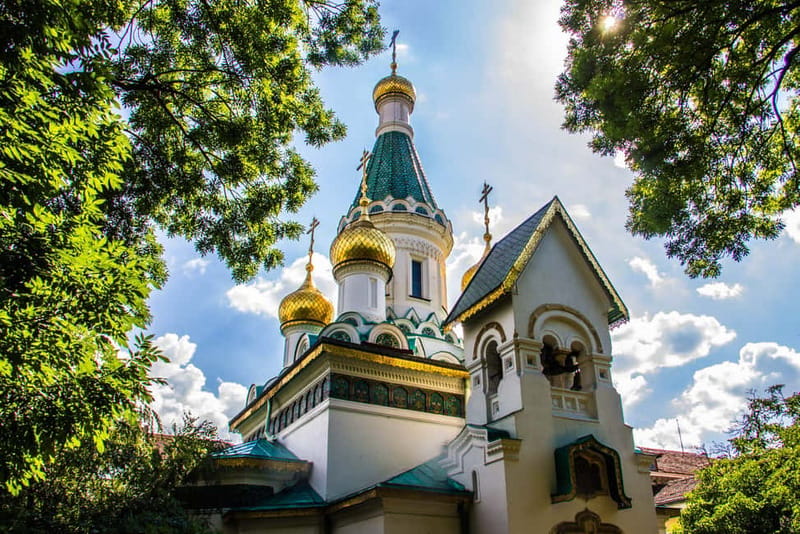
Next, you get Sofia’s signature church moment with Alexander Nevski Cathedral. This stop is often the first big wow in the walk, but it’s also useful because your guide can explain why it became the symbol of the city, not just a pretty building.
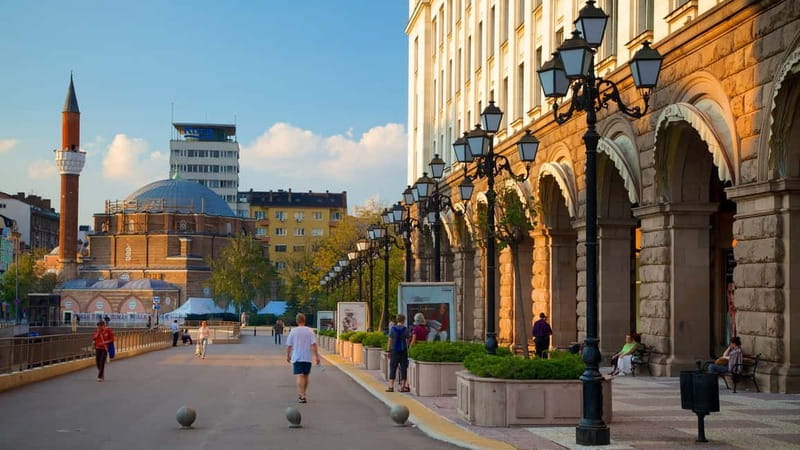
Then the tour widens out to include the institutional side of Sofia, including the Monarchy Palace, Sofia University’s main building, a piece of late 19th-century art, and the parliament area. Even though these places are different in function, they connect through the same idea: how capitals stage authority through architecture.
This is where I find the tour’s storytelling really helps. If you only did one church and one museum, Sofia would feel like separate islands. Here, you’re seeing how Bulgaria’s civic life evolved, from monarchy-era prestige through later governmental power.
A different sort of day from the same city:
- Wonderful Bridges-Bachkovo Monastery-Assen’s Fortress – day tour from Plovdiv
★ 5.0 · 32 reviews - Plovdiv guided walking tour
★ 5.0 · 31 reviews - Bachkovo Monastery & Asen’s Fortress – day tour from Plovdiv
★ 5.0 · 28 reviews
The Communist era monuments: what you see and what it means
You also visit the Communist administrative center, which is one of the most concrete parts of Sofia’s modern history. Communist-era public architecture can feel cold if you view it only as style. But on this tour, the explanation is what turns it from background into context.
The key benefit is that the Communist period is not treated as a generic era. You get positioned in time so you can spot the “monumental” approach and understand why these buildings were made to be seen, not just used.
If you’re the type of traveler who likes to know the why behind the look, this part pays off. It also sets up the next big location perfectly, because the day’s museum stop comes from the same political geography.
The National History Museum: 13,000 years inside a former power seat
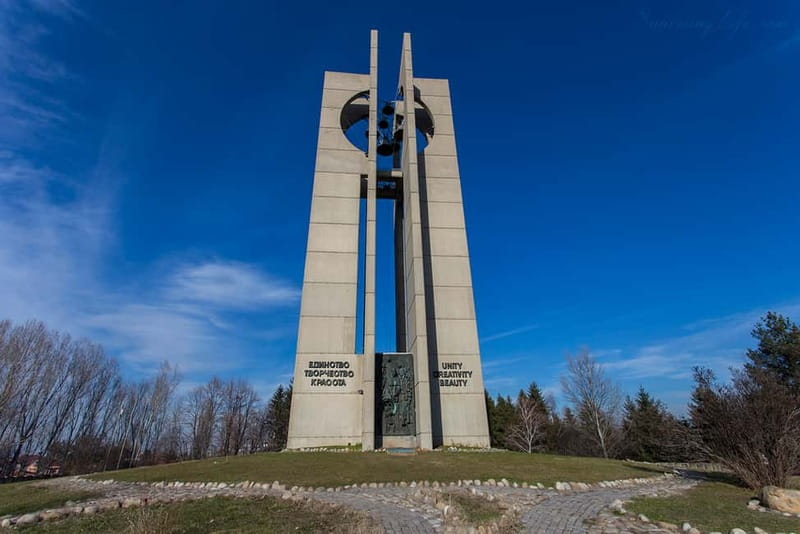
After finishing the center exploration, you head to the outskirts for one of the day’s most important stops: the National History Museum. The museum is located in the main Communist residence area, which means you’re stepping into a space with a past that matches the theme of the day.
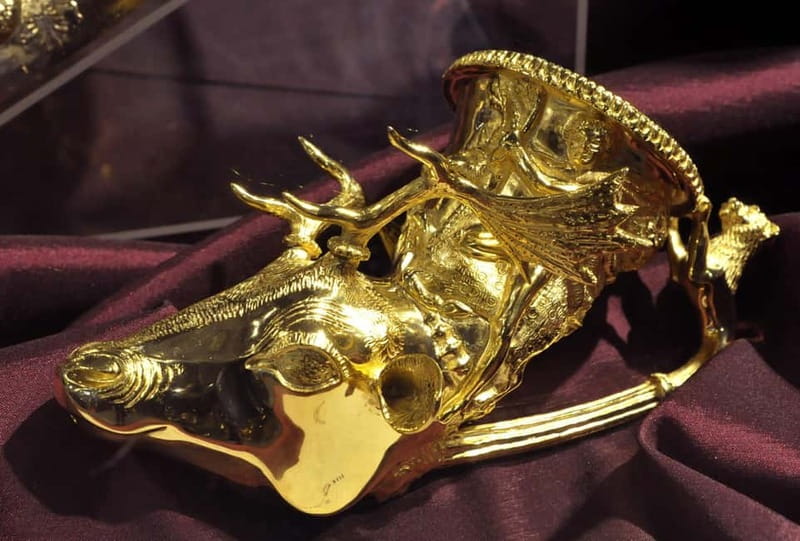
Inside, the collections are described as spanning over 13,000 years, from the earliest civilizations in the region through the Ottoman Empire and into modern-day Bulgaria. That is a huge timeline for one building, so the guide’s role is crucial here. The time you get is limited on a day tour, but the tour helps you aim your attention at the highlights.
The medieval section sounds like a standout focus, with artifacts such as weapons, armor, and religious icons from the Bulgarian Middle Ages. If you care about how religion and state power overlapped, this is the part that connects the dots between church art you saw earlier and the bigger medieval story of the Bulgarian Empire and the Bulgarian Orthodox Church.
My advice: don’t try to read everything. Use the guide’s pointers to pick 5 to 10 key items to study more closely. You’ll get more out of a few objects you actually understand than from sprinting through display after display.
Boyana Church UNESCO: the frescoes are the star
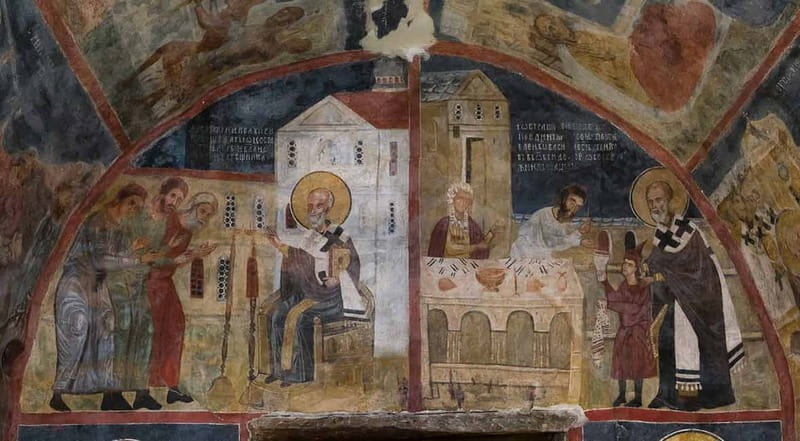
Then you reach the Boyana Church, the UNESCO site and one of the most satisfying stops in the whole day. The church was built in the late 10th century, but it’s known for frescoes painted in the 13th century, and those paintings are the headline.
The frescoes depict scenes from the lives of saints, plus portraits of Bulgarian nobles and church dignitaries. That mix matters, because it tells you the church wasn’t only about worship. It also reflects who had influence and how that influence was displayed through religious art.
Architecturally, Boyana Church is described as combining Byzantine and Bulgarian styles. Inside, the church is divided into three parts: the nave lined with columns and a ribbed ceiling, the semi-dome of the apse decorated with frescoes, and the narthex, which acts like a transition zone between secular and religious spaces.
I like that the tour explains this structure. When you understand the church’s layout, the frescoes feel more intentional. You’re not just looking at paintings, you’re seeing how the church space guides meaning.
Practical tip: keep your pace calm here. This is not a “walk fast for pictures” stop. It rewards slower looking, especially if you want to notice the way portraits and religious scenes are placed.
Park The Bells: Communist-era peace told by children
Your final stop before heading back to Plovdiv is Park The Bells, a monument from the Communist period. It was constructed in 1979 by the daughter of the last Communist leader of Bulgaria, connected to an initiative called the flag of peace.
The story behind the bells is the emotional heart of the stop. Children from both sides of the Iron curtain met and made bells, and the results were brought into the park.
This is a good end to the day because it changes the tone. After centuries of buildings and politics, you get a human-scale story about connection. It’s not a textbook moment. It’s a reminder that even in tense eras, people created spaces for contact.
Walking comfort and planning for meals
The tour includes a lot of movement: hotel pickup, highway driving, and then about 3 hours walking in Sofia’s center, plus museum and church time afterward. The provided advice is simple and correct: wear comfortable shoes.
What’s not included is food and drinks. That doesn’t mean you’ll go hungry, but it does mean you should budget for lunch and plan to buy water if you need it. One reason this matters is that the day’s schedule has a tight structure, so you may not have the kind of lunch detours you’d build on your own.
If you like to travel light, bring a small snack or two for peace of mind. If you prefer a sit-down meal, keep your expectations realistic and use the guide’s route timing to choose where to eat when there is time.
The real value: included entrances, small-group pacing, and expert guiding
At $104 per person, the best way to judge value is to look at what you actually get. Your day includes hotel pickup and drop-off in Plovdiv, transportation in a modern vehicle, a professional guide, and entrance fees.
That combination saves you time and decision fatigue. You’re not buying tickets one by one, and you’re not trying to translate opening times or ticket rules. For a single day, that matters.
The group size is limited to 8 participants, which keeps the pace manageable and makes it easier for the guide to adjust if someone needs a slower stop. On one prior departure, the group was so small that a single participant ended up with the guide for a more one-on-one experience. That can be a positive if you like flexibility, though it does mean you might not meet a bigger mix of people.
Guides like Theodore and Ivo have led this tour on past departures, and the consistent thread in their style is strong English and friendly, easy conversation. If you want to ask questions about what you’re looking at, you’ll likely get real answers, not a script you already heard.
Also, at least once, there was mention of the guide helping with photos and even working in a short additional museum detour based on interest. That kind of adaptability can turn a good tour into a memorable one.
Who this Sofia day tour is for
This tour is a strong match if you want:
- Major landmarks plus context in one day, not just photos
- A route that links ancient, medieval, monarchy, and Communist eras
- A guide-led pace for Boyana Church and museum time, where explanation really helps
It is less ideal if you hate walking or want an ultra-slow museum day with long meal breaks. The design is “see a lot, learn a lot,” so you’ll get the best results if you’re comfortable with steady movement.
Should you book this Plovdiv to Sofia day tour?
If you’re choosing between Sofia on your own versus a day tour, I’d book this one if you want a structured day that makes sense. The tour hits Sofia’s key anchors: Serdica remains, major churches and official buildings, the National History Museum, the UNESCO Boyana Church, and then a reflective finish at Park The Bells.
You should also book it if you care about interpretation. The value is not just in the sites, it’s in how the timeline is stitched together so you understand what changes and what stays.
Skip it only if you know you need lots of free time for your own pace, or if you strongly prefer food included in the price. Since meals are not included, plan for lunch and snacks.
FAQ
What time does pickup happen in Plovdiv?
Pickup starts at 09:00 from your hotel or address in Plovdiv.
How long is the tour?
The duration is 9 hours.
How many people are in the group?
It is a small group limited to 8 participants.
Is the tour guided in English?
Yes, the live tour guide speaks English.
Is food included in the price?
No. Food and drinks are not included.
What UNESCO site is visited?
The UNESCO site is Boyana Church.
Will entrance fees be covered?
Yes, entrance fees are included.
How much walking should I expect?
There is around 3 hours of walking in Sofia’s historical center.
What should I bring?
Comfortable shoes are recommended.
Is free cancellation available?
Yes, you can cancel up to 24 hours in advance for a full refund.
Added recently around Plovdiv
- Jewish Walking Tour of Plovdiv★ 5.0 · 1 review
- Plovdiv: Traditional Bulgarian Costume Photo Experience★ 5.0 · 1 review
- Walking tour of Plovdiv’s top attractions★ 5.0 · 1 review
- Asen’s Fortress Self-Guided★ 4.0 · 1 review
- Private 2-Day Horseback Riding in Rhodope Mountains from Plovdiv★ 5.0 · 1 review
- Private Day Trip From Plovdiv To Wine Cellars And Wine Tasting★ 5.0 · 1 review
- From Plovdiv: Musala Peak Full-Day Trekking Tour★ 5.0 · 1 review
Plovdiv Tours, compared.
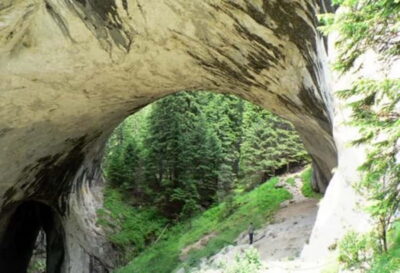
Bachkovo Monastery, Asen Fortress, & Bridges Tour
Read our review →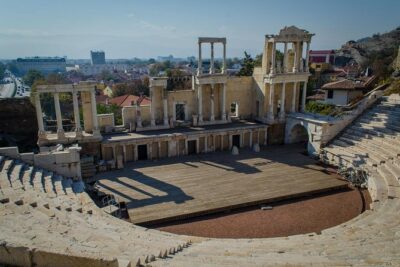
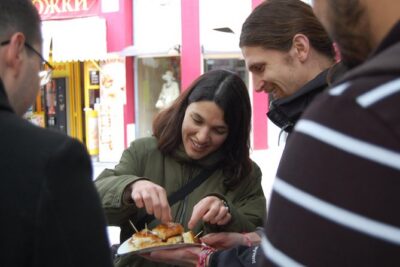
Food Walk: Bulgarian Food and Culture Tour in Plovdiv
Read our review →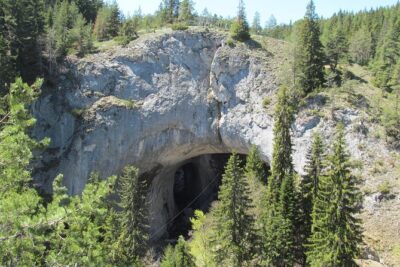
Wonderful Bridges-Bachkovo Monastery-Assen’s Fortress – day tour from Plovdiv
Read our review →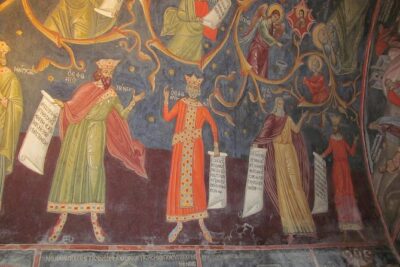
Bachkovo Monastery & Asen’s Fortress – day tour from Plovdiv
Read our review →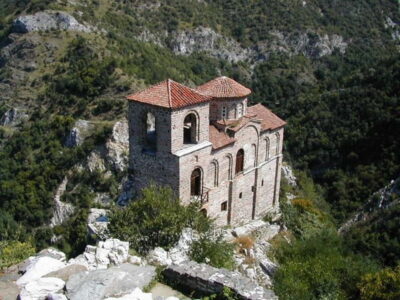
Browse the lists this tour appears in