
Review · WALKING TOURS
Plovdiv: Guided Walking Tour
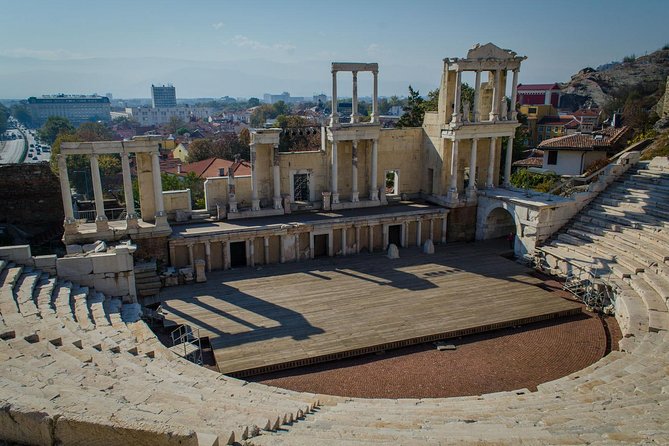
Plovdiv has layers you can walk off. This guided walking tour gives you a fast, friendly way to connect the dots between Thracian, Roman, Byzantine, Ottoman, and Bulgarian influences, with stops that actually match the story. I especially love how the Ancient Roman Theatre is still in use today, so you get that rare feeling of standing where performances happened nearly two thousand years ago.
What I like next is the mix of big-name sights and the everyday streets you would otherwise miss. You will walk Plovdiv’s famous long pedestrian stretch, then wind through the Revival District where colorful, decorated 19th-century houses turn every corner into a photo pause.
The only real catch is physical. Expect cobblestones plus uphill and downhill walking to reach the Thracian fortress hill, so you’ll want solid shoes. It is also not suitable for people with mobility impairments.
In This Review
- Key Highlights You Will Feel Immediately
- Why Plovdiv Works So Well on Foot
- The Roman Theatre Moment: Where the City Still Performs
- Roman Stadium Remnants: The Athletic Side of Public Life
- Revival Houses and the Old Town Streets That Reward Your Camera
- Kapana: The Creative District and Street-Level Plovdiv
- The Longest Pedestrian Street in Europe: A Smart Way to Get Your Bearings
- Thracian Fortress Hill: The View That Makes the Climb Logical
- Cultural Treasures Along the Way: Churches, Mosques, and Modern Art
- Guides Matter: What the Best Ones Do for You
- Price and Value: What $14 Actually Buys
- Timing, Comfort, and What to Pack
- Who Should Book This Plovdiv Walking Tour
- Should You Book This Plovdiv Walking Tour?
- FAQ
- What is included in the Plovdiv guided walking tour?
- What is not included in the price?
- How long is the tour?
- Where does the tour meet?
- What languages are available for the live guide?
- Is the tour suitable for people with mobility impairments?
Key Highlights You Will Feel Immediately
- Ancient Roman Theatre: Built in the 1st century AD and still used, with seating that makes the past feel close.
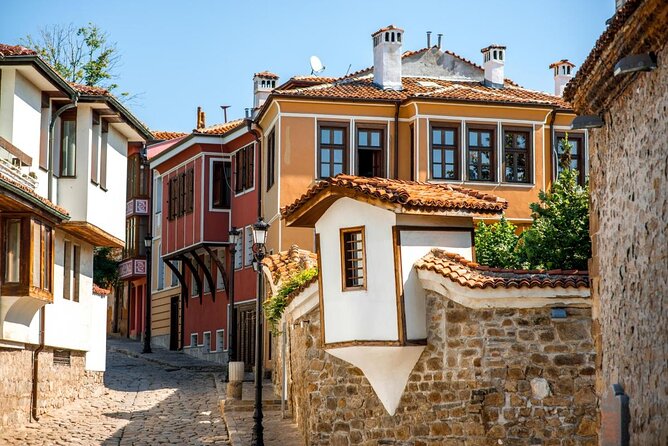
- Bulgarian Revival houses in the Old Town: 19th-century architecture made for walking, looking, and photographing.
- The longest pedestrian street in Europe: A practical way to get your bearings while enjoying shops and cafes.
- Kapana creative district: Art, workshops, and street scenes in a neighborhood known as The Trap.
- Roman Stadium remnants: Partially preserved traces of public life beyond the theatre.
- Thracian fortress hill viewpoint: The climb pays off with sweeping city views.
Further Walking Tours in Plovdiv
- Private city walking tour of Plovdiv★ 5.0 · 65 reviews
- Food Walk: Bulgarian Food and Culture Tour in Plovdiv★ 5.0 · 35 reviews
- Plovdiv guided walking tour★ 5.0 · 31 reviews
- Plovdiv: Old Town Guided Walking Tour & Audioguide & Museum★ 4.1 · 17 reviews
Why Plovdiv Works So Well on Foot
Plovdiv is one of those cities where the sidewalks do the storytelling. Instead of hopping between far-flung ruins, this 2-hour walking tour keeps you in the historic core long enough to understand how the different eras overlap.
The format is also practical. Two hours is short enough that you can still do other things the same day, yet long enough for your guide to explain why key sites matter. And because you get a live guide in English, Italian, or Spanish, you are not stuck decoding everything with guesswork.
If this is your first time in Plovdiv, I think this tour is an efficient orientation. You will see the main anchors, but also hear context that helps you recognize styles and themes as you keep exploring on your own.
The Roman Theatre Moment: Where the City Still Performs
The Ancient Roman Theatre is usually the stop that makes people slow down. Built in the 1st century AD, it is still in use, which is a big deal for how you experience it. You are not just looking at ruins. You are standing in a working venue shape, with stone seating that once hosted emperors and ordinary citizens.
What makes this stop valuable for you is the framing. A good guide will connect theatre architecture to Roman public life, not just toss dates at you. When you understand how space and audience worked back then, the site stops feeling like a single monument and starts feeling like part of a whole system of Roman urban culture.
Practical note: because you will be walking cobblestones and doing a bit of changing elevation, plan to take the photo you want, then stand for a minute. Let your eyes adjust to the scale.
Roman Stadium Remnants: The Athletic Side of Public Life
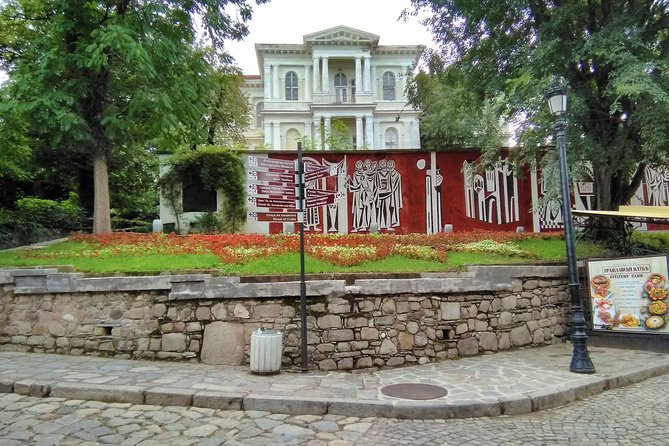
After the theatre, you often continue to another Roman layer: the Roman Stadium. You are not getting a full, rebuilt structure. Instead, you see remnants and partially preserved sections.
This stop matters because it broadens your idea of what Romans did in Plovdiv. Yes, there were performances. But there were also athletic competitions and public events. Even at a fragment level, it helps you picture a city that was built for crowds and shared moments.
If you love history that feels concrete, this stop is a good balance. It is less dramatic than a fully intact ruin, but it makes the Roman story more complete.
Revival Houses and the Old Town Streets That Reward Your Camera
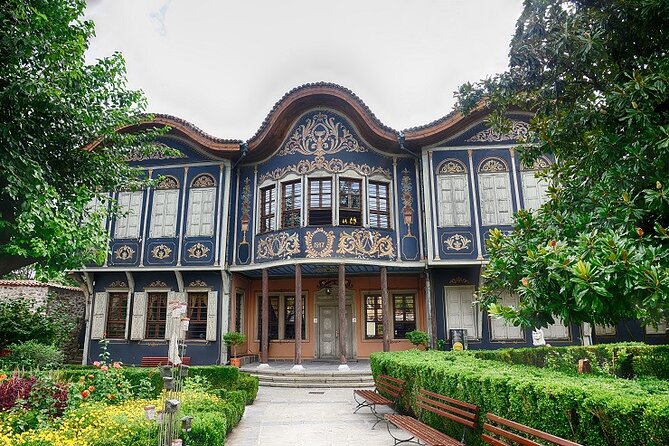
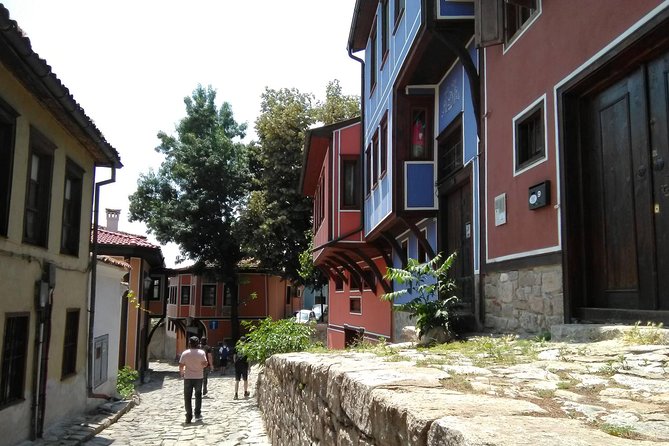
Next comes the Revival District, the part many people come to Plovdiv for. These are Bulgarian Revival-style houses from the 19th century, famous for colorful facades and intricate decorative details.
This is where the tour earns its walking time. You do not just pass buildings. Your guide points out what to look for, so you notice patterns you would probably miss alone. Think of it like learning a visual language: once you know what makes a house a Revival house, the street starts teaching you as you go.
Also, the Old Town streets are perfect for short photo stops. The guide’s route tends to include turns and side passages that keep the walk interesting, so you are not stuck filming the same view from the same angle.
Quick reality check: cobblestones mean your feet will work a little. Wear shoes you trust, not brand-new sneakers that feel stiff.
A different sort of day from the same city:
- Plovdiv: Bachkovo Monastery, Asen Fortress, & Bridges Tour
★ 5.0 · 56 reviews - Wonderful Bridges-Bachkovo Monastery-Assen’s Fortress – day tour from Plovdiv
★ 5.0 · 32 reviews - Bachkovo Monastery & Asen’s Fortress – day tour from Plovdiv
★ 5.0 · 28 reviews
Kapana: The Creative District and Street-Level Plovdiv
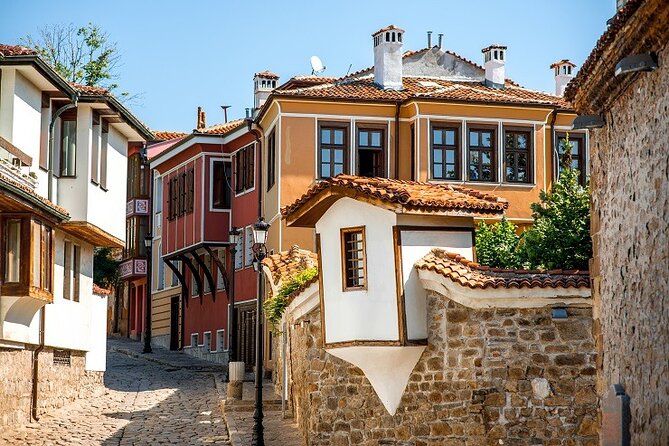
Then you head to Kapana, a creative district named The Trap. That name is memorable, and the vibe matches it. You get a neighborhood feel with galleries, cafes, workshops, and street art.
For me, Kapana is a reminder that Plovdiv is not stuck in the past. Yes, you are walking Roman and Revival sites, but you are also seeing how locals use space now: making, selling, creating, and hanging out.
If you like tours where the guide helps you connect history to daily life, Kapana delivers. You are not just collecting monuments. You are learning how the city’s character shows up in modern streets.
The Longest Pedestrian Street in Europe: A Smart Way to Get Your Bearings
One of the most practical parts of the itinerary is the walk along Plovdiv’s long pedestrian street, described as the longest in Europe. This is the stretch where you can slow down, observe, and feel the city’s rhythm without worrying about traffic.
What you gain here is momentum. By the time you reach the end of the pedestrian street, you understand how Plovdiv’s center pulls people through the day. It also sets you up for future self-guided exploring, because you get the flow of streets and landmarks.
The stores and cafes are there, sure. But even if you do not buy anything, you still get value from the street view: entrances, facades, and the way buildings relate to pedestrian space.
Thracian Fortress Hill: The View That Makes the Climb Logical
A standout highlight is the hike up to the Thracian fortress hill. This is your payoff stop. The perspective changes, and the city starts making more sense from above.
This part can be steep. One guide-led experience I saw described the walking as a fair amount of uphill and downhill, especially on cobblestones, so treat this as the main physical segment of the tour. Bring water if you tend to get thirsty on climbs, and in winter consider an umbrella if the weather looks moody.
If you are the type who likes photos with scale, you will appreciate this. A view from a hill does not just look pretty. It helps you visualize where the Old Town sits and why the city has been attractive for thousands of years.
Cultural Treasures Along the Way: Churches, Mosques, and Modern Art
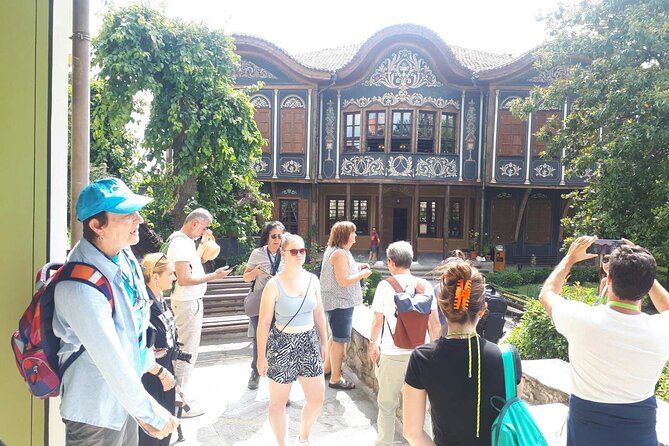
Between the major landmarks, your guide is likely to point out cultural treasures that connect different eras and communities. The route may include ancient churches and mosques, plus modern art installations, depending on the exact route that day.
This approach is what turns a list of sites into a coherent walk. You start noticing that Plovdiv’s layers are not locked in separate museum boxes. They coexist. You pass a site tied to one era, then look down the street and see how another era shaped the surroundings.
It is also why the guide matters. The best moments tend to be the short explanations that make you notice one small architectural feature, or understand the purpose of a space.
Guides Matter: What the Best Ones Do for You
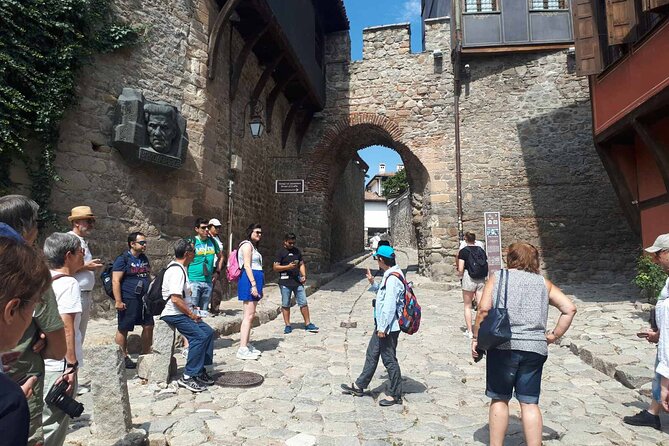
This tour is offered by City Tour Sofia, with live guides in Italian, Spanish, and English. And the difference between an okay tour and a great one often comes down to personality and clarity.
In particular, guides like Bibiana and Sonya are praised for being friendly, precise, and for steering the group through smaller, charming corners that most self-guided walks skip. That is the kind of guidance you can feel: you spend less time wondering where to look, and more time actually seeing.
Even if you speak one language, the route experience is the same idea. You get context in real time, and you can ask small questions when something catches your eye.
Price and Value: What $14 Actually Buys
At $14 per person for a 2-hour guided walking tour, the value is in coverage and interpretation. You are paying for a guide to connect major sites plus local street context, not for a ride between distant stops.
Keep expectations realistic: the tour price includes the guided walking tour, but it does not include entrance fees or food. So if you plan to go inside ticketed areas, you will need to budget extra.
That said, you can still get a lot without spending much more. Many of the key sights are visible and meaningful from the street and through the walking route. For me, this is a good deal because it helps you decide what deserves more time later.
Timing, Comfort, and What to Pack
Plan for a steady walking pace. The tour is short, but it is not a sit-and-watch experience.
Bring comfortable shoes and expect cobblestone streets. If you are sensitive to walking on uneven ground, think about what shoes you would wear for a long outdoor day at home.
Also, consider the season. Winter weather can bring rain or snow, and one practical tip shared was to carry an umbrella if you visit during wetter months.
Who Should Book This Plovdiv Walking Tour
I think this tour is a great fit if you:
- Want an efficient first look at Plovdiv without piecing together multiple guides
- Care about Roman sites and Revival architecture
- Enjoy walking tours that include both landmarks and everyday streets
- Like city views and can handle some incline
It is not the best choice if you have mobility impairments, because the route includes cobblestones and an uphill portion to the fortress hill.
Should You Book This Plovdiv Walking Tour?
If you want to understand Plovdiv quickly, this is a strong pick. For $14, you get a tight route featuring the Roman theatre, the Old Town Revival houses, Kapana, the long pedestrian street, and the Thracian fortress hill viewpoint, all with live guide commentary in English, Italian, or Spanish.
If you are on a tight schedule, this tour gives you structure. If you are a slow explorer, it also gives you a checklist of what to return to later on your own.
My final advice: lace up your best walking shoes, bring a little patience for uneven ground, and let the guide do the hard part, which is making sense of Plovdiv’s layers as you move through them.
FAQ
What is included in the Plovdiv guided walking tour?
The tour includes a guided walking tour only.
What is not included in the price?
Food, personal expenses, and entrance fees are not included.
How long is the tour?
The tour lasts 2 hours.
Where does the tour meet?
The meeting point may vary depending on the option booked, so you should confirm it when you reserve.
What languages are available for the live guide?
The live tour guide is available in Italian, Spanish, and English.
Is the tour suitable for people with mobility impairments?
No. The tour is not suitable for people with mobility impairments because it involves walking on cobblestones and includes inclines.
Added recently around Plovdiv
- Jewish Walking Tour of Plovdiv★ 5.0 · 1 review
- Plovdiv: Traditional Bulgarian Costume Photo Experience★ 5.0 · 1 review
- Walking tour of Plovdiv’s top attractions★ 5.0 · 1 review
- Asen’s Fortress Self-Guided★ 4.0 · 1 review
- Private 2-Day Horseback Riding in Rhodope Mountains from Plovdiv★ 5.0 · 1 review
- Private Day Trip From Plovdiv To Wine Cellars And Wine Tasting★ 5.0 · 1 review
- From Plovdiv: Musala Peak Full-Day Trekking Tour★ 5.0 · 1 review
Walking Tours, compared.
City Monuments Guided Walking Tour with Audio Guide
Read our review →
Sofia Highlights 2 Hour Sightseeing Walking Tour
Read our review →
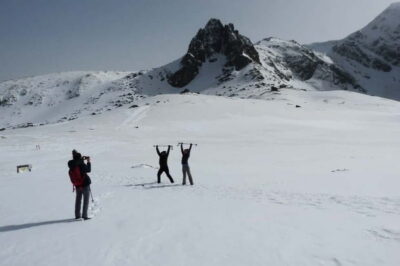
Seven Rila Lakes Snowshoe Walk & Thermal Spring Pools
Read our review →Browse the lists this tour appears in