
Review · WALKING TOURS
Jewish Walking Tour of Plovdiv
A city teaches you what it remembers. This Jewish walking tour of Plovdiv connects ancient synagogue traces to the WWII survival story in just 2 to 3 hours. I especially liked how our guide, Alex, brought the history down to street level, not just dates.
What I liked most were two simple things. First, the route hits major places in the Jewish story, from the oldest synagogue setting near Roman ruins to the 1943 rescue-linked Historic Jewish School. Second, you get a small taste of daily life with snacks, including a traditional delight shared across Bulgarians, Jews, and Muslims.
One consideration: this is a walking tour in the historic center, so comfortable shoes matter, and you will want to plan around a few focused stops rather than a long sightseeing loop.
In This Review
- Key things to know before you go
- Ancient Synagogue roots near the Roman ruins
- The historic Jewish Street, where commerce and community met
- Dondukov Garden as the gateway to the former Jewish Quarter
- Monument of Unification and Plovdiv’s changing political past
- The Historic Jewish School and the 1943 rescue story
- Monument of Gratitude, how Bulgaria’s Jews survived through solidarity
- Price, included snacks, and what you get for your time
- Who this tour suits best in Plovdiv
- FAQ
- FAQ
- How long is the Jewish Walking Tour of Plovdiv?
- What is the meeting point?
- Does the tour include pickup?
- Is this a private tour?
- Is a mobile ticket provided?
- What’s included in the price?
- Are the stops free for admission?
- Is transportation included?
- Is service available for people traveling with service animals?
- What is the cancellation policy?
- Should you book this Jewish walking tour of Plovdiv?
Key things to know before you go
- Ancient synagogue context: You’ll start with the Ancient Synagogue site, tied to the 3rd century CE and Roman-era surroundings.
- Street-level Jewish Plovdiv: The walk includes the historic Jewish Street linking the neighborhood with the city center.
- Sephardic and Ottoman layers: Dondukov Garden (City Garden) is treated as a gateway to the former Jewish Quarter, with Sephardic roots and Ottoman connections.
- WWII moral courage stops: The Historic Jewish School and the Monument of Gratitude focus on how Bulgarian Jews survived deportation through civil solidarity.
- Small, private-group feel: It’s a private tour, so you move with only your group.
- Good value for the price: At about $15.61 per person, you also get a licensed local guide and a snack included.
Further Walking Tours in Plovdiv
- Private city walking tour of Plovdiv★ 5.0 · 65 reviews
- Plovdiv: Guided Walking Tour★ 4.3 · 41 reviews
- Food Walk: Bulgarian Food and Culture Tour in Plovdiv★ 5.0 · 35 reviews
- Plovdiv guided walking tour★ 5.0 · 31 reviews
Ancient Synagogue roots near the Roman ruins
Plovdiv has a habit of layering time on top of time. The tour starts at Rimski Stadion Square, and it quickly pivots into deep history with the Ancient Synagogue context. You’ll hear how this site relates to one of the oldest known synagogues in Europe, traced to the 3rd century CE, and how it was once located near Roman ruins.
This opening works because it changes your mental map of the city. Instead of thinking of Plovdiv as only a Medieval or Renaissance stop, you start seeing it as a long-running crossroads where communities formed, worshiped, traded, and adapted.
Also, the tour is friendly to your budget. The stops are marked as admission ticket free, so you can focus on the story without juggling extra entrance fees at each point.
The historic Jewish Street, where commerce and community met
After the ancient grounding, the walk moves to the historic Jewish Street, the kind of street name that sounds generic until you understand what it once did. Here you’ll stroll along a commercial route that connected the Jewish neighborhood and the city center.
What I found useful is that you do not just get a list of buildings. You learn the kinds of people who made the area work: Jewish merchants, bankers, doctors, and prominent families. When your guide ties those roles to the street layout, you start picturing daily movement, not only historic events.
It’s also a good pace for photos. The street stop is short, about 15 minutes, so you get time to look without feeling rushed, and you can still keep your energy for the more emotional memorial stops later.
Practical tip: plan to keep your phone handy and your camera settings ready, because the tour spends time outside and at key viewpoints where good light can make a big difference.
Dondukov Garden as the gateway to the former Jewish Quarter
One of the most interesting stops is Dondukov Garden, often called the City Garden. On this tour, it is not treated as a generic park stop. You’ll be guided to see it as a gateway to the former Jewish Quarter, and it becomes a backdrop for two big themes: Sephardic Jewish culture and Ottoman-era influences.
This matters because Sephardic traditions are not just a footnote here. The tour frames Plovdiv as a place where Spanish Jewish culture took root and evolved, shaped by the wider Ottoman context of the region.
The stop lasts about 20 minutes, and it’s paced so you can shift from street commerce into cultural memory. You’ll also pick up the names of Jewish-linked locales and how they connect across the city, even when you no longer see the original buildings in the same way.
If you like tours that explain how a city’s geography changed over time, this one is a strong fit. Parks, gardens, and squares often hide history in plain sight, and this stop teaches you how to notice it.
Monument of Unification and Plovdiv’s changing political past
The tour then moves to Monument of Unification, another short stop, around 20 minutes. This is where your guide adds a layer many people miss when they only think about Plovdiv’s old streets: the city’s political role has shifted dramatically across time.
You’ll hear how Plovdiv once served as a capital of an entity that no longer exists. That line can sound abstract until you connect it to why monuments get built where they do. The guide helps you read the monument not just as a national symbol, but also as a way the city chooses to narrate itself.
For me, the value here was timing. This stop acts like a bridge between earlier Jewish community traces and the WWII-focused stops that come next. It reminds you that Jewish life in Plovdiv was shaped by broader historical forces, not only by internal community life.
A different sort of day from the same city:
- Plovdiv: Bachkovo Monastery, Asen Fortress, & Bridges Tour
★ 5.0 · 56 reviews - Wonderful Bridges-Bachkovo Monastery-Assen’s Fortress – day tour from Plovdiv
★ 5.0 · 32 reviews - Bachkovo Monastery & Asen’s Fortress – day tour from Plovdiv
★ 5.0 · 28 reviews
The Historic Jewish School and the 1943 rescue story
When the tour reaches Historic Jewish School, it turns more serious. This stop is set up as a key point in the 1943 rescue of Bulgarian Jews from deportation.
The building is presented as part of how rescue efforts worked on the ground, not just an overall success story. You’ll hear about the community organization behind the effort and the role of public support and moral courage during a moment when people had reason to stay silent.
This is the kind of stop where your guide’s personal storytelling really matters. In the one review I saw, the guide’s thoughtful approach and personal knowledge were singled out as a standout. You can expect that same style here, because this topic needs more than dates, it needs human context.
A practical note: this stop is emotionally heavy. If you do better with controlled pacing, take a slow moment at the start of the stop to look around and steady your focus before the story fully lands.
Monument of Gratitude, how Bulgaria’s Jews survived through solidarity
The final major stop is Monument of Gratitude, erected by the Jewish community to honor Bulgarian people and institutions who helped save them.
If the Historic Jewish School stop explains how the rescue took shape, the Monument of Gratitude explains how the community remembered it. You’ll hear emotional stories of solidarity and civil courage, framed as acts of support that helped people survive the Holocaust when they were at serious risk.
This is one of those locations where the name matters. Gratitude is not only a feeling here. It’s also a historical record, a way of pointing to specific kinds of help that made a difference.
The tour ends back at the meeting point, so you’re not left wandering afterward. In about 2 to 3 hours total, you get the full arc: ancient community roots, everyday street life, cultural layers, and then the hard lessons and rare civil stance that protected Jewish neighbors.
Price, included snacks, and what you get for your time
The price is $15.61 per person, and that feels especially reasonable once you look at what’s included.
You get:
- A professional, local, licensed tour guide with deep Jewish history and culture background
- Admission fees are covered in the sense that the guide is the paid component, and the stop list is marked as admission ticket free
- Snacks, including a traditional delight used and loved by Bulgarians, Jews, and Muslims
- A mobile ticket, plus pickup offered
For a short walking tour, the value comes from focus. You’re not paying for big vehicles or long drives. You’re paying for guided interpretation in a compact historic area where the story is concentrated into walkable stops.
Duration is listed as 2 to 3 hours, and each stop is short enough that you stay engaged. You won’t feel like you’ve been trapped for an entire day, but it’s long enough to build understanding and emotional context.
Two more practical notes:
- You’re in the historic city center, so plan to dress for walking and weather.
- It’s a private tour/activity, so you only share with your group, not the whole town’s schedule.
Who this tour suits best in Plovdiv
This is a great match if you:
- Want Plovdiv history that centers real people, not only monuments
- Care about WWII-era survival stories, especially where moral courage is part of the explanation
- Prefer guided walking routes that teach you what to look for at each stop
It’s also a good option if you already plan to explore Plovdiv’s old town on your own. This tour acts like an anchor. It gives you a story spine you can hang other sights on.
If you prefer purely scenic sightseeing with minimal talking, this may feel too story-heavy. But if you like walking while learning, you’ll likely appreciate how carefully the stops are chosen for emotional and historical pacing.
FAQ
FAQ
How long is the Jewish Walking Tour of Plovdiv?
The tour runs about 2 to 3 hours.
What is the meeting point?
It starts at Rimski Stadion Square, TsentarPlovdiv Center, 4000 Plovdiv, Bulgaria.
Does the tour include pickup?
Pickup is offered.
Is this a private tour?
Yes, it’s private, meaning only your group will participate.
Is a mobile ticket provided?
Yes, you get a mobile ticket.
What’s included in the price?
You get a professional local licensed tour guide, plus snacks (a traditional delight) and the admission fee component tied to the guide.
Are the stops free for admission?
The stops listed are marked as admission ticket free.
Is transportation included?
No. It’s a walking tour and is located and performed only in the historic city center of Plovdiv.
Is service available for people traveling with service animals?
Yes, service animals are allowed.
What is the cancellation policy?
You can cancel for a full refund up to 24 hours in advance of the experience’s start time.
Should you book this Jewish walking tour of Plovdiv?
If you want a Plovdiv experience that connects ancient Jewish roots to WWII survival through specific places, I think this is a strong booking. The route is compact, the guide matters, and the stops are chosen for meaning, from the Ancient Synagogue context to the Historic Jewish School and the Monument of Gratitude.
One final check before you book: bring comfortable shoes and some emotional readiness. This tour is not only informative, it’s also about memory and solidarity, and it earns that seriousness at the right moments.
Added recently around Plovdiv
- Plovdiv: Traditional Bulgarian Costume Photo Experience★ 5.0 · 1 review
- Walking tour of Plovdiv’s top attractions★ 5.0 · 1 review
- Asen’s Fortress Self-Guided★ 4.0 · 1 review
- Private 2-Day Horseback Riding in Rhodope Mountains from Plovdiv★ 5.0 · 1 review
- Private Day Trip From Plovdiv To Wine Cellars And Wine Tasting★ 5.0 · 1 review
- From Plovdiv: Musala Peak Full-Day Trekking Tour★ 5.0 · 1 review
- Sofia Highlights Walking Tour★ 5.0 · 1 review
Walking Tours, compared.
City Monuments Guided Walking Tour with Audio Guide
Read our review →
Sofia Highlights 2 Hour Sightseeing Walking Tour
Read our review →
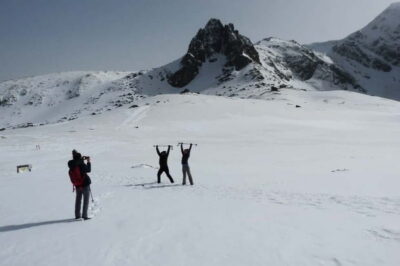
Seven Rila Lakes Snowshoe Walk & Thermal Spring Pools
Read our review →Browse the lists this tour appears in