
Review · WALKING TOURS
Sofia Hidden Gems: Small-Group Walking Tour with Tram Ride
Sofia pulls you in with stories hiding in buildings. This small-group walking tour pairs classic landmarks with a smart tram ride, plus quick interior stops like the National Library and Sofia University. You get an easy way to connect the city’s layers, from ancient Serdica to Ottoman-era sites, without feeling lost.
I particularly like two things: first, the tour is packed with places that are usually hard to slot into a normal half day, yet many entries are listed as admission free. Second, the guide-led flow makes the stops make sense, especially when you can ask questions and move at a pace that works for most people.
One watch-out: the schedule is tight, with many stops around 5 to 15 minutes, so this is not the time for slow, deep museum wandering. If you want to linger for an hour in one building, plan to come back on your own later.
In This Review
- Key highlights worth your time
- Price and time: what you really get for $45.66
- Start at Saint Sofia Church, where Serdica’s big council echoes
- St. Alexander Nevski Cathedral, the Neo-Byzantine headline
- Kvadrat 500: modern art in Sofia’s newest gallery block
- Inside the National Library and Sofia University, education as a living monument
- National Theatre, Largo, and the opera origins in the city center
- Rotunda Church of St George and Ancient Serdica under Nezavisimost Square
- Mineral Baths, Central Sofia Synagogue, and Banya Bashi Mosque
- West Gate of Serdica, Zhenski Pazar, and the smart ending at Central Market Hall
- Who this tour fits best, and what to do after
- Should you book this Sofia walking tour?
- FAQ
- How long is the Sofia Hidden Gems tour?
- How much does the tour cost?
- What language is the guide?
- How many people are in the group?
- What’s included for getting around?
- Where does the tour start and end?
- Do I need to worry about cancellations?
Key highlights worth your time
- Small group (max 10): easier questions and a less chaotic feel on narrow old-street corners
- English guide: clear explanations and a tour built for English speakers
- City transport card plus a tram/metro short ride: you get a break from nonstop walking
- Free entry at many stops: you can focus on seeing, not ticket math
- Modern + ancient stops together: Kvadrat 500 sits right beside ancient Serdica remains
- End at Central Market Hall: convenient tie-in to food, shopping, and getting out of the center
Further Walking Tours in Sofia
- Sofia: Communist Walking Tour★ 4.9 · 1,106 reviews
- Sofia: City Monuments Guided Walking Tour with Audio Guide★ 4.5 · 825 reviews
- Communist Walking Tour of Sofia★ 5.0 · 690 reviews
- Sofia Highlights 2 Hour Sightseeing Walking Tour★ 5.0 · 442 reviews
Price and time: what you really get for $45.66
At $45.66 per person for about 2 to 3 hours, this is priced like a focused city orientation tour. You are not paying for a long ride or a big meal plan. You are paying for an English guide and a tight route that hits major sights efficiently, including a short tram/metro ride covered by a city transport card.
The max group size of 10 matters more than it sounds. With fewer people, the guide can adapt when someone asks a question, and you spend more time looking at Sofia, less time waiting in a clump. Also, many stops list free admission, so the tour does not quietly turn into a surprise cost day.
Your real commitment is pacing. You’ll cover a lot of ground and spend brief, purposeful time at each place. Think of it as a “best-of” storyline, then you can choose what to revisit later.
Start at Saint Sofia Church, where Serdica’s big council echoes
Your walk begins at St. Sofia Church in old Sofia, on ul. Paris 2. This is one of the oldest churches in the city, dating back to the 4th century. The site links to the Council of Serdica, held most probably in 343, with 316 bishops, and that event is part of why this place feels important even today.
What I like about starting here is the way it sets the timeline. Before you even reach the more famous modern monuments, you understand the city’s core identity: Serdika becomes Sofia, and religion and civic life were tightly connected long ago.
Practical note: the stop is listed for about 10 minutes and admission is free. That means you’ll get the main facts and key views, but not a slow, stand-and-stare visit. If you love early Christian sites, you may want to return after the tour with extra time.
St. Alexander Nevski Cathedral, the Neo-Byzantine headline
From early roots, the tour moves to St. Alexander Nevski Cathedral, the big Orthodox landmark most first-time visitors want to see. It’s built in a Neo-Byzantine style and is described as one of the 50 largest Christian church buildings by volume worldwide.
This stop works even if you’re not religious. It’s a visual lesson in how Sofia projects scale and faith. The cathedral’s presence helps explain why the city’s older streets still feel anchored by monumental architecture.
The time is short, around 10 minutes, and listed as free entry. So you should treat it as a photo and orientation moment. For full interior appreciation, come back later, but on a half-day tour this cathedral is the right kind of “wow” stop.
Kvadrat 500: modern art in Sofia’s newest gallery block
Next up is Kvadrat 500, the National Gallery’s newest and largest building, opened 25 May 2015. The route highlights its size and structure: about 1,700 artworks across 28 halls on four levels.
This is one reason the tour feels well-rounded. You’re not stuck only in churches and ruins. Kvadrat 500 gives you a modern cultural snapshot, with Bulgarian art traced from the mid-19th century plus European art from the 15th–19th centuries, and even exhibits with art connections from Asia, Africa, and America.
The practical catch is time. This stop is included as part of the walking flow, so you should expect a brief guided overview rather than a full museum day. If contemporary or Bulgarian modern art is your priority, take a quick note during the tour, then return with more time when you’re not on a schedule.
A different sort of day from the same city:
- From Sofia: Rila Monastery & Boyana Church Day Tour
★ 4.7 · 5,107 reviews - From Sofia: Must-See Rila Monastery & Boyana Church Day Tour
★ 4.6 · 3,322 reviews - From Sofia: Guided Day Tour of Plovdiv’s Must-See Sights
★ 4.6 · 1,688 reviews
Inside the National Library and Sofia University, education as a living monument
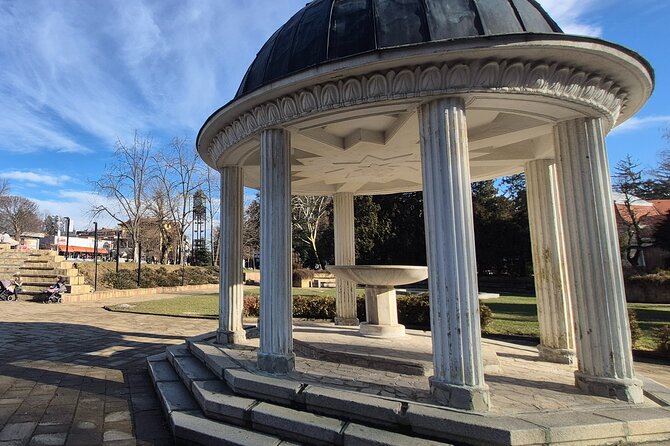
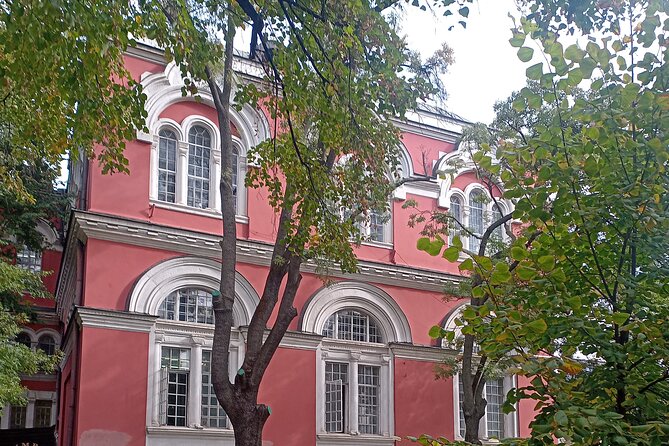
Two of the most satisfying stops are the Bulgarian National Library (St. Cyrill and St. Methodius National Library) and Sofia University St. Kliment Ohridski. Both are listed with free admission, and the tour indicates you will visit inside.
The library stop is small in duration, about 10 minutes, but the facts are big. The collection is nearly 8.5 million documents, and it receives around 70,000 publications each year. That kind of number helps you understand Sofia’s educational identity, not just as a slogan, but as an active institution.
Then you move into Sofia University, described as Bulgaria’s first higher educational institution. The tour ties its roots back to public teaching activities dating to the second half of the 9th century, then forward through the Bulgarian Renaissance and the post-1878 era.
You’ll also see the university building’s story. Built 1884–1886 in a neo-Renaissance style and designed by architect Constantin Yovanovic, who studied in Vienna and Switzerland and also authored the Serbian Assembly design (1891 to 1892). That detail helps the architecture feel less random and more connected to wider European currents.
The drawback is simple: with brief interior access, you’ll only capture the highlights. Still, for most visitors, this is the best way to see these places without needing a separate plan.
National Theatre, Largo, and the opera origins in the city center
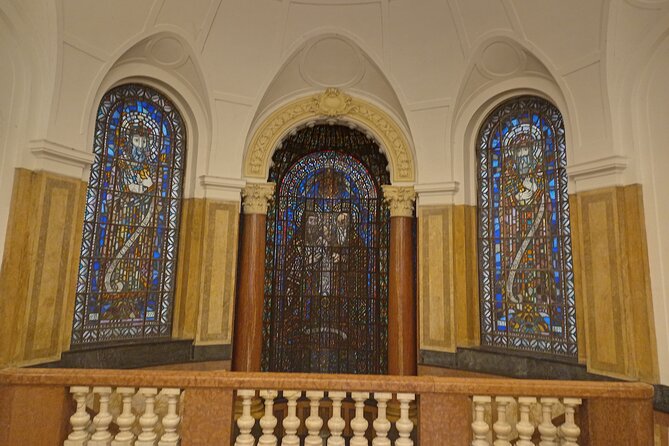
The route threads through Sofia’s performing-arts layer. You pass the era when opera and theatre were becoming a public statement.
One included detail is the early opera story. In 1890, three Bulgarian musicians, Dragomir Kazakov, Ivan Slavkov, and Angel Bukoreshtliev, organized the first opera troupe in Bulgaria as a branch connected to the Sofia Drama and Opera Troupe. The tour notes 12 whole operas and excerpts from 11 operas performed with support from Bulgarian, Czech, and Italian participants, alongside orchestras and a piano.
Then comes the National Theatre, finished in 1906 with the opening ceremony held 3 January 1907. The design is credited to Ferdinand Fellner and Hermann Helmer, known for a popular early-20th-century approach. The hall is Art Nouveau, and the tour includes the fact that the plafond and auditorium walls were painted by Viennese artist Rudolf Fuchs. Even the seat count is given: the auditorium seats 848.
You also visit Largo (Largoto), an architectural ensemble of Socialist Classicism buildings built in the 1950s as the city’s new representative center. This contrast is valuable. It shows you Sofia is not stuck in one era or style.
If you’re short on time, this section still works because you’re getting “story per stop,” not just facades. If you’re an architecture nerd, you’ll likely want to linger outside, but don’t expect long, seated breaks.
Rotunda Church of St George and Ancient Serdica under Nezavisimost Square
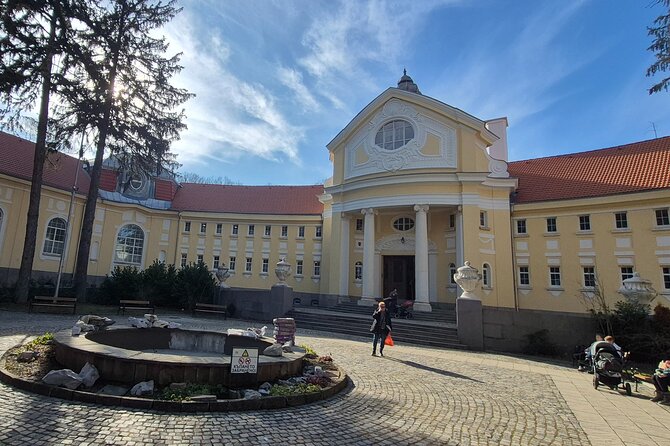
After the theatre world, you go back to the old city core with the Rotunda Church of St George. This is a Late Antique red brick rotunda, built in the early 4th century as Roman baths, then later turned into a church inside the walls of Serdica. The tour notes it’s considered the oldest building in modern Sofia and belongs to the Bulgarian Orthodox Church.
What makes it memorable is how it compresses history. Roman baths, then Byzantine-era transformations, then Orthodox worship. Even if you don’t read religious symbolism, you can feel how reused and repurposed these spaces have been over centuries.
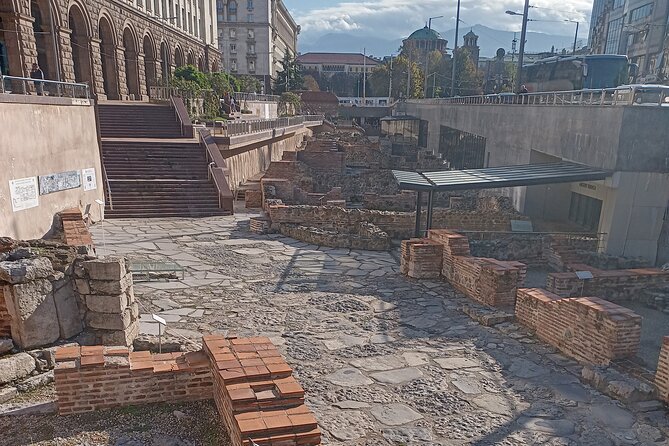
Next is the Ancient Serdica Archaeological Complex, which includes areas under and around Nezavisimost Square. The tour explains the “Largo” zone integrates unearthed remains into a site for cultural events. You also see parts of the Roman town’s main street, the decumanus maximus, connecting the eastern and western gates, plus a lapidarium nearby.
A practical benefit here: archaeological sites can be confusing if you’re alone. With guided framing, you understand what you’re looking at, like the idea of an insula (a whole urban block) and the presence of shops and residential spaces.
The only consideration: the stop timing is listed as about 15 minutes, so it’s a quick orientation. If you love Roman city planning, you’ll probably want more time later, but this gives you the map in your head.
Mineral Baths, Central Sofia Synagogue, and Banya Bashi Mosque
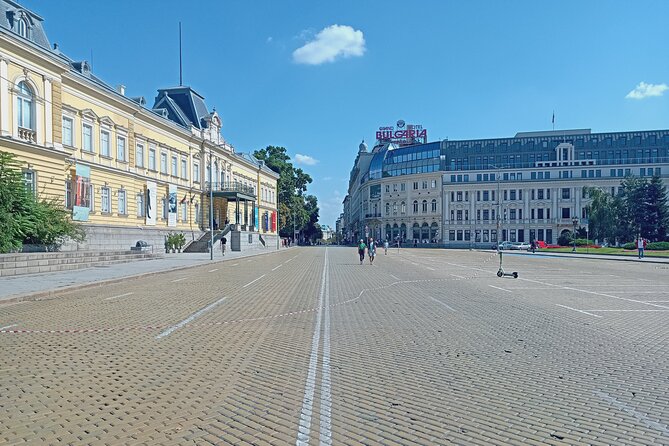
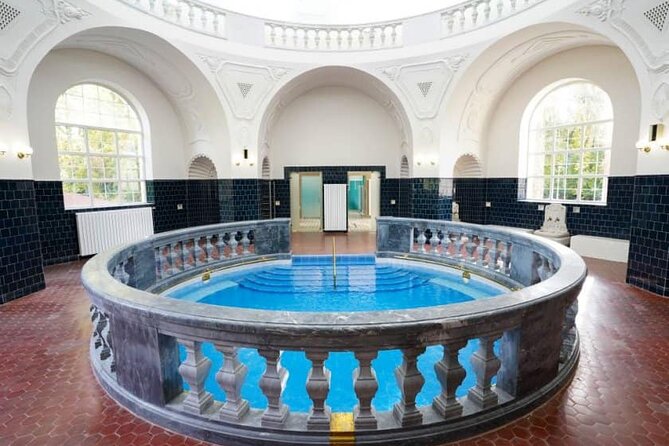
Now Sofia gets physical, not just visual. The tour includes the Central Mineral Baths near Banski Sq 1, with the building designed in Vienna Secession style while incorporating Bulgarian, Byzantine, and Eastern Orthodox ornamental elements. Architects listed are Petko Momchilov and Friedrich Grünanger, designed 1904 to 1905 and approved 30 January 1906. The note about other drafts being declined adds context that the design was a deliberate compromise between influences.
The tour also brings in the Jewish community’s architecture story at the Central Sofia Synagogue. It says the early 20th-century Jewish community collected donations and invited Viennese architect Friedrich Grünanger. The names of top contributors are shown on the wall after entering, and the construction is said to have been organized and completed in four years. Even the building technique has a detail that sticks: tombstones from an old Jewish cemetery were used for the base. The construction value is given as 437,000 golden leva. It also notes the synagogue sits on the old site of another synagogue called Ahava ve Chesed (Love and Goodness).
Then comes Banya Bashi Mosque, built in 1576 during Ottoman military expansion by architect Miamar Sinan. It’s right by the hot mineral springs, and the tour even connects the meaning of Banya Bashi to the idea of many baths.
Why this cluster works: it shows Sofia as a crossroads of religions and daily life. Baths, worship, and community are not separate chapters here. They sit next to each other across centuries.
The trade-off is time and variety. You’ll take in a lot of detail quickly. If you want to read inscriptions slowly at the synagogue or focus on ornamental patterns at the mosque, you’ll need a return visit, because this is a guided overview within a walking route.
West Gate of Serdica, Zhenski Pazar, and the smart ending at Central Market Hall
To wrap up, you return to the city’s older bones and its local life.
First is the West Gate of Sofia, part of the protected fortress wall section with towers. The tour notes a preserved pentagonal tower next to the gate and a triangular tower nearby. It also places the gate in context between St. Joseph Catholic Cathedral, Todor Alexandrov boulevard, and the Monument Symbol of the City of Sofia.
Then you go to Zhenski Pazar Women’s Market, described as the oldest market in Sofia, established more than 140 years ago. It’s framed as one of the city’s important trading centers.
Finally, the tour ends at the Central Market Hall of Sofia, at bul. Knyaginya Maria Luiza 25, on level -1. The route notes it’s close to a bus station, so getting back out is straightforward. If you want a snack or a quick meal right after the walk, this ending point is a good one. It’s also a natural place to pick up small gifts.
As always with market endings, keep your expectations flexible. You’re there to see and orient, not to bargain for hours. But you will leave with a sense of what the local day looks like.
Who this tour fits best, and what to do after
This is a good match if you want a guided orientation to Sofia’s big eras in one shot. It suits first-time visitors, people staying in the center, and anyone who prefers a tight route over self-guided guesswork. The max group size and English guide make it easier to ask questions, and the included tram/metro short ride helps break the pace.
It also fits travelers who like “story stops.” The route links places to events and people, from the Council of Serdica to the early opera troupe founders, to specific architects like Constantin Yovanovic, Ferdinand Fellner and Hermann Helmer, and Friedrich Grünanger. That makes the day feel connected, not random.
After the tour, I’d do one practical thing: choose one or two places you most want to return to. For many visitors, that’s either the art at Kvadrat 500 or the interior depth of major institutions like the library, the university building, or the cathedral. This tour gives you the shortlist, then you decide your favorites.
And a small tip: bring sunscreen. Even on a short walking route, Sofia sun can catch you while you’re between stops.
Should you book this Sofia walking tour?
Yes, if you want a well-paced, English-friendly route that covers key Sofia sites in 2 to 3 hours, with a tram ride and many stops listed as free admission. The structure is built for orientation, and the small group size makes the experience feel more personal.
Book it if you like having a guide connect the dots between ancient Serdica, Orthodox and Ottoman landmarks, and Sofia’s cultural institutions. Skip it only if you need long, unhurried time at museums or you prefer doing everything at your own speed with zero schedule.
If you want, tell me your travel dates and what you care about most, churches, art, history, or local food, and I’ll suggest which stops to prioritize for a return visit.
FAQ
How long is the Sofia Hidden Gems tour?
The tour is listed as lasting about 2 to 3 hours.
How much does the tour cost?
The price is $45.66 per person.
What language is the guide?
The tour is offered in English.
How many people are in the group?
This tour/activity has a maximum of 10 travelers.
What’s included for getting around?
You get a city transport card and a tram/metro short ride, plus a mobile ticket.
Where does the tour start and end?
It starts at St. Sofia Church, Old City Center, ul. Paris 2, 1000 Sofia, Bulgaria. It ends at the Central Market Hall of Sofia, bul. Knyaginya Maria Luiza 25, level -1, Sofia.
Do I need to worry about cancellations?
You can cancel for a full refund if you cancel up to 24 hours in advance of the experience start time.
Added recently around Sofia
- Archaeological tour-From the Neolithic to Modern times in Augusta Trayana★ 5.0 · 1 review
- Sofia Full Day Tour★ 5.0 · 1 review
- PRIVATE adventure to Rila Lakes – GROUP price for 6★ 5.0 · 1 review
- 05.12.2026 Night of the Stars Show Ticket with Exclusive Access★ 5.0 · 1 review
- Melnik & Rozen Monastery Tour: Wine Tasting, History, Scenic Walk★ 5.0 · 1 review
- Small-group Weekend trip to Bulgaria’s most famous sites★ 5.0 · 1 review
- Exclusive Afternoon Wine & Appetizers with Local★ 5.0 · 1 review
Walking Tours, compared.
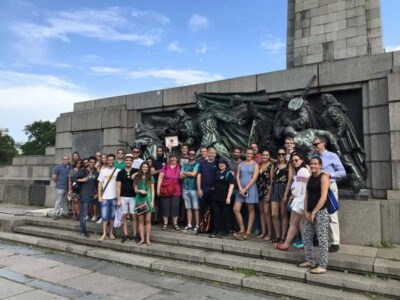
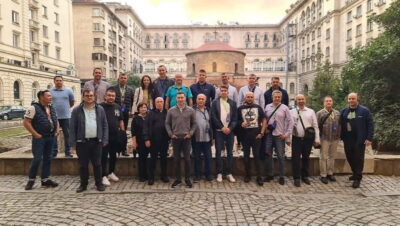
City Monuments Guided Walking Tour with Audio Guide
Read our review →
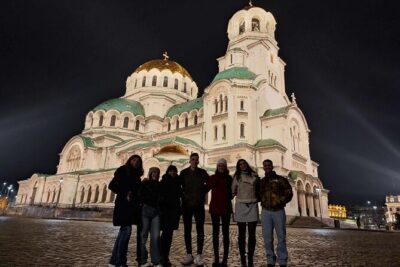
Sofia Highlights 2 Hour Sightseeing Walking Tour
Read our review →
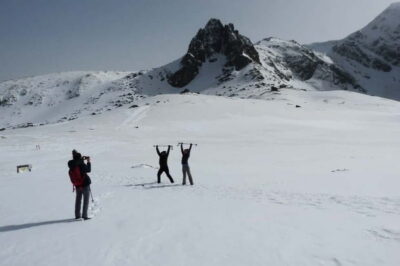
Seven Rila Lakes Snowshoe Walk & Thermal Spring Pools
Read our review →Browse the lists this tour appears in